

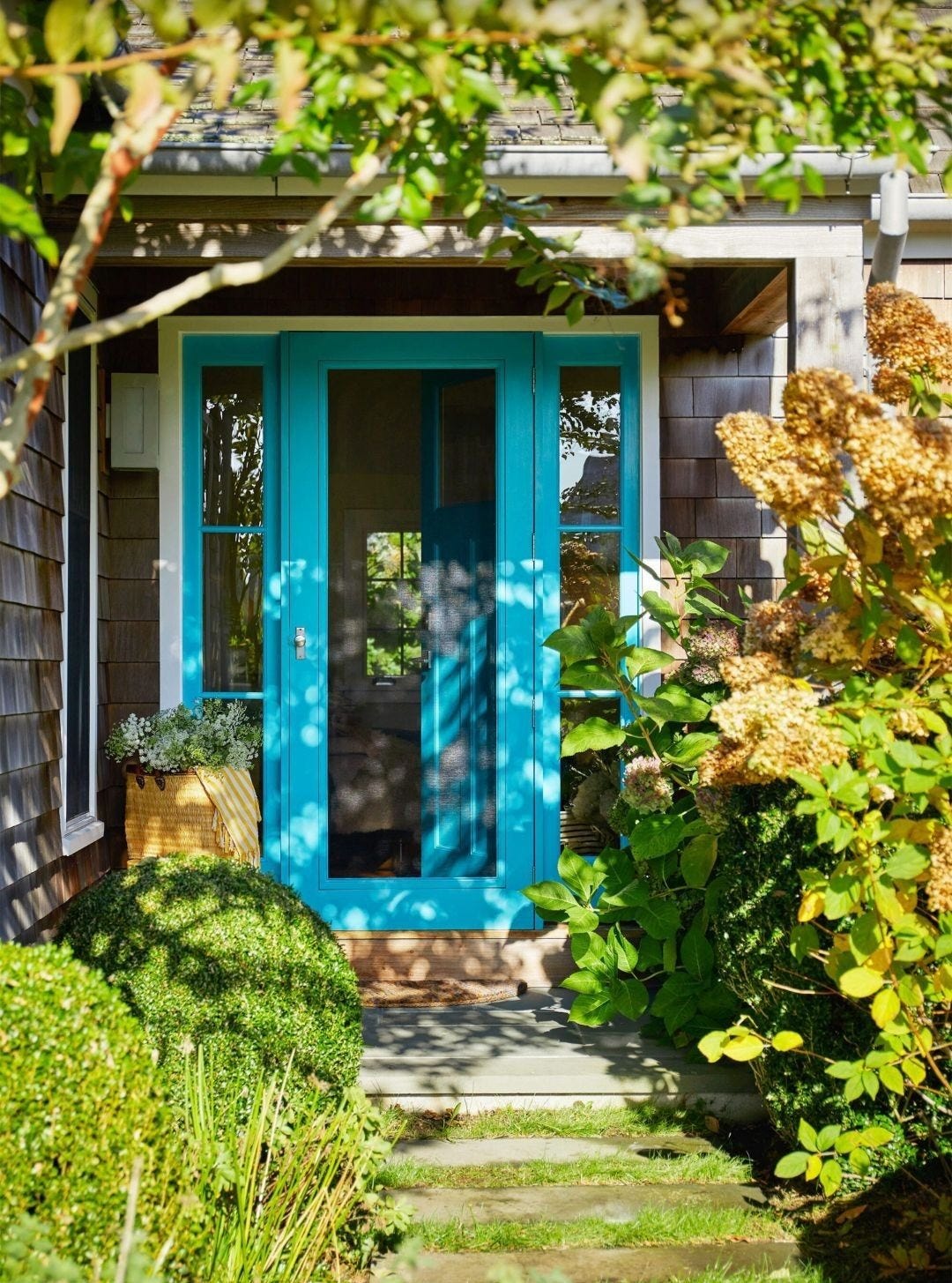
Dear Design Your Wild, Have you done any articles on designing a foundation garden? I have a really long house with a large area to landscape. Do you design it like a garden room? Or do you frame the house with plants?—Jennifer
You caught me! I have been avoiding the topic of foundation planting because I’m not a fan of traditional foundation shrubs. In fact, the first thing I did when we closed on our homes in Florida and Rhode Island is rip out the overgrown shrubs that were blocking the windows and darkening the living rooms. Because, as I’ve written before, the view from inside is My No. 1 Design Priority. (By “rip out,” by the way, I actually mean cut to the ground; there’s generally no reason to remove stumps.)
Don’t sit your house on a shrubbery pedestal
After the view from inside, your most frequent views of your yard are probably what you see when you leave or arrive at your home. Your house, including the foundation, is part of this experience, but it’s not an artwork to frame or to put on a shrubbery pedestal, builders’ reductive approach to landscaping for “curb appeal.” I don’t like that because it puts the emphasis on how others see your house, instead of on how you and your loved ones enjoy the experience; however, it’s unwise to totally ignore curb appeal, because it adds seven percent to home value, according to research. Just do it your way.
When Zoe first toured me around her home, I asked what she planned to do about the trash cans along the walk to her back door. She teases me about my judgy-ness, but these things matter! So adopt my judgy mindset and retrace the path you most frequently take when you’re returning home, by car or foot. What do you see as you approach your home? As you walk along the path to your door? When you reach the entry? Take pictures. Photographs highlight unsightly details to which familiarity has blinded us. What do you notice in the pictures that you didn’t see before? Then make a plan to improve the experience. (For ideas, watch Zoe and my design workshop Turn that Patch into a Plan and read Why You Need a Chair (or Two) in Your Front Yard).
Everything you add between your perspective (e.g., from the street) and the house—a tapestry hedge for privacy, open areas with seating, a curving path to stroll around the house, trees and shrubs to add pause, dense plantings anywhere—will distract from the span of your house. If you think a tall shrub or two close to the house between windows will improve your experience, on top of everything else, then plant them, too.
In addition, I recommend you—and everyone—make your entry gorgeous, as I describe in “How” below. It’ll bring you joy.
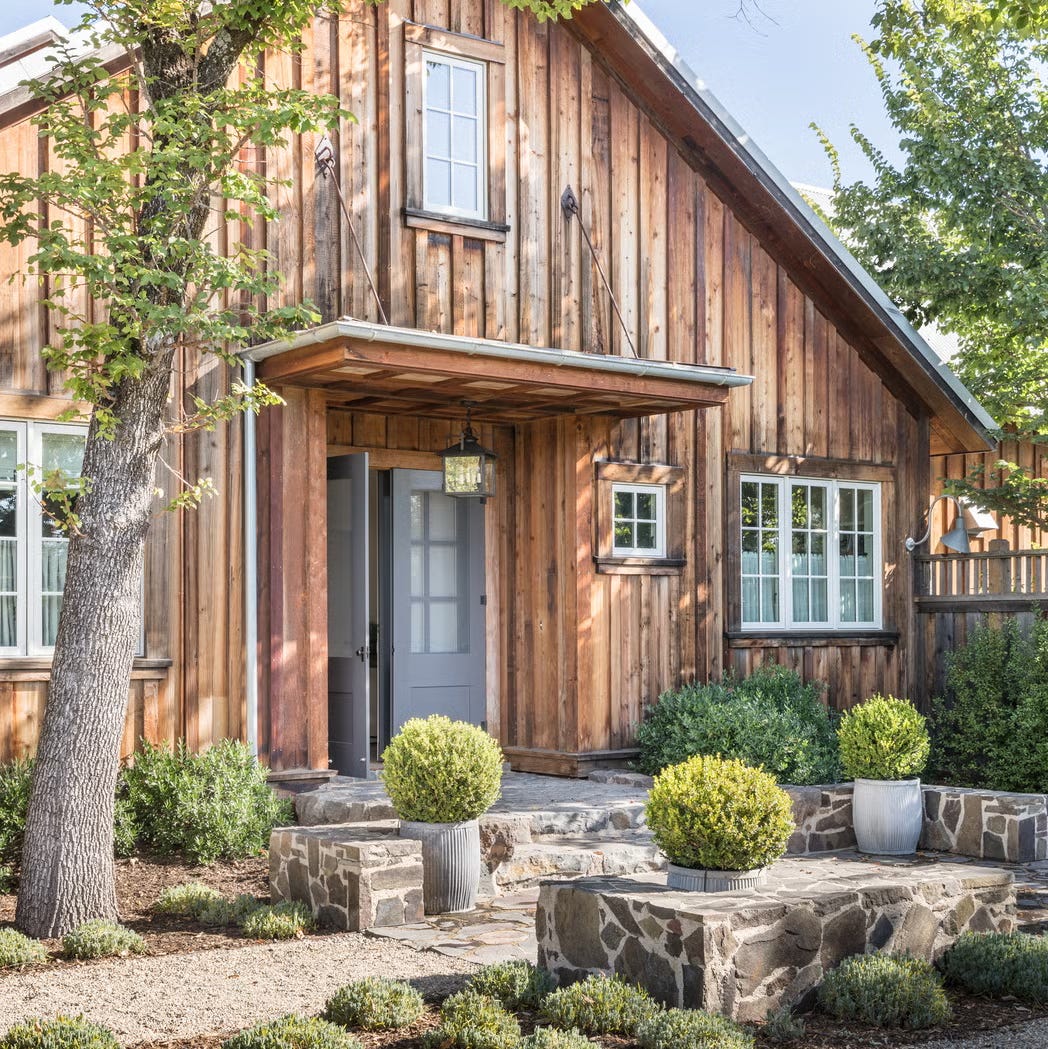
Dear Design Your Wild, How far from a house should a shrub be? Can you recommend re: planting now for how we envision the garden years from now? Many of us will be planting wee plants, shrubs, or trees, but the design is made with full-grown plants in mind.—Workshop participant
If you’ve read this far, you know I’m not a fan of foundation shrubs. You might consider planting forbs closer to the house, and using shrubs for privacy and for adding pause and surprise to your daily stroll. (Or planting nothing against the house, where wildfire risk is high.) But that’s not what you asked…
Plant foundation shrubs half their mature spread (diameter) plus 18 inches from the house, which will leave space to access the house for repairs. If you can’t find the shrub’s mature spread, assume it’s equal to its mature height. And, while we’re on the subject of height, never plant a shrub that will eventually block a window. If you’re set on a particular species, plant a dwarf cultivar, rather than commit yourself (or some future owner) to perpetual pruning.
As for imagining how shrubs and trees will fill in over time, read my article What If It’s Too Tall? for tree size and growth charts and how to visualize sizes relative to your body and your house.
Happy planting!
—Heather
P.S. Can you identify one element common to all the front gardens that illustrate this newsletter? (Answer at bottom)
Why, How, Wow!
Why? For the birds
You know this, right? Bird populations are plummeting, as are the caterpillar populations they need to breed. A big reason I plant natives and write this newsletter is to help turn around this disturbing trend. (For a refresher, see The Big “Why.”)
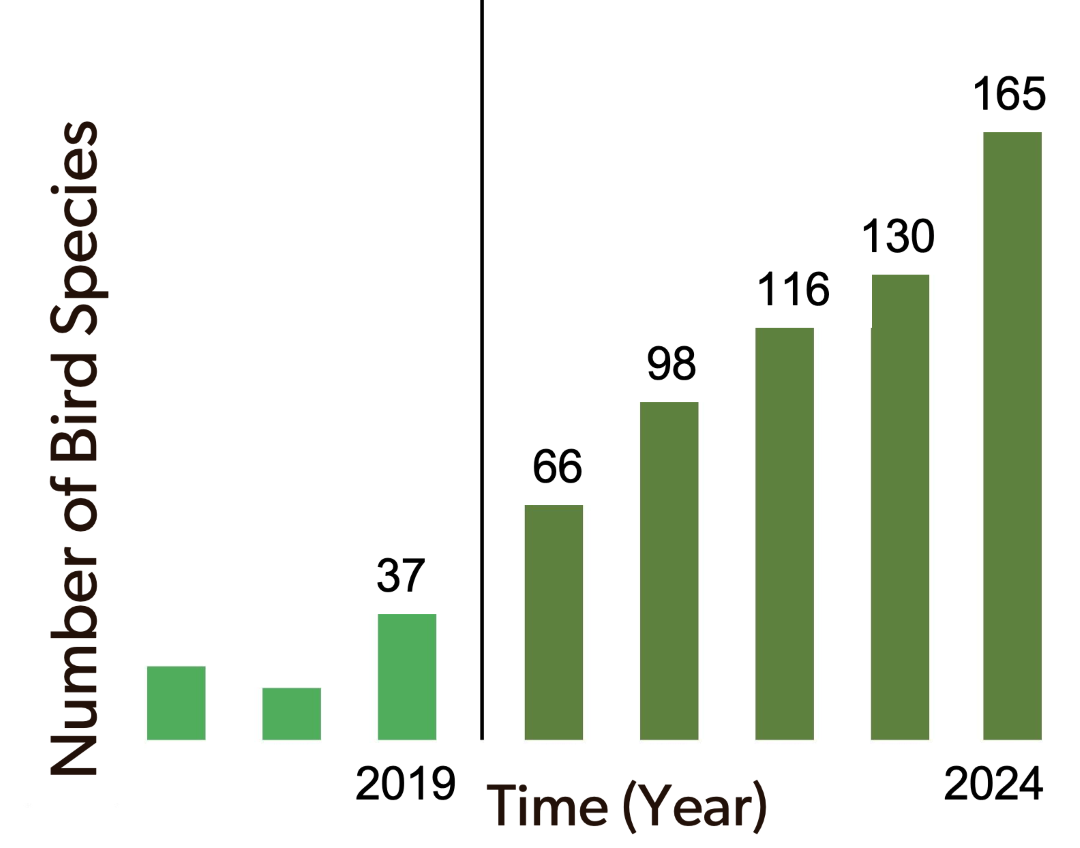
That’s why Zoe and I got so excited about the graph below from Cornell eBirds Garden for Birds. It’s more proof that our work makes a difference! A homeowner tracked the bird species he observed in his small Florida yard before and after replacing turf with mostly native plants. Within five years, he was seeing more than four times as many bird species.
Participation in the eBirds Garden for Birds project is by invitation—which Cornell is kindly extending to you, dear readers. Use the invitation link below to sign up for (or into) an eBird account and follow instructions. (Unfortunately, Merlin observations don’t yet count.)
Join Cornell eBird Garden for Birds
And, to get your yard’s health score and jumpstart your yard’s transformation, join the 12-week Less Lawn, More Life challenge.
How: Attend to inexpensive details for big impact
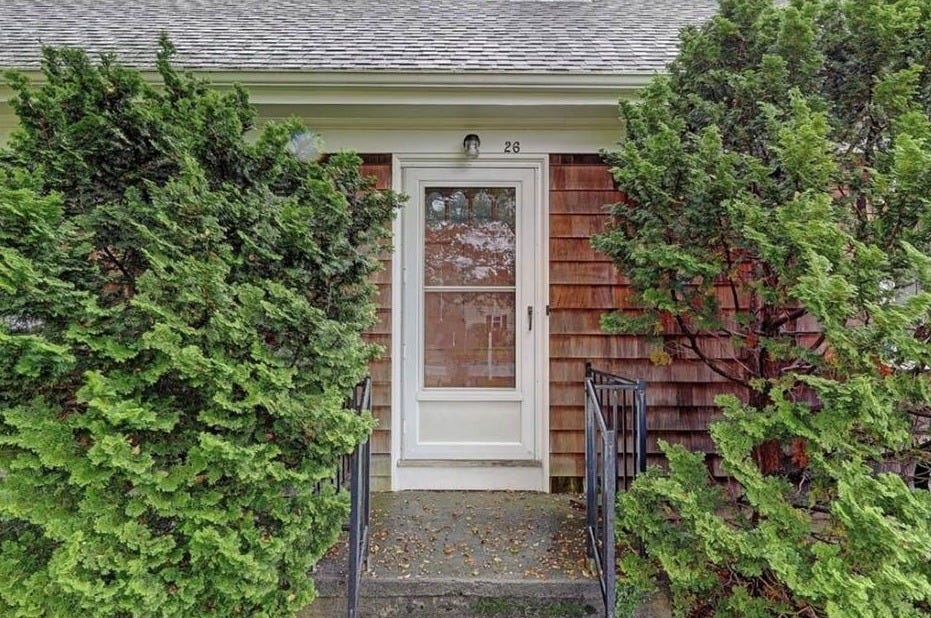
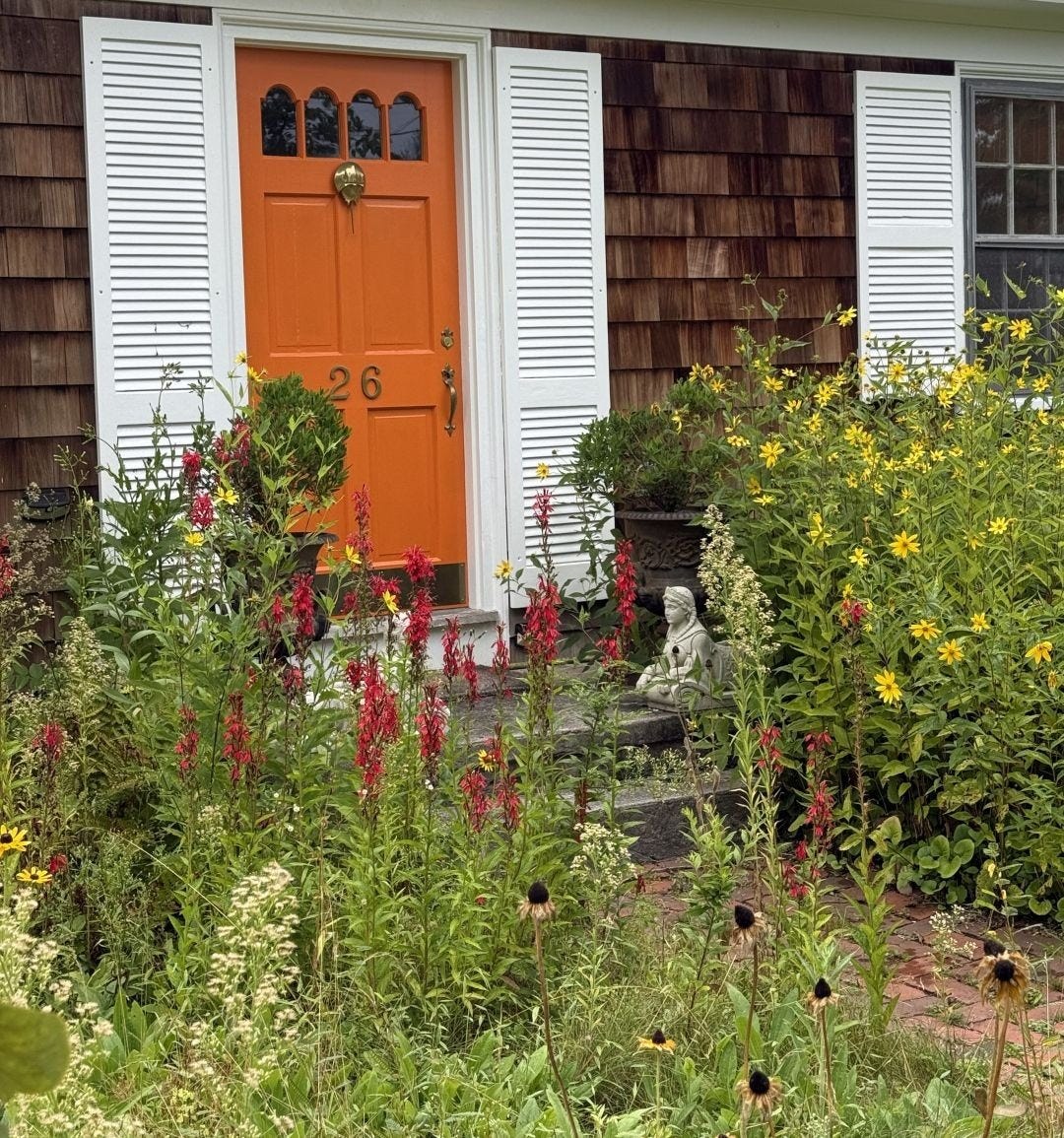
I want everything I see as I walk from the curb or driveway into my home to look (and smell) beautiful. Your front door—and back door, if you use it regularly—is a focal point. In my opinion, though perhaps not that of my neighbors, a refined and sumptuous entryway is the most important “cue to care,” communicating the intentionality of the wild plantings around it. That means attending to numerous small details, most of them inexpensive fixes, fortunately. Here’s a checklist based on what Pete and I did to transform our Rhode Island entryway. (Links are to sources.)
Cut down or cut back too-tall shrubs.
Remove extraneous or unattractive details (e.g., storm door, metal handrail, too-small, randomly-placed house numbers).
Pressure wash the siding.
Buy an attractive, natural-fiber door mat (e.g., this animal-print coir door mat).
Paint the front door a fabulous color. Repaint the trim. (See this year’s hot front door colors, per House Beautiful.)
Add details consistent with the house style (e.g., original wood shutters and unlacquered brass kickplate, five-inch house numbers, and hand cast door knocker). I often source hand-crafted hardware from Etsy.
Introduce a large planter or two or a trio in different sizes (minimum 18 inches deep).
Consider vintage cast stone sculpture.
Polish the door handle.
We didn’t have room, but place a bench or a chair or two if you do.
Wow! Stunning native entry garden
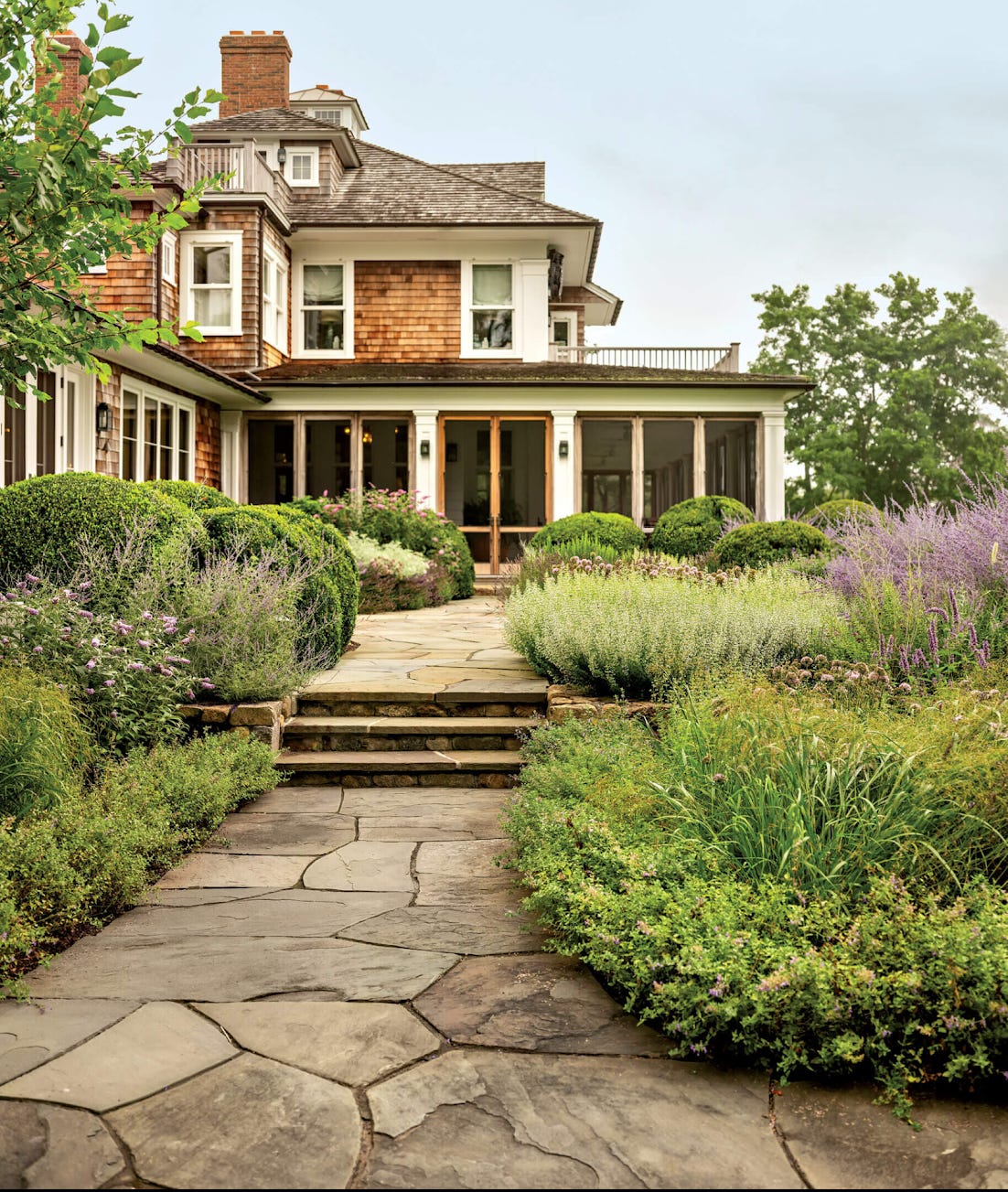
Landscape architect Ed Hollander created a gorgeous native entry garden at this Hamptons home, incorporating numerous shrubs into the plantings on both sides of the path; he did not push all the shrubs up against the house in a traditional foundation planting. I only wish it had a bench to add that sense of comfort. The other outdoor rooms in this large yard include a pool, pickleball court, organic vegetable garden, a dining pavilion, and a screened-in tea house nestled by the water.
By converting lawn areas to pollinator meadows and finessing new connections with bursts of native and climate-appropriate trees, flowers and grasses, “We were able to preserve the best of what was there while bringing it into tune, and to restore the landscape to what it might have been,” Hollander says.—Luxe
Although many of us can’t afford such lavish destinations, most can create an equally beautiful entry garden, given enough time.
Digging deeper
Take your gloves off! If you don’t know why, read the New York Times’ recent article about the health benefits of getting our hands dirty. [gift link] Or just envisage your body as a symbiotic assemblage of trillions of microbes—a concept dubbed “holobiont”—and reap the benefits of feeling closer to nature, according to Australian research.
Turn a patch of grass into an outdoor room with an adult lawn game from L.L. Bean. Or make a kids’ play area with some mud and a hose, as I describe in Kids Will Love Nature If You Do These 10 Things.
This year’s RHS Chelsea Flower Show, the world’s most prestigious horticultural event, once again demonstrates that English garden pros are way ahead of Americans with respect to adopting relaxed planting, low-carbon inputs, and practices that encourage biodiversity. Check out Alexandra Campbell’s video summary, The Best RHS Chelsea 2026 Ideas—That Actually Work at Home. (9 minutes)
Interested in contributing beyond your lot line? Search for volunteer opportunities near you with the National Parks Service and Fish & Wildlife Service here.
Answer: All the entry gardens have BALLS!
By that I mean, they have evergreen globes. Their year-round structure and elegance adds a “je ne sais quoi” to formal and naturalistic gardens alike. Skip the box (so blighted, so last century) and go for a cultivar of something native to you, bred to keep its size and spherical shape to minimize pruning. The ones in my entry planters are inkberry holly (Ilex glabra) ‘Gembox.’ I love the idea of grouping different size cultivars of one species—like ‘Gembox’ and ‘Shamrock’—in what our friend Martine dubbed a “shrub cabal.”
The new book, Plant This, Not That, recommends these box alternatives. Ask your native plant nursery to recommend a dense, rounded cultivar.
Inkberry holly (Ilex glabra, get at least one male for fruiting): AL, AR, CT, DE, FL, GA, LA, MA, MD, ME, MS, NC, NH, NJ, NY, OH, PA, RI, SC, TX, VA
Oregon boxwood (Paxistima myrsinites): AZ, CA, CO, ID, MT, NM, OR, UT, WA, WY
Great options with limited ranges: Yaupon holly (Ilex vomitoria) in the Southeast and Walter’s viburnum (Viburnum obovatum) in Florida.
See my article for online sources of conifer globe cultivars. Keep in mind that dwarf conifers can be v-e-r-y slow growing.
Thank you for the invitation for eBird garden for birds. I do a checklist every morning. I received a grant to remove turf and replace with native plants for birds two years ago, and I haven’t looked back. (Tracking birds was a requirement of the grant fulfillment.) We continue to fill in with additional native shrubs and forbs especially. It has given us a great deal of joy. I was so pleased when Cornell launched this program, and I look forward to participating.
The entryway looks so much better. Love the shutters on the side and the bright orange. Inspiring me to improve my own, though my storm door has to stay for the cats (and the Wisconsin bugs).