

This week, I’m responding to more questions from participants in my daughter Zoe and my Turn that Patch into a Plan workshop. [free video]
Dear Design Your Wild, A room for you in your front yard: I’m having trouble visualizing a destination in the front of my home—it’s a very standard 1960s neighborhood.
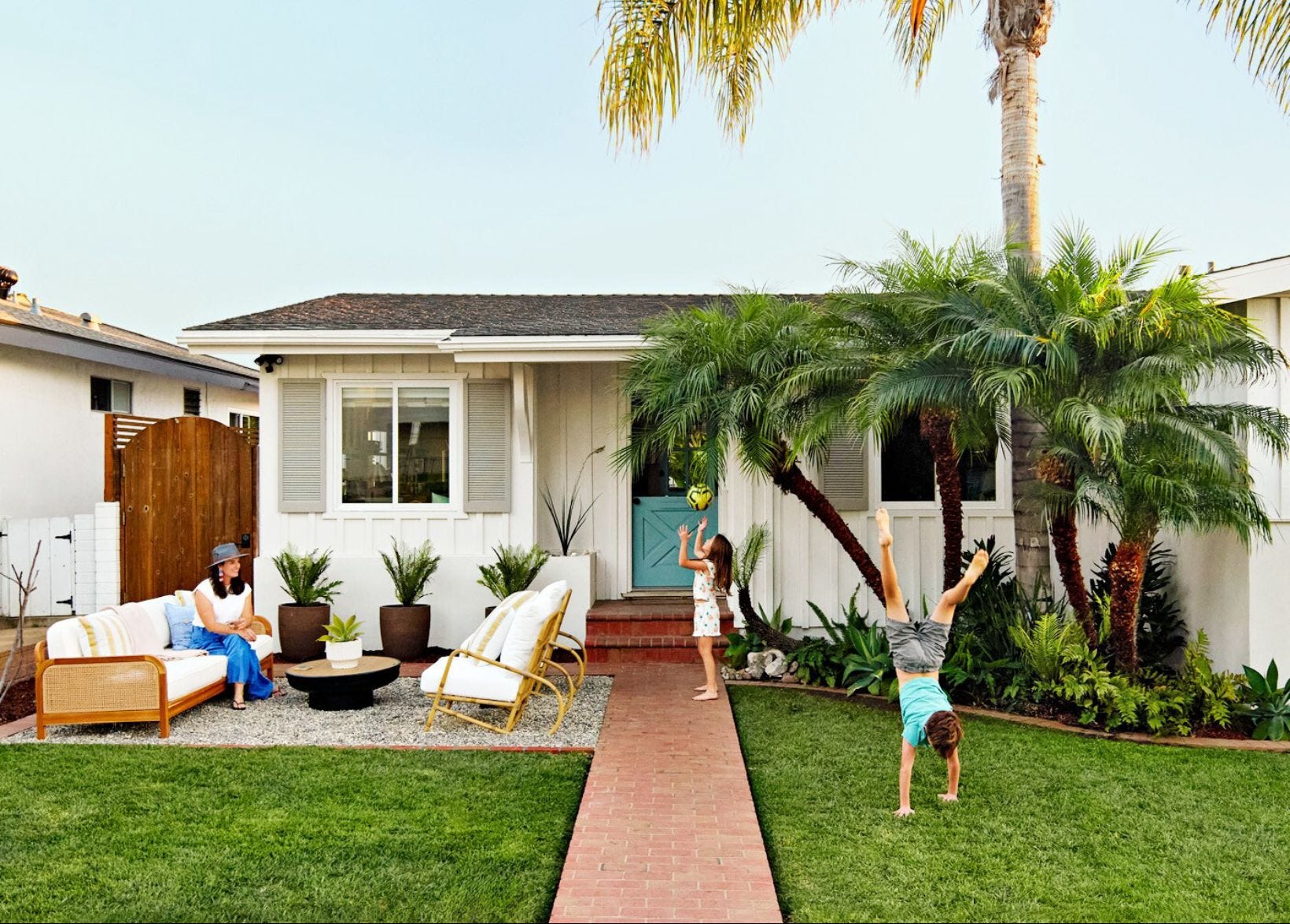
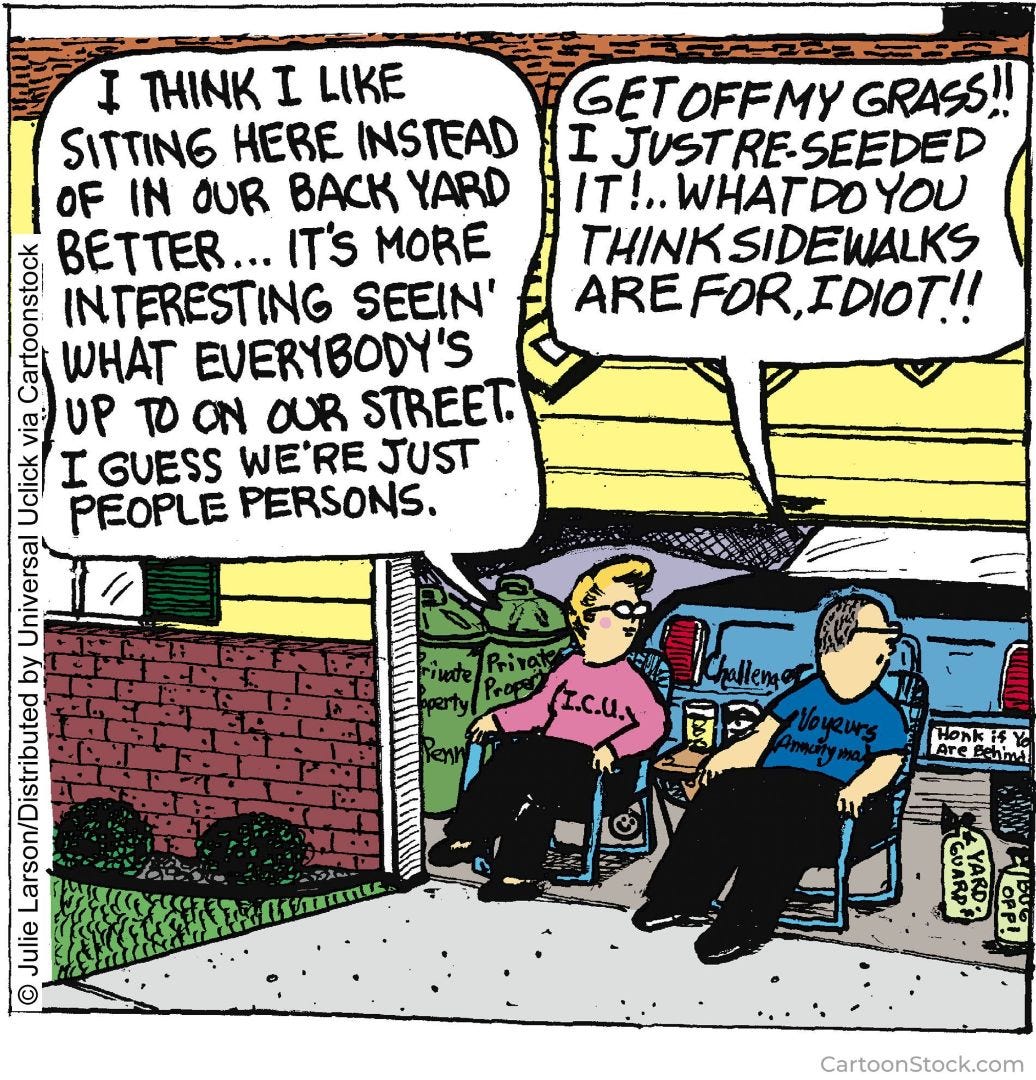
So many options! From an understated bench to a fully-furnished patio. Even a basketball hoop in the driveway makes a destination but, as Charlotte garden designer Jay Sifford says in a recent Instagram reel, I’m a big proponent of seating in the front yard.
From the mid-19th century through the 1930s, sitting in front of one’s home was commonplace. Houses were usually built with front porches where you could relax, cool off, people-watch, and socialize with neighbors. But as cars became commonplace, developers constructed communities without sidewalks and houses without porches. By the time your house was built in the 1960s, front yards were generally designed to be passed by or through, not used. Although New Urbanist developments like the 1980’s Seaside (Remember The Truman Show?) bucked this trend, most new homes are still built without functional front yards.
Fortunately, you don’t need a porch to enjoy seating in your front yard. In fact, “social front yards” became a trend during the pandemic, according to Kevin Lenhart, landscape architect and design director at Yardzen.
“People were getting cabin fever in their houses during quarantine,” Lenhart says, and “this put a lot of pressure on backyards, so naturally, some of it overflowed into the front yard. People were craving interaction and wanted to talk to new people without going to public spaces, and front yards became a safe semi-neutral territory for neighbors to interact.”—Food52 (with Lenhart’s how-to tips)
More recently, the New York Times wrote about how Houston residents are socializing with neighbors in their transformed, street-facing garages and proclaimed “The Garage Is the New Front Porch” [gift link].
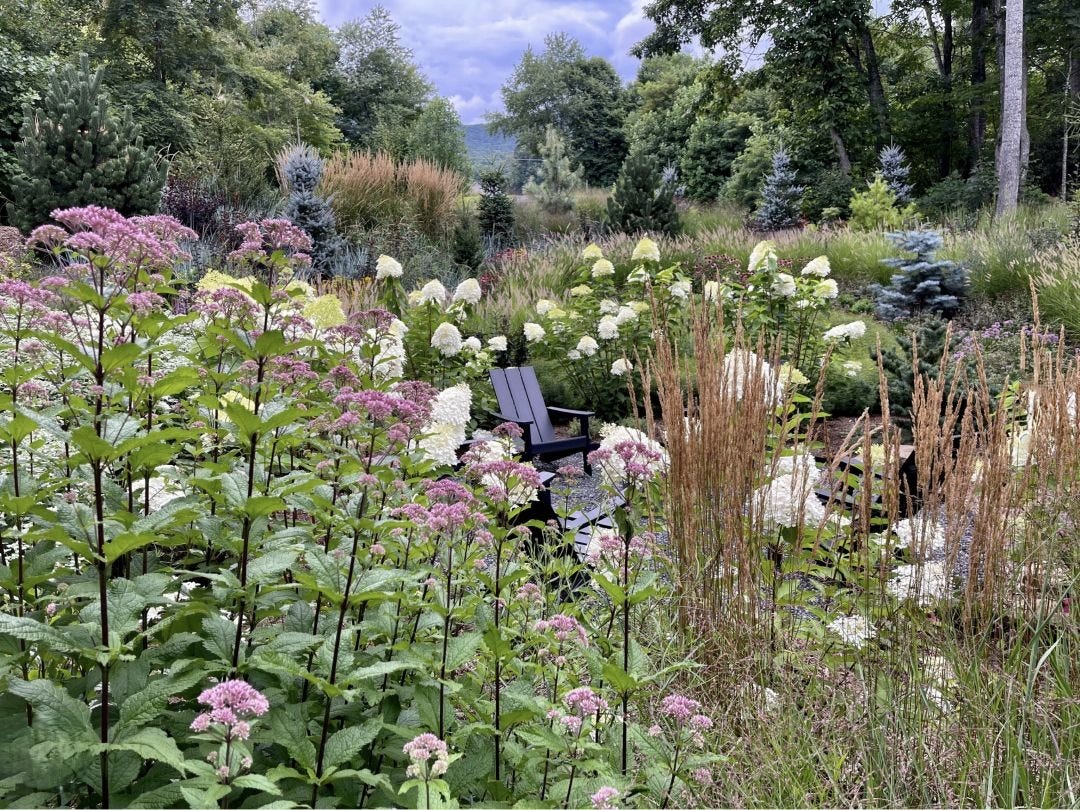
But even if you’re not social, go ahead and put a chair or bench in your front yard. Research shows that putting a chair or bench along a path creates a sense of comfort, even if you never use it. And, especially amid today’s rash of incivility, why not signal a friendly willingness to interact, even when you’re not feeling social?
(No, cavemen and dinosaurs never coexisted, but the sense of security you get from enveloping seating in tall greenery is still a good idea.)
Dear Design Your Wild, A good portion of my side yard is a septic leech field. What to do on/around this?
A septic field is a great place for a meadow, because the deeper-rooted grasses and wildflowers improve the soil’s ability to absorb wastewater and filter contaminants. Ideally, run your path around the field, not over it, because foot traffic has the reverse effect—and everyone needs a path circling their house, when at all possible. In fact, now is a good time to seed a meadow with a septic safe mix like this one from Prairie Moon. Do not plant shrubs or trees over the septic field, because their woody roots may damage the lines; woody plants with water-seeking roots (like willows) should be kept far from the drainfield.
Dear Design Your Wild, I have a big stump in this design [from the workshop]. Any tips?
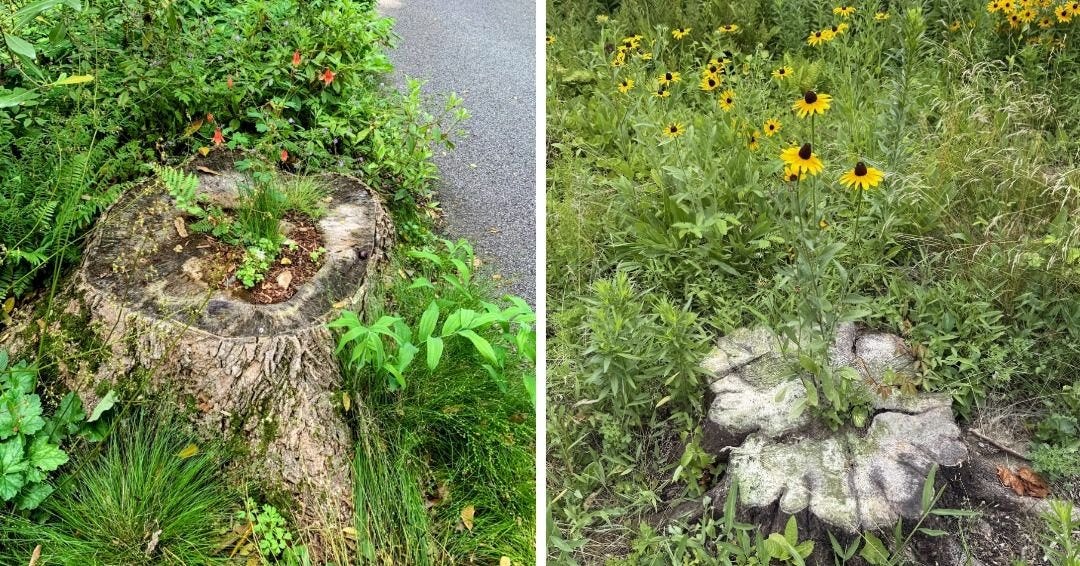
First, go you for keeping the stump! We need more dead wood in our landscapes. My top recommendation for your stump is to treat it as a planter, preferably surrounded by more vegetation. Many stumps have natural depressions you can plant right into, but you can hollow out a large stump to make a deeper planter, if you like. For more on the ecological value of dead wood and how to make it attractive, see Wait! B4 You Cut Down That Tree.
Why, How, Wow!
Why?
First, the bad news: According to the “environmental mismatch hypothesis,” posited in a recent journal article, the environment we’ve created may threaten the viability of our species. Ouch.
A growing body of observational and experimental evidence suggests that industrialisation negatively impacts key biological functions essential for survival and reproduction and, therefore, evolutionary fitness. Specifically, environmental contamination arising directly from industrial activities (e.g. air, noise and light pollution, microplastic accumulation) is linked to impaired reproductive, immune, cognitive and physical function. Chronic activation of the stress response systems, which further impairs these biological functions, also appears more pronounced in industrialised areas.—Biological Reviews

How
The good news: OK, I can’t really address that crushing hypothesis. However, it certainly suggests protecting and engaging with the natural world we evolved for—as you and I are doing—has widespread benefits. That’s true at the macro level, where 190+ countries have committed to conserve at least 30 percent of their terrestrial, inland water, and coastal and marine areas by 2030. (Notably, the United States is not among them.)
And it’s true on the micro level: There’s scads of hard evidence that each of us can improve our physical and mental health by connecting more with nature, as Dr. Kathy Willis documents in her new book Good Nature: Why Seeing, Smelling, Hearing and Touching Plants Is Good for Our Health. I’ll share more from the book another time, but for now I want to leave you with some simple changes Willis told Joe Gardener she’s making in her life:
Extending time in nature, walking or sitting, to 20 minutes or more.
Focusing on greenery; flowers are less important.
Gardening without gloves.
Touching plants.
Growing spider plants indoors.
Diffusing natural scents inside, too.
Making her screensaver a nature scene.
Did any of these surprise you? They surprised me—and I’m making changes. For the evidence behind these recommendations, read Willis’s book or watch the podcast. One example: A spider plant completely transforms the microbiome in a closed room.
Wow!
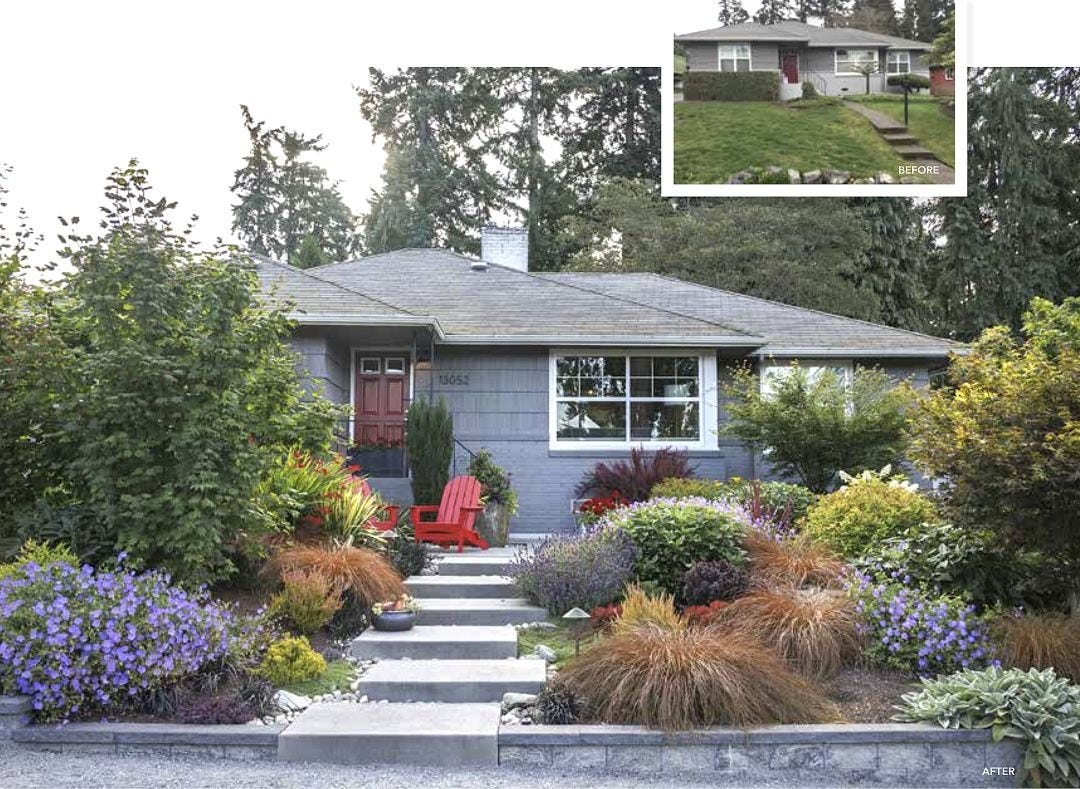
Seattle-based landscape designer and educator Stacie Crooks transformed a typical post-World War II front yard into a wildlife-friendly garden with seating and mostly native plants.
Using two-thirds evergreen plant material ensures that there will be plenty of interest and garden coverage throughout each season. We carefully chose a plant color palette that complements the house color and intentionally incorporated red and burgundy plants to connect the eye to the red front door.—Fine Gardening
Miscellany
I’ve started borrowing ebooks for my Kindle, including Willis’, from the library. Ebooks don’t contribute anthropogenic mass and libraries compensate writers especially well for ebooks.
The Supreme Court has agreed to hear Bayer’s case that federal pesticide labeling protects them against the thousands of cancer claims from Roundup users. Stay tuned. [CNN]
This year’s winner of the “green Nobel Prize” studies lowly fungi. Learn why in her interview in the New York Times. [gift link]
You can see my and others’ resolutions in Laura Fenton’s Garden Pros Share the 10 Ways They’re Changing Their Landscapes in 2026
Chairs in the front yard are community connection gamechangers! I’m so happy to live on a street where we all do it. :)
Front yard seating is a fun design project. Might give it a go this spring. Thank you for sharing.