Dear Yardener,
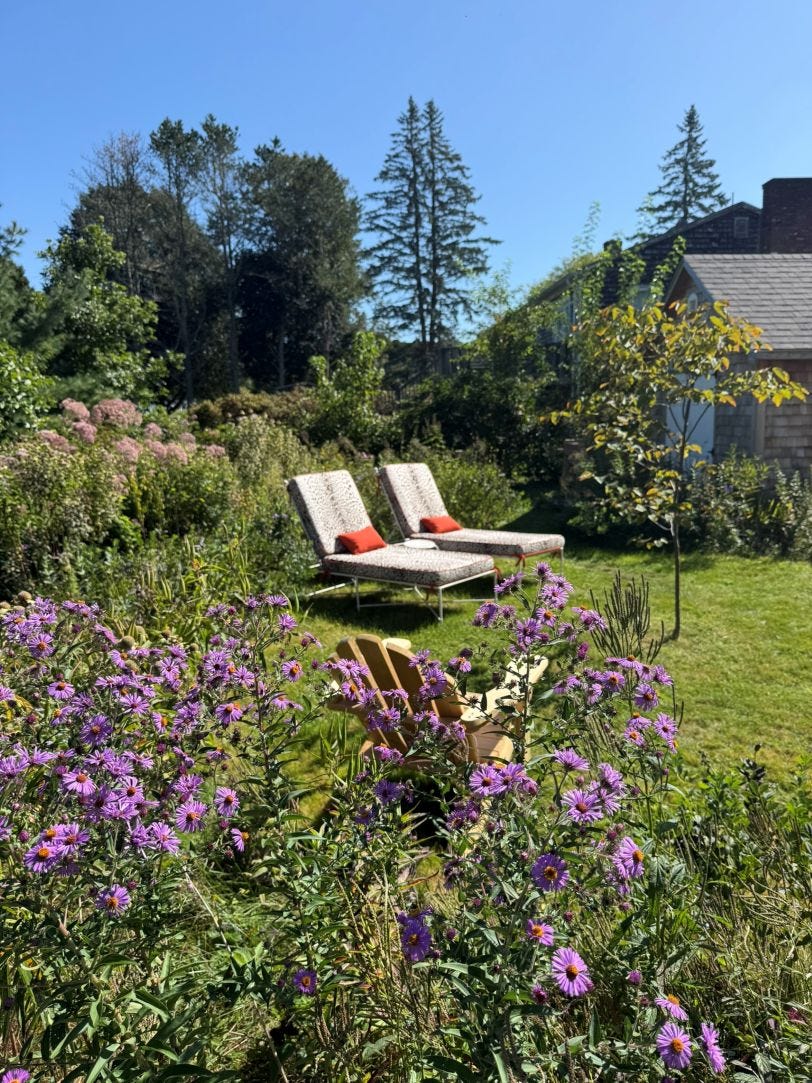
What’s your fall planting plan? The best time to install plants—especially shrubs and trees—is when the soil is when warm soil, cool air, and plenty of rain encourage roots to grow without leaf stress—i.e., late summer to late fall in most of North America. That’s why this weekend Pete and I went to our favorite native plant specialist nursery, Rhode Island’s Prickly Ed’s, to pick up a blackhaw to complete our allee, plus two inkberry ‘Gembox’ globes to create a moment of formal pause between two garden rooms. In the meantime, the asters, goldenrods, sneezeweed, and Joe Pye weed thrill me as I stroll around my yard during breaks from writing our book.
For more fall planting ideas, watch Zoe’s webinar with Basil Camu this Thursday at 5:30 p.m. Eastern time; register at Plant a Pocket Forest for More Life & Less Work.
—Heather
P.S. Help Zoe and me choose what to illustrate in our book by answering the polls below about garden destinations.
P. P.S. We are still looking for beta readers. If you are an experienced native plant gardener in Los Angeles, San Diego, or San Francisco and would enjoy commenting on our manuscript in exchange for a signed copy of our book and mention in the acknowledgement section, please hit “reply” and let me know.
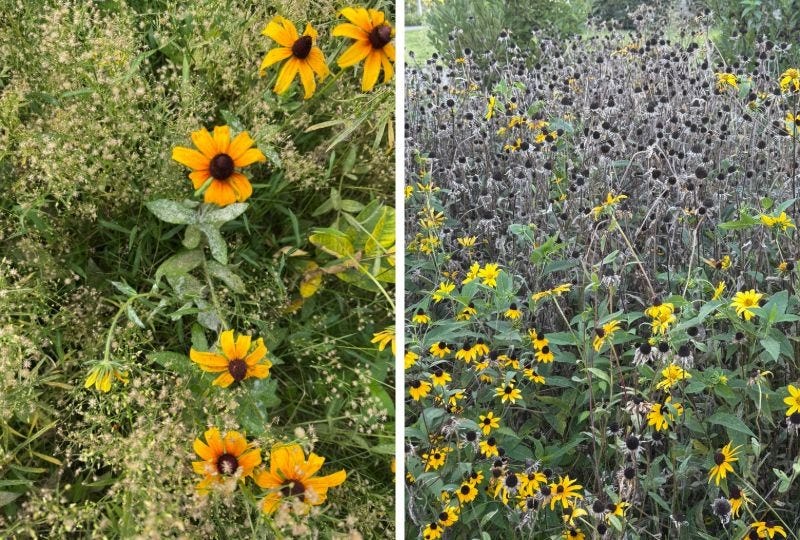
Dear Design Your Wild, My black-eyed Susans have some sort of leaf spot where the leaves turn brown and wither away every year. My local master gardener gave me a general answer that I can leave it since it seems to be just a visual problem. Is it affecting the insects/birds or amount/duration of flowers?—Amanda
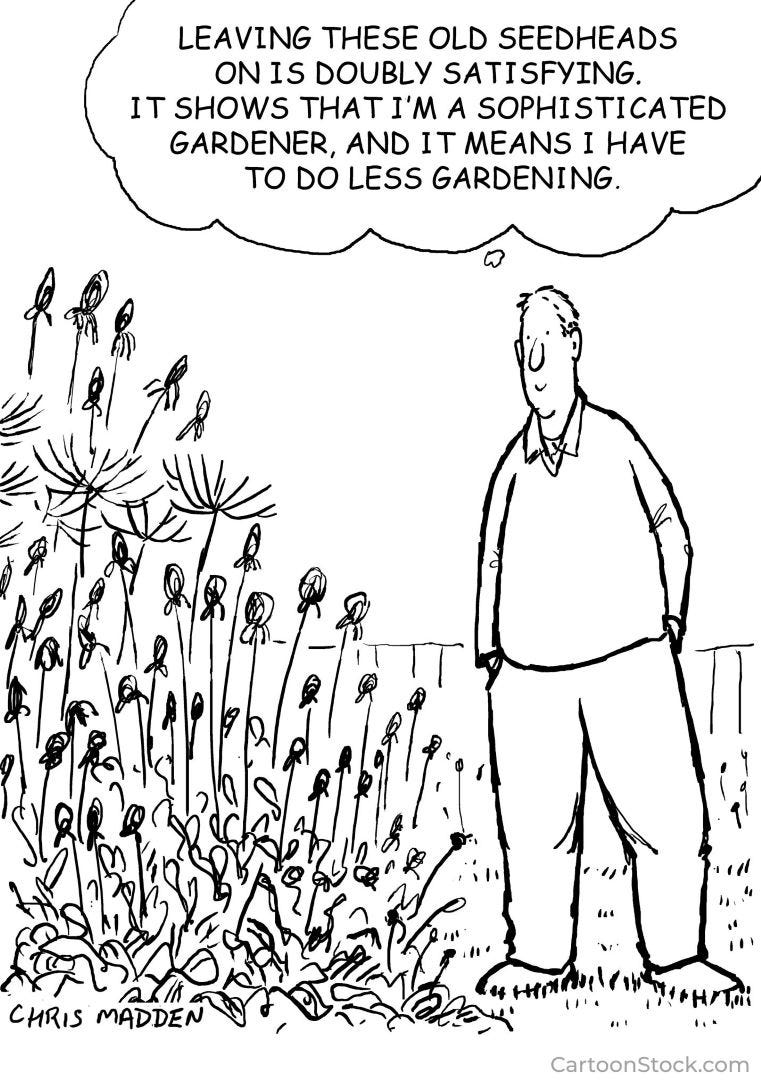
Hahahaha, large swaths of our new black-eyed Susans have done the same thing—and I didn’t even realize anything was wrong until I received your question! Since then, I’ve researched diseases, grilled both a landscape architect and a nursery owner as they toured my garden, and researched diseases via plant apps and online. And I’ve concluded, like your local master gardener, it doesn’t matter: The brown stalks and seedheads look attractive and the short-lived plants will soon be replaced by the other species thriving around them. (Black-eyed Susans are biennial; they grow roots and shoots the first year, then flower and die the second, spreading seed that restarts the cycle.)
You raise the all-important issue of feeding insects and birds. We have plenty of other options for them in our yard. And I recommend you make sure to plant more species, if you haven’t already, including among and around those rudbeckia. I’m not even going to mention what diseases your plants might have, because my hope for you is that you forget about plant diseases. It’s another agricultural relic encouraged by the yard care industry. And who knows what important ecological function a disease may play? Powdery mildew, for example, feeds fungus-eating thrips, mites, and ladybeetles. I’ll spare you the “more cowbells” image this time, but please adopt my mantra: The only prescription is more plants.
Dear Design Your Wild, I just moved to a brand new house and am struggling with rainwater running down the surrounding hills into a low spot too close to my new raised bed vegetable garden. Good thing I always wanted a rain garden! Brad Lancaster’s webinar was helpful, but I feel anxious about digging swales to help guide the rain water to the low spot and then to a wooded area for overflow! How will this look and will it work? Also I may need a bridge to get to my vegetable garden!?! I am trying to see this as an opportunity?!?—Lou, Hopkinton, Rhode Island
You’ve got this! You might be surprised to hear a rain garden is only four to eight inches deep. They typically cover around 100 to 300 square feet, roughly a quarter the size of the area that drains into them, larger for clay soils, smaller for sandy soils. A minimum of five feet in any direction is necessary to accommodate gradually sloping sides. Once the plants fill in, they look just like any other bed; you can barely see the depression, NOT like the many images online of rain gardens that hold water (a no-no) or have way too much mulch or stone. The real treat is that gorgeous plants that like a little extra water—perennials like blue flag iris and swamp rose mallow and shrubs like buttonbush and rose azalea—will thrive in the bottom of your rain garden.
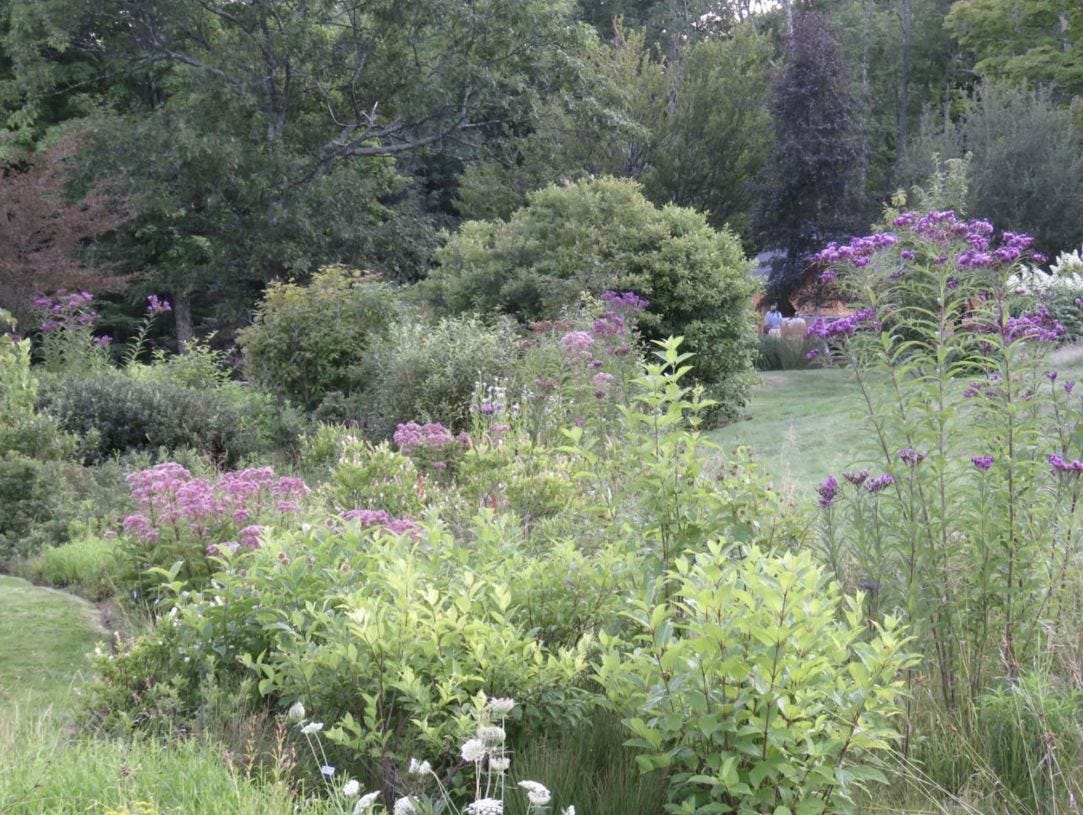
It’s important to remember that a rain garden does not stay wet. The goal is to capture stormwater and allow it to soak into the ground over the course of just one day. Rhode Island’s loam and sandy loam soils usually provide ideal drainage. Unfortunately, the developers of your “brand new” home may have removed the top soil, leaving a compacted base good for foundations but not for rain gardens. To test your drainage, do a percolation test by digging a hole about eight inches deep by eight inches in diameter and filling it with water. If the water takes more than 24 hours to drain (or one inch per hour), you’ll need to dig your rain garden down an extra foot or so and add back a mix of sand (50%), topsoil (25%), and compost (25%)—adding substantially to the cost.
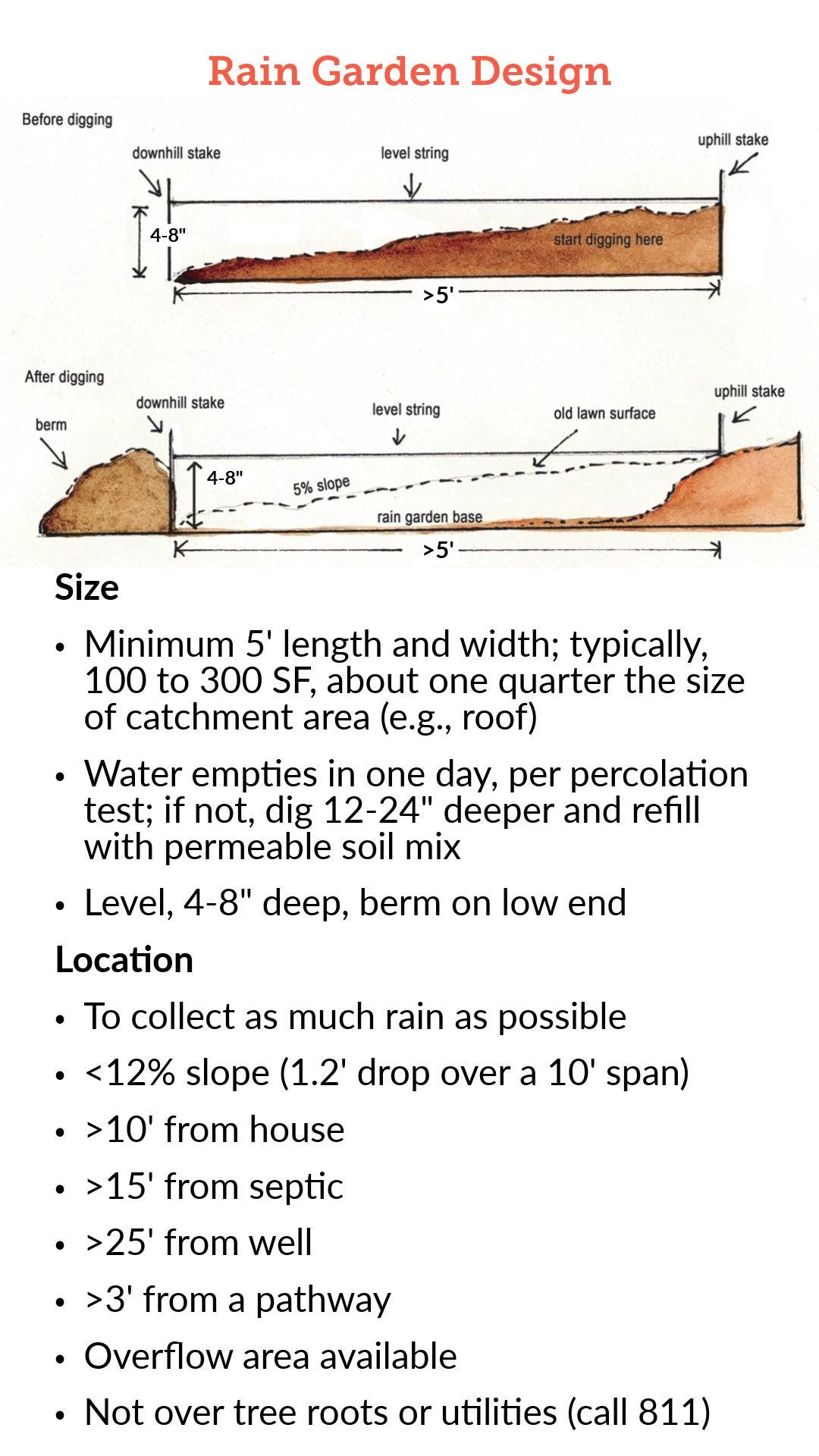
Whether you need narrow swales into or out of the rain garden will depend on where you locate it. If rainwater flows down a wide area, you might just want to make a long rain garden—a swale itself, after all—rather than redirect it. A simple opening may be sufficient to direct overflow to a safe area like your woodland. If it’s not possible to site your rain garden where the stormwater flows naturally, you can build a narrow swale to channel it. Cover any narrow swales with rocks or gravel if rushing water will wash away plantings.
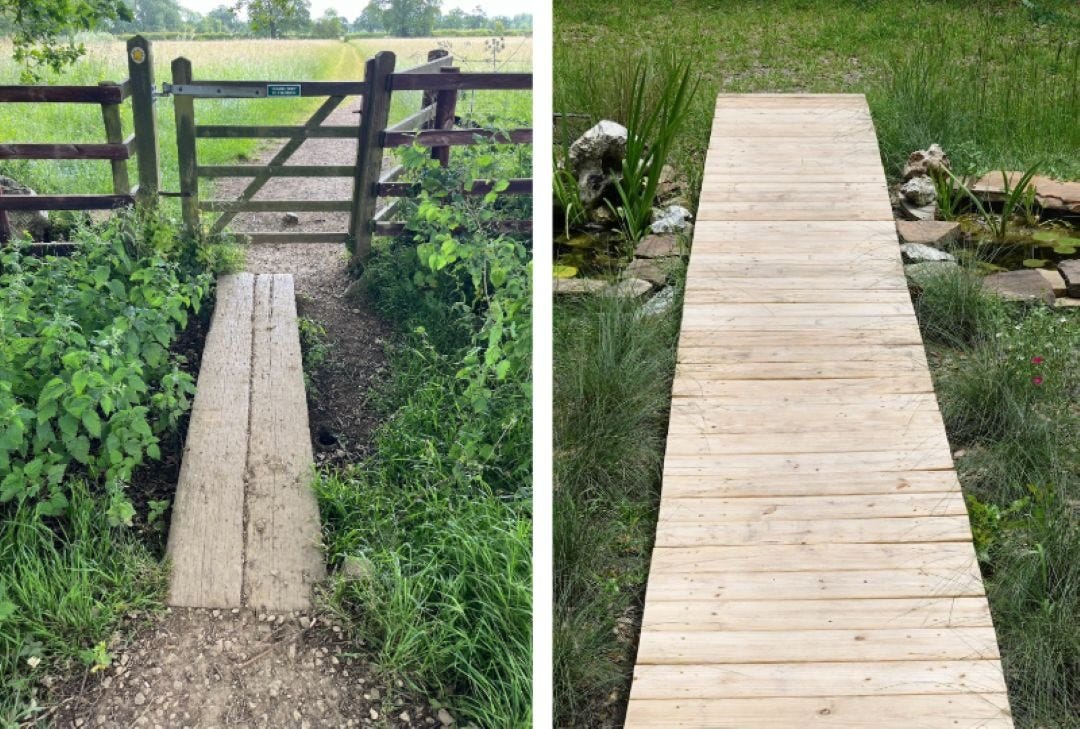
Immediately after digging (and amending if necessary), plant densely into the bare soil to keep invasives out: either seed several times the recommended amount of a native rain garden mix in late fall or install one plug or plant per square foot and cover the surrounding soil with an inch or two of leaf mulch or wood chips. Or—and this may be controversial—seed the entire area with a fast-germinating, low-growing fescue mix and plant native shrubs and perennials into it later as you have time and funds. (See the Mountain Top Arboretum rain garden brochure for plant ideas.) A small wood bridge leading over the rain garden to your raised beds will be charming.
Digging Deeper
Haven’t created a layout of paths and destinations for your outdoor home? Set aside 90 minutes, grab a lot map and some highlighters, and join Zoe and my recorded workshop, Design a Yard You Love: Quick & Easy Layouts. And voila!
Want to make an Adirondack chair? Pete just built ours using Norm Abram’s plans; here’s Norm’s video.
I love this quote from Bette Midler, who just launched a clothing collab with Flora Animalia, made in Los Angeles and supporting Midler’s New York Restoration Project, which has been improves green spaces in the city like the community garden on our block where Zoe and her sisters played as children.
Gardening is life-affirming. It recharges your batteries. You know what it does? It focuses your mind on something bigger and more important than you. It’s extraordinary, is what it is. Everywhere you look, there’s something to delight you, something to terrify you, something to pique your curiosity. It’s gigantic, and it’s endless. … It’s just endlessly enchanting. If you open your eyes to it.—Bette Midler in Vogue
Hesitating to plant a tree? Read What If It’s Too Tall? and then go for it!
Gravel gardening is a hot topic. To learn more, read Dwell’s interview with author Jeff Epping.
For peak leaf peeping near you, check out the fall foliage map.