

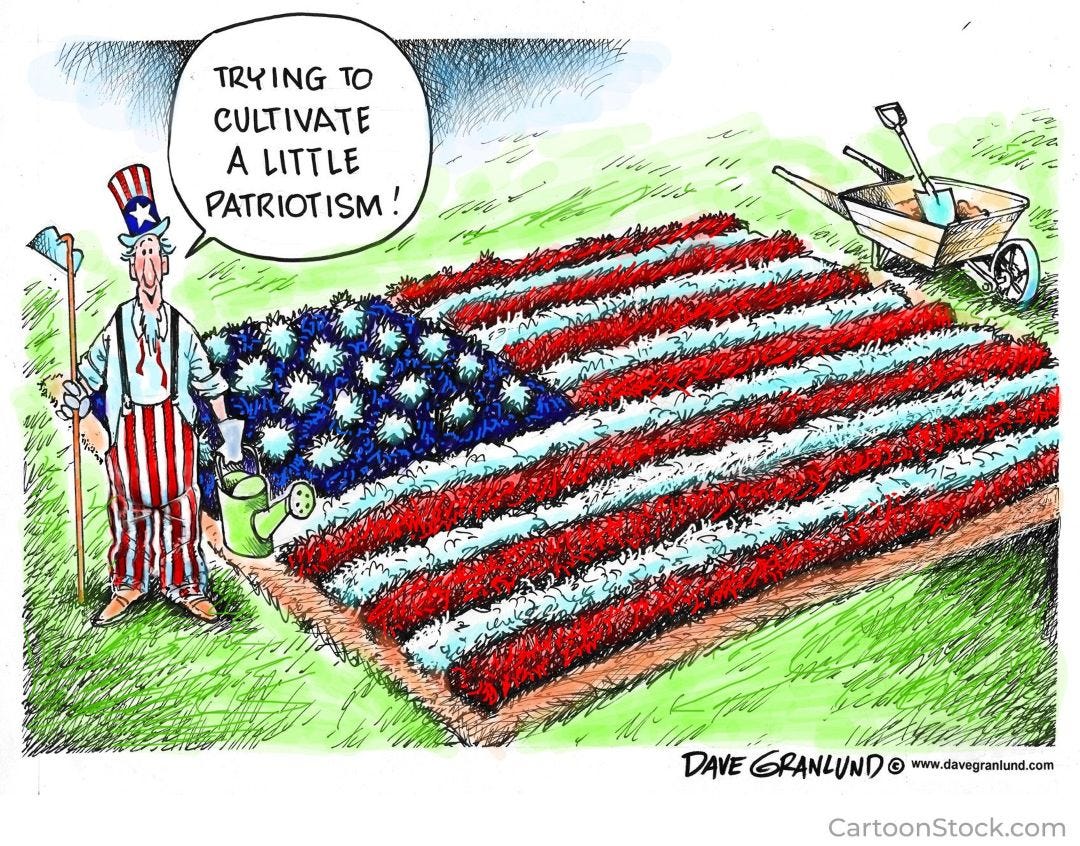
Happy Independence Day!
And please join me, Robin Wall Kimmerer and her Plant Baby Plant nonprofit, and my daughter Zoe and the Wildr Places team in celebrating interdependence by sharing what it means to you at interdependence.everyday. For me, interdependence includes the web of life that Pete and I are nurturing—and are part of—in our yards. It also includes Zoe and my writing and teaching partnership to help others create similarly joyful communities of flora and fauna.
Meanwhile, I’ve been noodling about why Americans have not asserted our independence from an onerous British garden culture. There’s a vibrant gardening culture in the United Kingdom today that we’re largely missing out on because we’re still applying British plants and horticultural traditions in a hostile climate. You, dear readers, are the exceptions, leaders in the revolution, like the original patriots.
Lawn as civic duty
A familiar explanation for why we have lawn-dominated home landscapes starts with George Washington and other members of the early American elite trying to prove they weren’t complete rubes by maintaining vast, costly lawns similar to those they saw at aristocratic residences in France and England. A hundred years later, designer of the first planned community Frederick Law Olmsted and artist and popular author Frank J. Scott democratized lawns and imbued them with a uniquely American moral significance:
With our open-front lawns we declare our like-mindedness to our neighbors, and our distance from the English, who surround their hards with inhospitable brick wall.—Frank J. Scott in “The Art of Beautifying Suburban Home Grounds” (via National Wildlife Federation)
After World War II, this symbol of the suburban lifestyle became accessible to millions more, thanks to the G.I. Bill and the 40-hour workweek.
In this era, the lawn expanded beyond its role as a personal pleasure or status symbol; it became a measure of civic responsibility. The perfect, uninterrupted green of suburban landscapes came to represent the ideal community—one where each homeowner contributed to the collective aesthetic and well-being of the neighborhood. This uniformity, while visually pleasing, also exerted a subtle pressure on individuals to conform to certain standards of lawn care, lest they disrupt the visual harmony of their community.—National Wildlife Federation
More work for worse results
Peer pressure is certainly potent, but I don’t think lawn culture explains why Americans have so few flowers, shrubs, and trees in our yards. That origin story also starts with Brits. They are responsible for the exotic plants and ornamental horticulture traditions that make gardening in North American more toxic and difficult than in the U.K.
The United Kingdom has a mild, damp, and maritime climate with consistent but moderate rainfall, warm winters, and cool summers. This perfect weather encouraged a passion for gardening that, combined with a lack of native species and a mania for exploration, led Brits to scour the world for promising plants and to breed them for beauty and long-lasting blossoms, starting in the 17th century. Gardening became a national pastime in the Victorian era and remains immensely popular today.
Early Americans with means adopted British ornamental plants and practices, motivated by nostalgia for Old England and a desire to differentiate their yards from their neighbors’ and the wilderness around them. And when American native flowers cropped up in their gardens, they dubbed them “weeds.” As a result, beautiful and ecologically valuable plants are called milkweed, ironweed, sneezeweed, butterfly weed, and Joe Pye weed. The penchant for foreign plants and disdain for local ones became so entrenched that American plants are now rare in American garden centers. Ironically, U.K. nurseries sell hundreds of cultivars of American natives unavailable here.
Gardening exotic plants in North America requires much more labor, knowledge, and inputs—amendments, fertilizer, irrigation, pesticides, etc.—for less satisfying results compared to in the U.K. The only city here with a climate like London’s is Seattle. The rest of our continent experiences differing combinations of extreme heat, freezing winters, hyper-humidity, and/or prolonged dry periods. Also, our soil tends to be either more acidic (in the East) or more alkaline (in the West). So, beloved English garden plants like delphiniums, bearded irises, and hybrid tea roses often succumb to heat stress, root rot, and mildew. Others like periwinkle and English ivy love some of our weather so much they take over, spreading into wild areas and displacing native vegetation and the fauna that depend on them. And some, like foxgloves, do both: they rot in the East and go wild in the West.
To make matters worse, our lots are much bigger than U.K. plots—about five times as big, on average—so it’s that much harder to create and maintain dense plantings. With smaller lots and an ideal climate, an individual or couple in the U.K. can create and maintain a beautiful ornamental garden on an average-sized lot just by puttering around on weekends. That’s not possible in the U.S. using exotic plants and traditional horticulture. It’s no wonder most Americans gave up on gardening and adopted a simple landscaping formula that’s easy to outsource: mostly mown lawn with a few tried-and-true foundation shrubs and specimen trees—many so easy to grow they’re often invasive (e.g., barberry, crape myrtle, golden rain tree, rose of Sharon, etc.). And those deep beds of mulch? A shortcut to achieve a neat look quickly with unskilled labor, nothing like the joyful explosion of dense planting that’s popular in England today.
The new beautiful—North American version
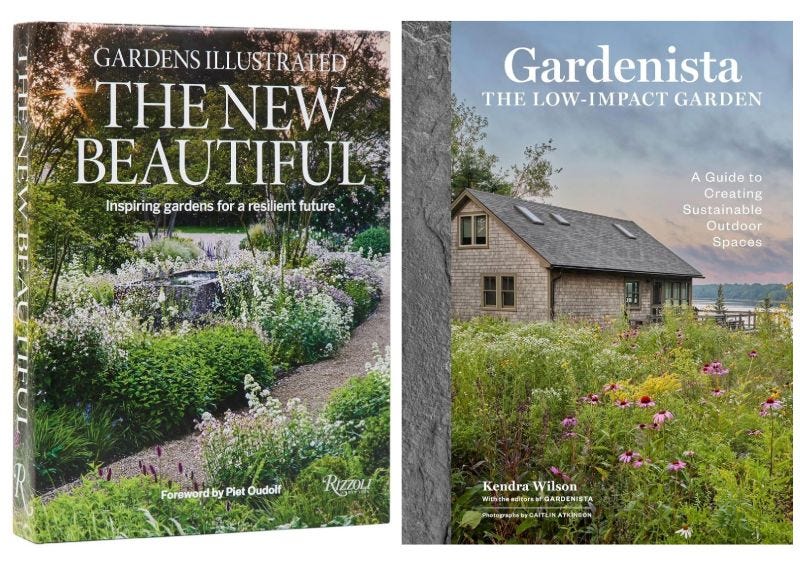
Ironically, I’ve learned a lot from contemporary Brits about how we can make our yards more joyful and biodiverse. I subscribe to dozens of their magazines, belong to their Garden Museum, travel to tour their gardens, etc. Sustainable gardening is already well entrenched there, promoted by the Royal Horticultural Society and required at its prestigious RHS Chelsea Flower Show. Densely planted ornamental gardens with little lawn and no visible mulch fill the pages of their premier magazine, Gardens Illustrated, and its gorgeous book “The New Beautiful.”
However, I ignore U.K. plant choices—unless they’re North American natives—as well as their seasonal advice. We need to adopt uniquely American methods for homeowners here to be able to create, maintain, and enjoy our much larger gardens in far less hospitable—and varied—climates. I feel proud to be one of the people who’s trying to figure this out—alongside Zoe and the Wildr Places team and hundreds of others. For certain, our native plants—adapted to specific climates, as well as supporting local insect populations—are central to the solution.
Fortunately, we can each declare independence from British gardening traditions—and interdependence with our local wildlife—in our own yards. You, dear readers, are reaping the rewards of having done so. I was so thrilled to see in our last poll that more than half of you average an hour or more a day in your yards. Bravo! (And thank so many of you for participating.) You are reaping the physical and mental health benefits—and pure joy—of American ecological landscaping with American plants.
—Heather
Why, How, Wow!
Why? Some of the dirty downside of lawns
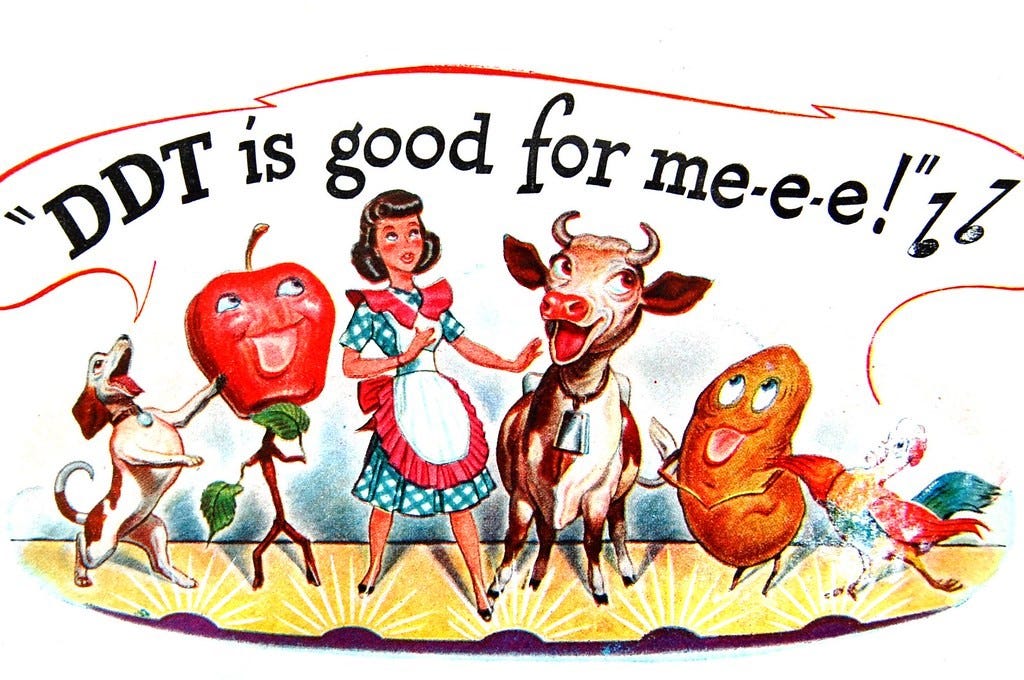
Did you know that finding and promoting domestic uses for war chemicals was government policy? DDT was developed during World War II to kill malaria and typhus-carrying insects threatening our soldiers. Afterward, the Chemical Corps championed its domestic uses, including for lawns and gardens. Americans widely applied DDT in their yards until it was banned in 1972 thanks in large part to Rachel Carson’s book “Silent Spring,” which linked DDT to declining bird populations (including near extinction of the bald eagle) and even cancer in humans. Today, Americans continue to apply vast quantities of toxic chemicals to maintain their yards, as summarized by my friends at Prickly Ed’s Native Plant Emporium:
Americans use ten times more pesticides on lawns than farmers use on crops according to the U.S. Fish and Wildlife Services. This amounts to 80 million pounds of pesticides spread across neighborhoods despite mounting research pointing to serious health concerns for both the humans and pets who spend time in those spaces.
Lawn chemicals also account for most documented wildlife poisonings each year. Birds are particularly vulnerable to this hazard since it is common for them to mistake pesticide granules for food. Indeed, an estimated seven million wild birds die each year due to the purely aesthetic use of common “Weed and Feed” step programs. These same products adversely impact essential pollinators like foraging native bees, kill countless beneficial insects, and are complicit in the stark decline of fireflies that once lit up night skies. Amphibians like … toads and spring peepers are also especially susceptible to harm from lawn care pesticides and fertilizers both through direct contact and run-off impacts.—pricklyeds.com
How: Prepping grass for planting (to be continued)
Dear Design Your Wild, How do you recommend prepping a grassy area to become a planting bed?—Jennifer Murphy
Great question! The answer depends on the size of the area, what you’re planning to plant (seed, plugs, or plants), the makeup of your grass (e.g., turf grass species, amount of invasives mixed in) and the thickness of its thatch, and your resources (time and money). I’m going to punt this week so I can create a framework. In the meantime, here’s what I’ve written about turf removal most recently.
Readers: Would you please help me by sharing in the comments your experiences preparing grassy areas for planting?
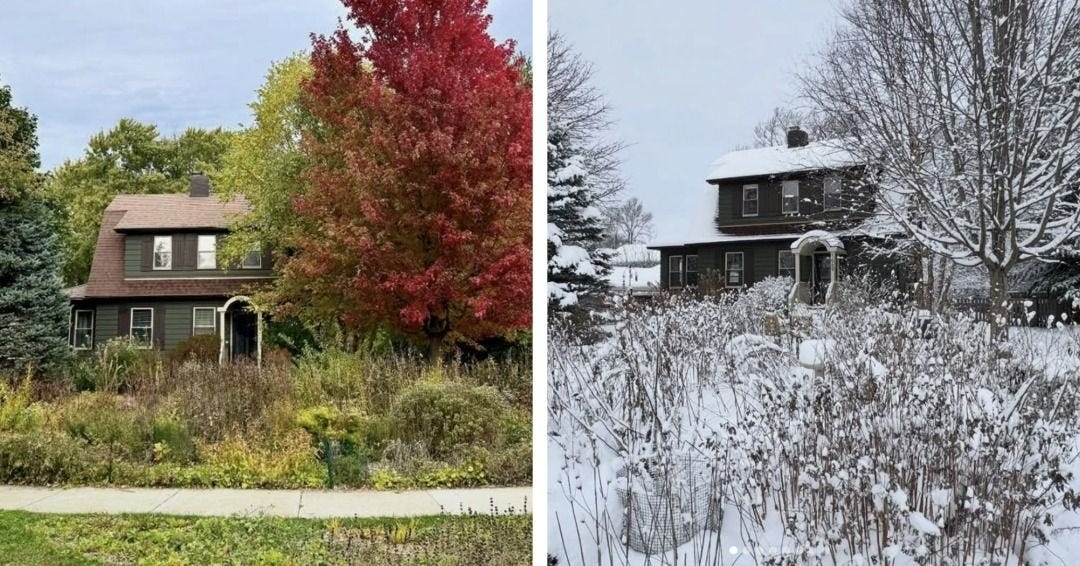
Wow! Before and after over the seasons
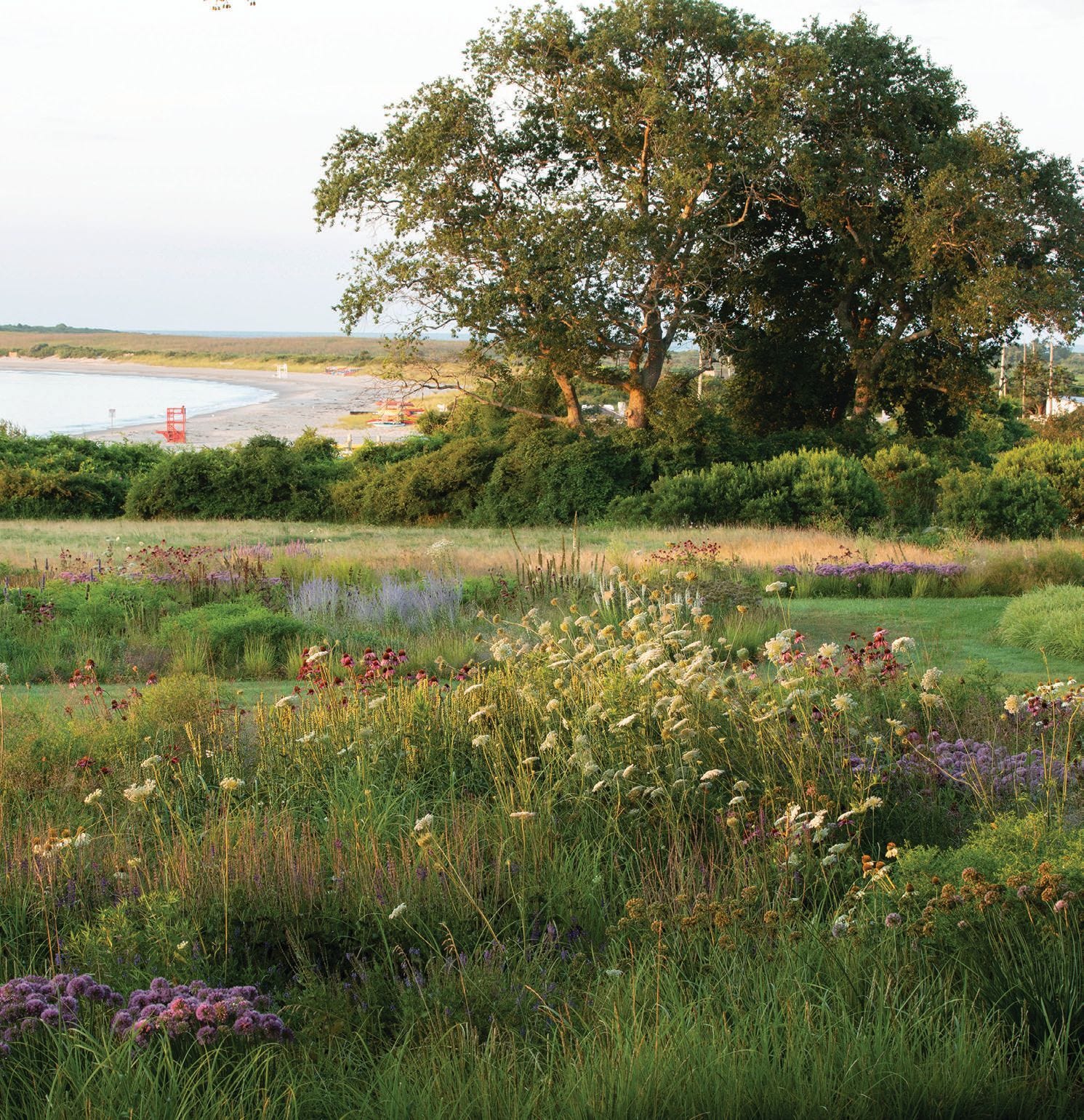
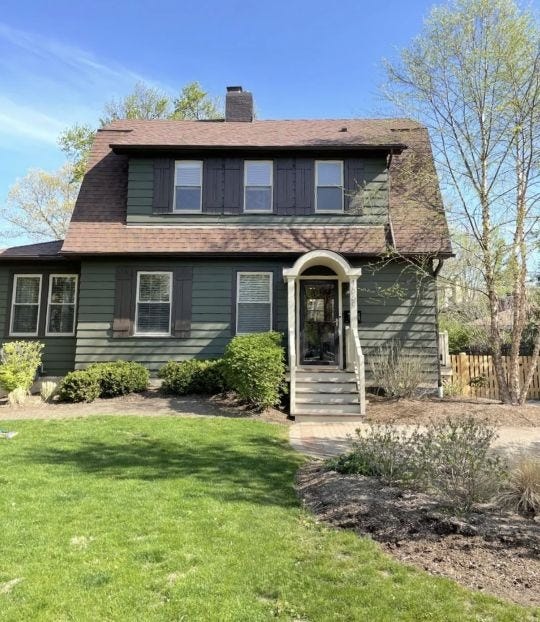
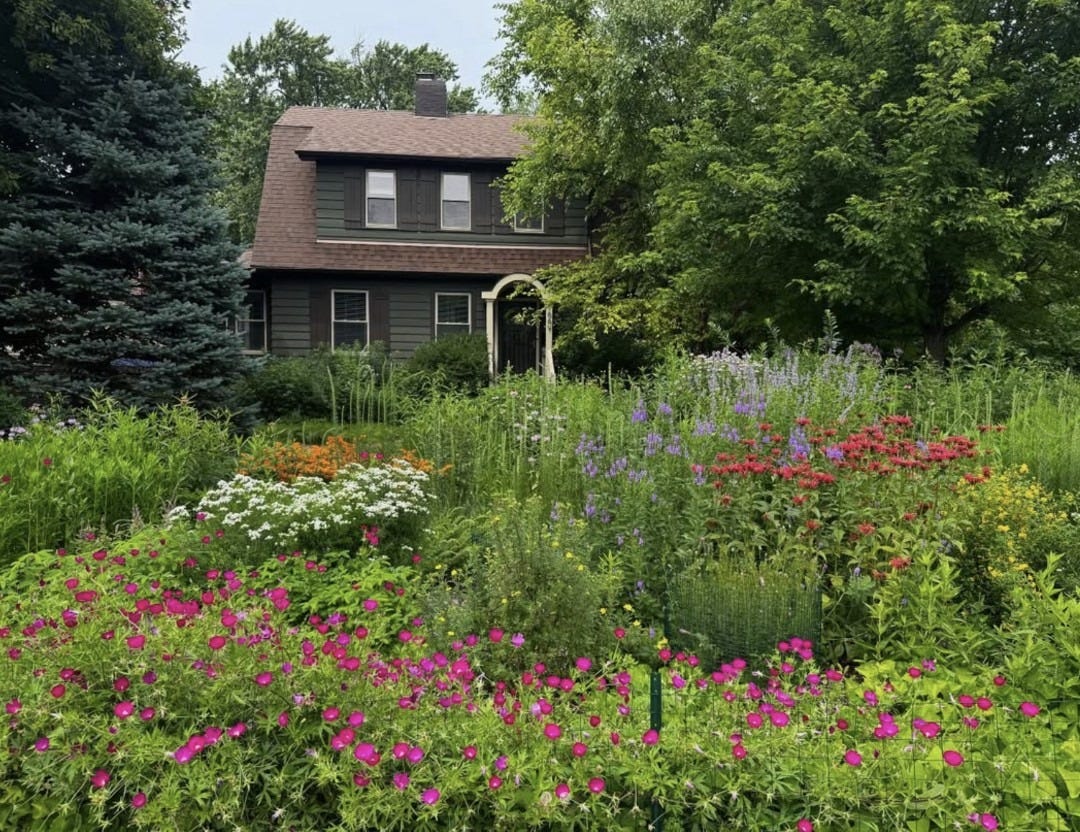
It’s garden tour season! Find a garden near you to tour through your local native plant groups or the Garden Conservancy Open Days. This gorgeous DIY lawn-to-natives transformation was on last year’s Native Plant Garden Tour of the Highland Park suburb of Chicago. (This year’s tour is July 11 and you can still register here.)
Here’s what owners Fritz and James say about their experience:
We moved to Highland Park in 2020 and knew from the start we wanted to be part of the growing movement to replace traditional lawns with landscapes that are more vibrant, diverse, and environmentally sustainable. As an avid birder since my college days, I saw our new parcel of green as a unique opportunity to create a native garden that would be as beautiful as it was beneficial—drawing in not only birds, but also a wide array of pollinators and other wildlife. …
One of the great joys of native gardening is that it’s an ongoing learning experience. Each year brings new insights—about which plants thrive in our specific conditions, which combinations create the most appealing look, and which species turn out to be more aggressive than expected. We’ve come to see our garden as a living laboratory, where we continually refine and adapt. That process of discovery makes the work deeply rewarding and keeps us engaged season after season.—Go Green HP
Digging Deeper
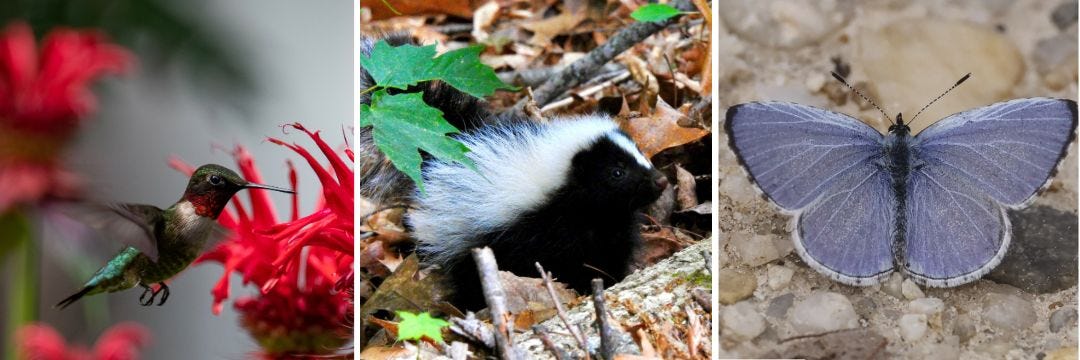
Wondering about how we handled the skunk in our yard? We didn’t. It left on its own after having babies under our shed. Whew! We were worried that our dog Sukey would get sprayed. Meantime, I read Humane Gardener Nancy Lawson’s Skunks Are Better Than Pesticides.
In case you missed it, here’s a gift link to the New York Times’s article, You Love Your Native Garden But Will Buyers Love It Too? Patios and seating are the landscaping upgrades that add the most home value, according to Real Simple. Personally, I don’t think you can ever have enough chairs—anywhere—but in the recent heat wave I’m most appreciative of our outdoor shower; here’s how to design one, per Martha Stewart.
Becoming an expert birder can reshape your brain and might protect it from aging, according to new research; learn more at Smithsonian.
Want to do a biodiversity audit? Here’s how from Perfect Earth Project.
Finally, what’s behind this week’s poll? I read Researchers Accidentally Discover That Humans Prefer to Turn Counterclockwise. But They Still Have No Idea Why and wonder whether I should advise readers to design their yard circuits with that in mind.
I love this blog so much!
In terms of removing turf, my advice (based on what I've learned from other people I consider to be local experts, followed by my own experience) is as follows: 1) Mow your lawn down to the lowest possible setting. 2) Sign up for ChipDrop at https://getchipdrop.com/. This free service connects landscapers who have tons (literally) of wood chips to get rid of with gardeners who want them. It works best if you have a driveway where they can dump a massive quantity of chips. The chips may arrive unexpectedly, so be on the alert! 3) Spread the chips in a layer about 4-6 inches thick all over your mowed lawn. My understanding is that it is NOT necessary to spread cardboard or plastic or newspaper over the lawn before laying down the chips, and that in fact, it is better to just put the chips directly over the grass, because that allows air and water to percolate down into the soil. 4) Do nothing for a few months, while the grass decomposes and the chips slowly begin to decompose too. 5) Plant your native plugs directly into the chips, ideally in the fall -- as long as the bottoms of their roots are in the soil, they should be fine.
I did try the method of digging up turf grass, but it is so labor-intensive compared to this extremely easy (and free) method, that I would never dig up grass again (esp since digging up the grass then also releases all the weed seeds stored in the soil, making your gardening that much more difficult the next year). The woodchip method just takes time. It's worked really well for me. It's been about 4 years since I did this, and now my front yard is lush with native plants and has practically no grass or weeds.
Another terrific blog! Thanks Heather!