

Hello, Superb Subscriber!
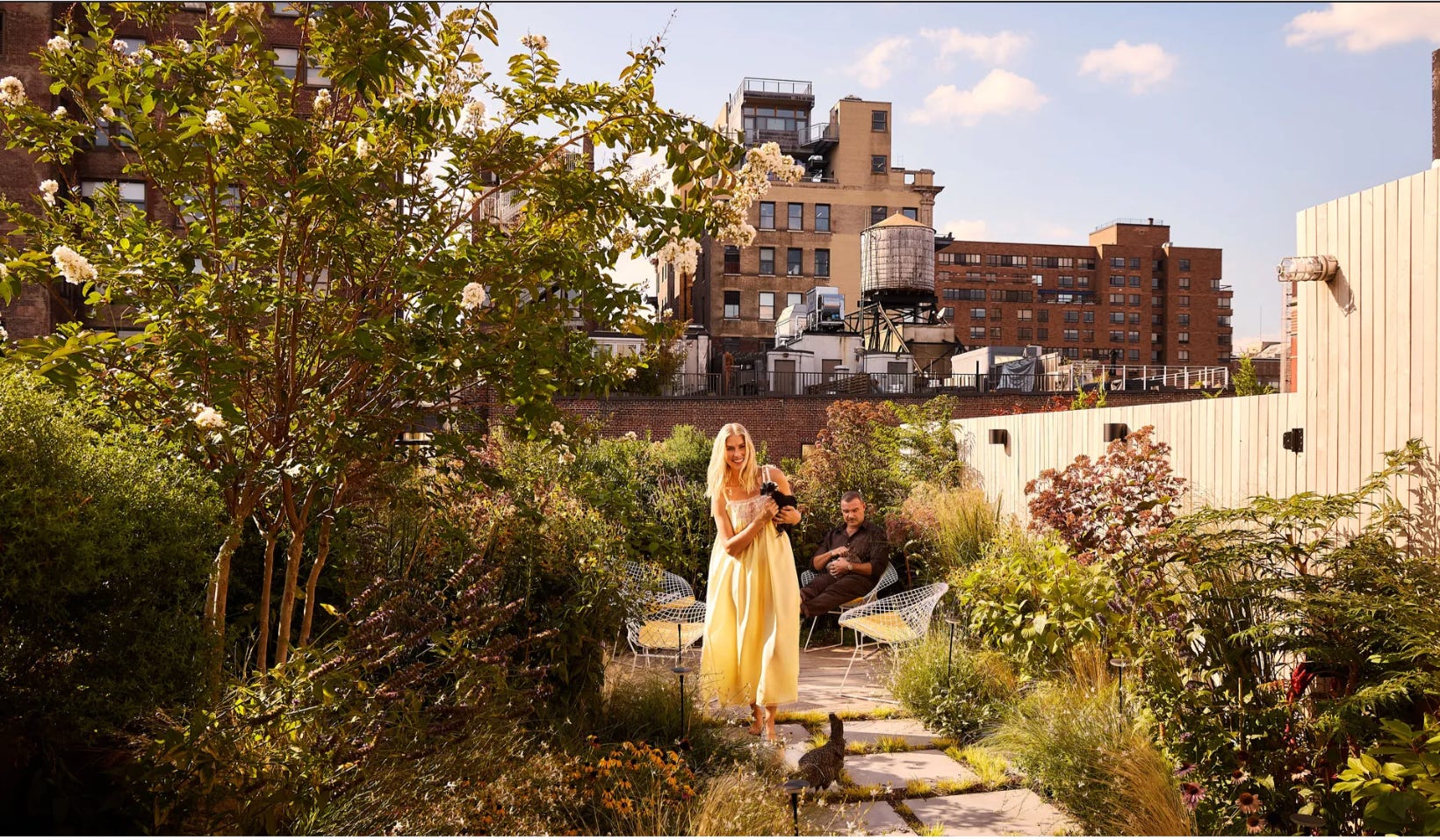
What’s your fall planting plan? Pete and I have already planted several shrubs and mature perennials and, among our native perennials, 75 exotic allium and tulip bulbs. Next week, Pete will protect our young trees and shrubs with six-foot T-posts and heavy duty fencing from DeerBuster.com, as he does each fall. I’ll plant a flat of golden groundsel plugs and winter sow perennial seeds (see “How” below)—a little early, because we’re heading to Florida soon. And that’s what I’m really excited about: We intend to plant shrub and tree saplings around the perimeter of the backyard, entirely screening the fence. In a few years, we’ll be cosseted in soft greenery, as if our house sits in a forest, rather than an urban lot.
What makes it possible for us to install so many shrubs and trees—I’m guessing about 150—is buying bareroot whips. They come in bundles of 10 to 50 from states, conservation districts, and private restoration nurseries. In addition to being a deal (as little as a dollar a piece) whips are easy to install, don’t suffer transplant shock, and grow exceptionally quickly when planted closely together, like a microforest.
The time to plan bare root whips is when they are dormant, usually in winter, but they often sell out early. So if your yard layout calls for a long shrub screen or microforest, I recommend you watch Zoe’s webinar with arborist Basil Camu and order your whips soon. (Don’t have a yard plan? Watch Zoe and my free quick and easy layout workshop, lot map and highlighter in hand.)
—Heather
P.S. If you can’t find them locally, you can order bare root saplings through the Arbor Day Foundation, which starts shipping in late November. You can use Wildr Places, online or the app, to determine whether a species is native to you; unfortunately, the Arbor Day Foundation sells invasives like crape myrtle, as well as natives.
P.P.S. Subscribers LP and Sharon asked about how to control lesser celandine and Himalayan blackberry, pernicious invasives in the Pacific Northwest (PNW). As I wrote recently, we only have a handful of nonchemical techniques to control invasives; the most effective in each situation depends on how the target species reproduces. The best defense is “competitive exclusion,” i.e., planting rambunctious native spreaders with similar reproductive strategies. Lesser celandine spreads by root tubers and above-ground bulblets, so strays should be dug out completely and large areas smothered under cardboard and six inches of wood chips. Mowing is a no-no, because it spreads the bulblets. PNW natives to plant in its place include spring ephemerals like western spring beauty and pacific bleeding heart and matting groundcovers like wild ginger and piggyback plant. On the other hand, Himalayan blackberry reproduces by wildlife seed dispersal, tip-rooting when arching canes touch the ground, and aggressive underground root growth from rhizomes and its woody crown. It is best controlled by cutting to the ground—as often as six times a year. PNW natives with similar competitive strategies to plant in its place include red elderberry, salmonberry, Pacific ninebark, snowberry, and rosa nutkana.
Why, How, Wow!
Why?
For a yard you’ll love, Zoe and I recommend devoting half your outdoor space to paths and garden rooms, with several seating areas if at all possible. Then plant the rest with native plants—shrubs for screening and green enclosure, small trees as focal points, medium-sized and tall trees for shade, and perennial wildflowers and grasses for color, scent, texture, and sound (from the insects they attract). For a quarter acre average-sized yard, this means you’ll need thousands of plants. Whips, winter sowing, hardwood cuttings, and direct seeding meadows can make them more affordable.
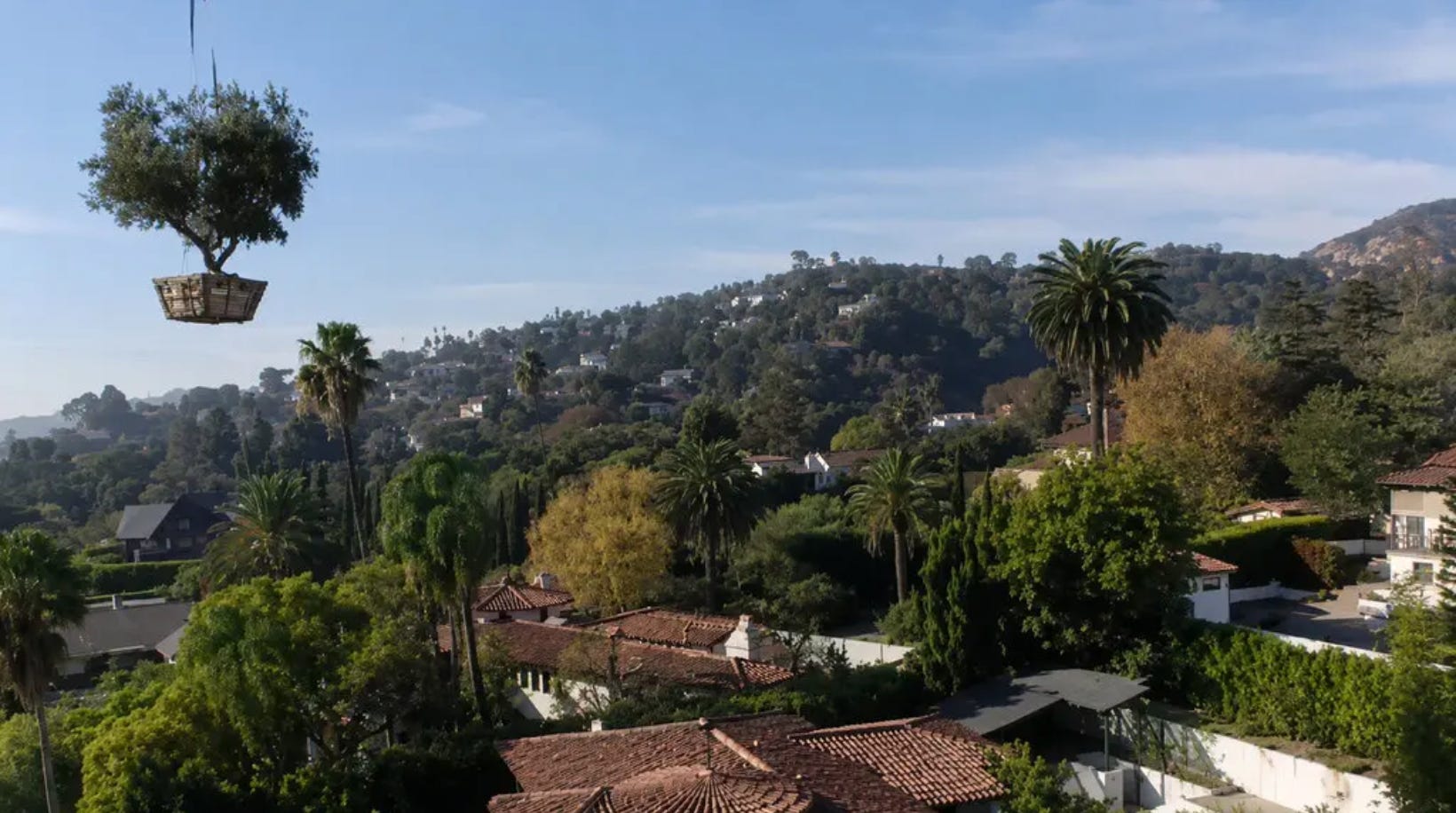
Of course, if money is no object, you can spend tens of thousands of dollars to install a single full-sized tree, like this one from an article about this latest wealth flex in The New York Times [gift link]
How
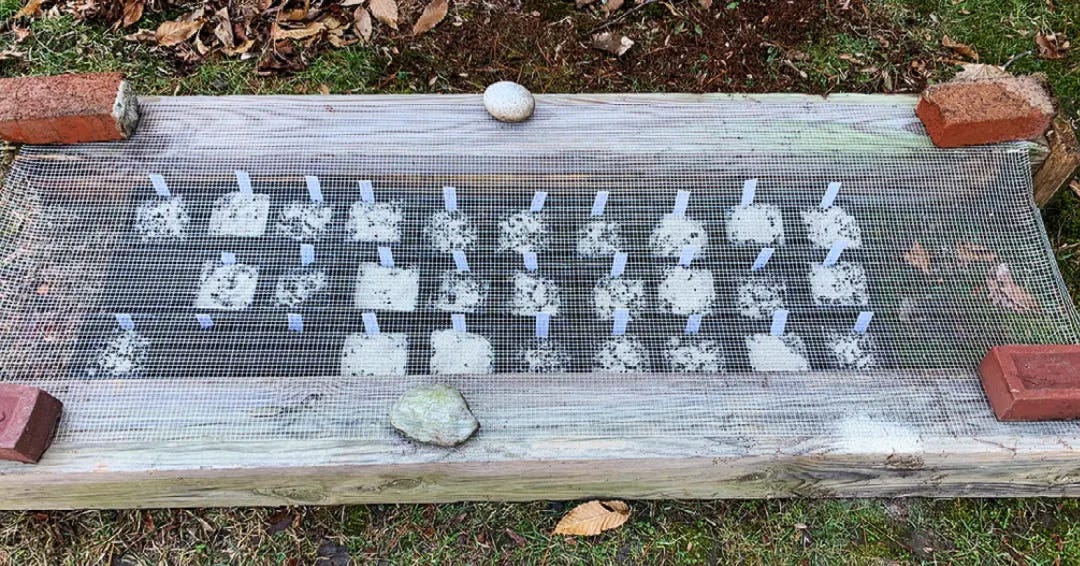
Many native plants produce seed in summer or fall and sprout in spring. Their seeds evolved to undergo a cold, wet period in between, called cold stratification; many seed companies use the germination code C to indicate such seeds. You can mimic the natural stratification process by seeding in small pots in late fall or early winter—check the best time for your area—and leaving them outside. You can winter sow woody plants, as well as herbaceous ones.
Location: Shady area to the east or north side of your house, close enough so you pass often during hot weather and within reach of a hose.
Materials: 50 or so seeds in packets or collected; four-inch pots or pint berry containers to start; potting soil; untreated sand (e.g., builder’s or sandbox); window screen or hardware cloth and two six by six lengths of lumber; later: gallon containers and a table or hardware cloth and t-posts
Germination nursery (late fall/early winter):
Put about three inches of soil in pots.
Spread seed from one packet evenly over each pot, pat lightly, and label with species and date.
Cover with sand the depth of the seeds; for seeds that need sun to germinate, just a dusting to keep wind from blowing them away.
Cover pots with hardware cloth to protect from critters and prevent leaves from covering pots. Leave them exposed to the elements.
Seedling nursery (late winter/spring):
Preparation:
After the first true leaves appear (not just the temporary cotyledons), transplant one-inch square clumps of seedlings (like brownies!) into the middle of new pots (four-inch in humid regions; gallon in arid regions where small pots may dry out in a matter of hours). Germination rates may vary by months; be patient.
Move sun-lovers to part sun and keep shade species in shade. Protect containers by putting them on a table or making a mini-fence of hardware cloth and t-posts.
Maintenance:
Check the weight of your seedling pots daily and water thoroughly as soon as the pot dries out. Learn the feel of lifting a dry pot compared to a freshly watered one and judge this by weight.
When pots dry out within a day or roots appear through the holes in the bottom of the pot, transplant them into larger pots as individual plants, if they separate easily.
Plant nursery or transplanting (early/late fall):
When the seedlings are robust—like what you find at a nursery—transplant into the soil as you would a container plant.
Some seedlings will benefit from staying in gallon pots over winter.
Wow!
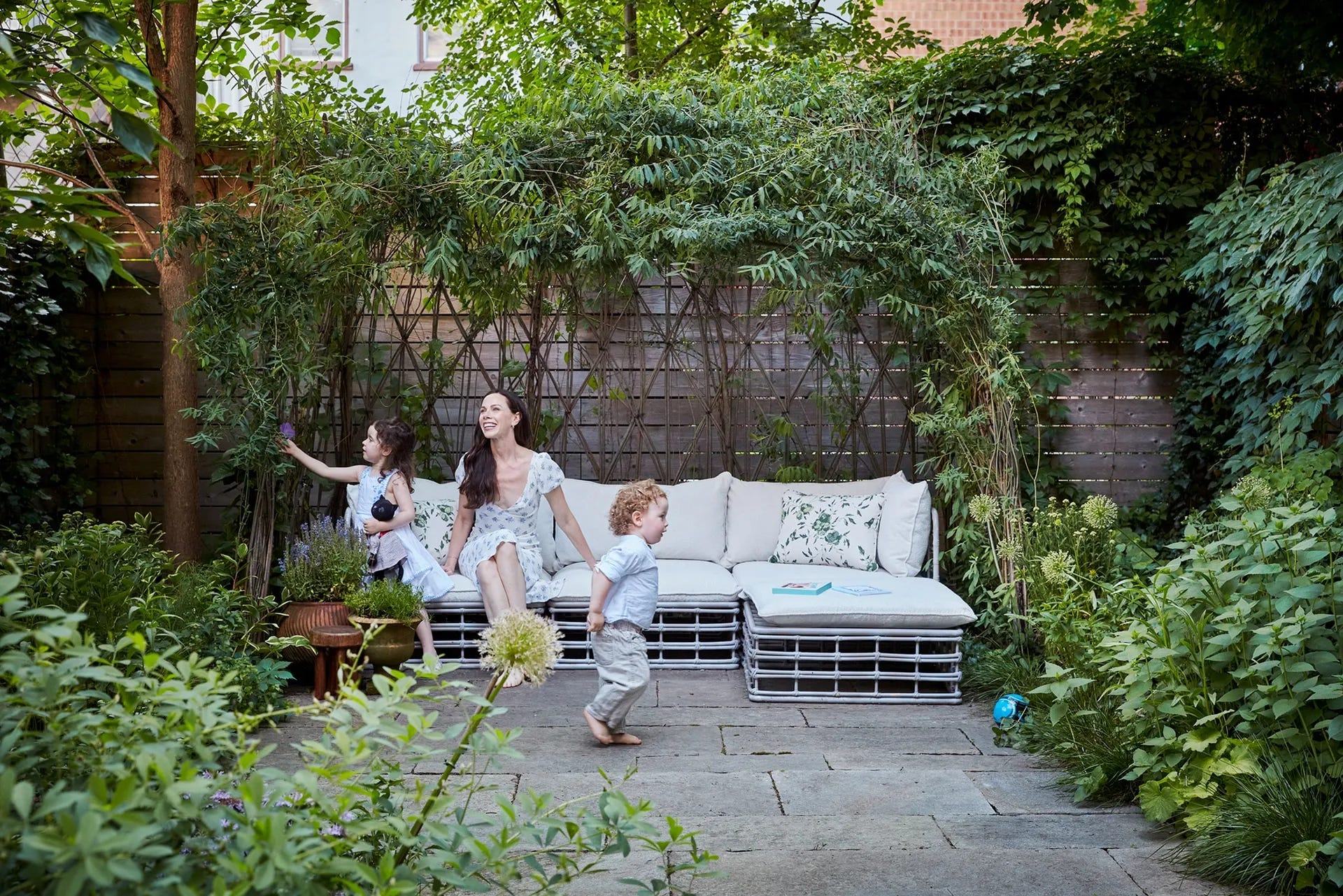
In activist Barbara Bush’s Brooklyn backyard, Nathalie Pierrepont Design hid the back fence and made a sun canopy with woven willow from Living Willow Farm. Bush was inspired to create a biodiverse yard by her mother, former First Lady and founder of Texan by Nature Laura Bush.
My mom is a naturalist. … She has a sign in her yard that says “Monarch Wrangler,” since Texas is in the pathway of the monarch butterfly migration. There was so much intentionality around what was in our yard.—Wallpaper
Designer Nathalie Danilovich says,
[Barbara Bush] wanted a wild, naturalistic garden—one that’s established, layered, romantic—we referenced, partly in jest, the beautiful overgrowth in Grey Gardens. … While we talked a lot about plant diversity and pollinators, it was important to keep the plant palette relatively tight for this size space.—Wallpaper
Plant species in the garden include tufted hair grass ‘Gold Dew,’ slender mountain mint, purple meadow rue, eastern bee balm, and rattlesnake master.
See more pictures of Bush’s garden in Wallpaper.
Great advice. Last year I started Pacific Northwest native seeds in milk jugs and left them outside all winter. The growth rate was excellent but removing the seeds from the milk jugs was difficult. I am going to try the method you have recommended It seems much easier.
Thanks,
Ruth