

Dear Design Your Wild, I am intrigued by the microforest idea. Can you tell us more? Also, how to improve existing woodlands?—Tracy
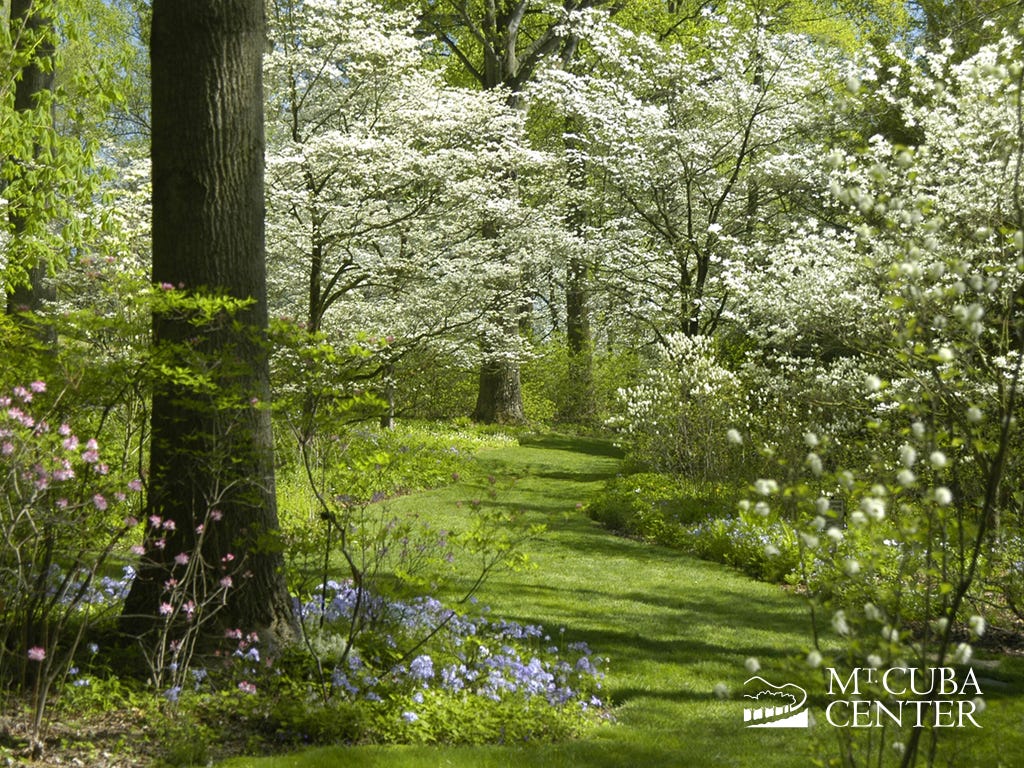
Anyone can create a microforest—or pocket forest—in as small as a 10-by-10-foot area. Based on the work of Japanese ecologist Akira Miyawaki in the 1970s, microforests are a way to rapidly reclaim industrial or urban land. Miyawaki’s method involves deep tilling, numerous prescribed amendments, and a wide variety of native shrubs and trees planted densely.
Bram Gunther, Wildr’s vice president of science and former head of forestry for the City of New York, told me the key to rapid growth is dense planting, not tilling or amendments. Whereas traditional forestry practices recommend 100 to 150 trees per acre, microforests are orders of magnitude denser: one woody plant for every two square feet—or up to 22,000 per acre.
Pocket forests: 10-by-10 building blocks
Gunther and Dave Baker, co-founder of Plan it Wild, a Westchester landscaping company, have experimented with till, no till, planting directly into sod, and various plant sizes under five gallons. “The trick is the shrub and groundcover layer,” says Baker. If it’s planted densely, “everything else falls in line. It’s also a natural deer deterrent, because deer tend not to be able to browse easily in such dense planting.” Until this layer establishes, they install temporary protective fencing.
Plan it Wild has installed microforests as small as 275 square feet, repeating 10-by-10-foot building blocks and always incorporating a path for exploration. Here’s a sample formula for a 10-by-10 area:
Two canopy trees (e.g., white oak, sugar maple, tulip poplar)
16 understory trees
32 shrubs
Groundcover forbs around the edge to keep out invasives
Improving existing woodlands
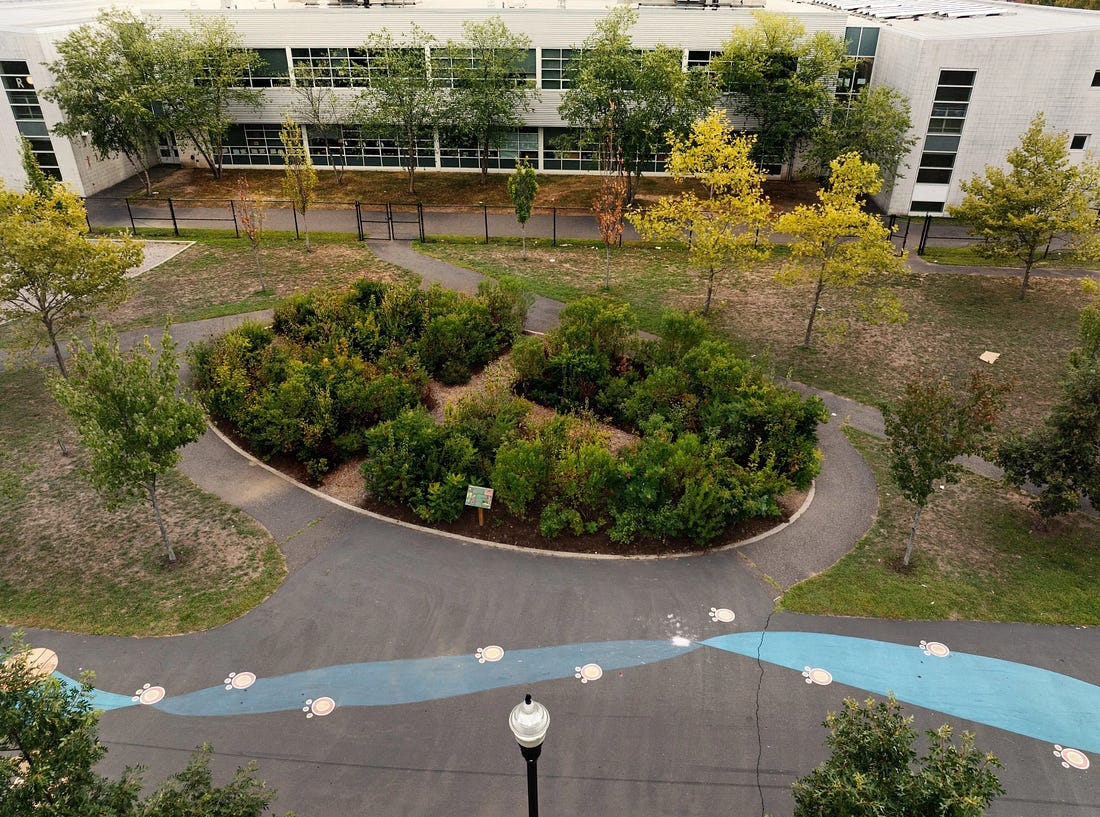
Creating a path is also a first step to improving an existing woodland—after you’ve improved any woodland edge visible from your existing paths and destinations. Then tackle the visible areas along the path one section at a time, removing invasives and encouraging or planting native perennials and shrubs. (For how to attack invasives, see The Latest on Weeds and, for large forested areas, Shade Solutions for Invasives.)
You can create a florific early spring wonderland with wildflower species that take advantage of sunshine before deciduous trees leaf out, as well as flowering understory trees and shrubs. Many woodland wildflowers are ephemerals that disappear in the heat of the summer, so plant green groundcovers with interesting leaves and woodland asters that grow slowly to bloom in fall. For ideas, see Vibrant Native Plants for Shade and, if you’re in the eastern half of the continent, Edge of the Woods Nursery’s article on ephemerals.
Whether you’re planting a new forest or into an existing one, plant just before your rainiest season (see weatherspark.com) and follow these watering guidelines.
Dear Design Your Wild, I’m 900 feet from Lake Erie (but up a 50-foot bluff). The deer don’t need me to have a pond, but how important is it for other wildlife? Or the pollinators I’m feeding with native plants?
The pollinators you’re currently feeding are already getting water somewhere. Native bees forage over a smaller distance than butterflies and non-native honeybees, but they still cover a few hundred yards. A pond will attract more of these bees and butterflies, because they’ll come to your yard for water, as well as food.
A pond will also attract numerous additional species that need water to reproduce—arthropods like dragonflies, damselflies, fishing spiders, caddisflies, water boatmen, backswimmers, whirligig beetles, and water striders, and potentially amphibians like frogs and toads. It will also provide habitat for myriad bacteria, fungi, algae, rotifers, and hydra that spend their entire lives in water. So, even with a Great Lake close by, adding a pond will make your yard more biodiverse.
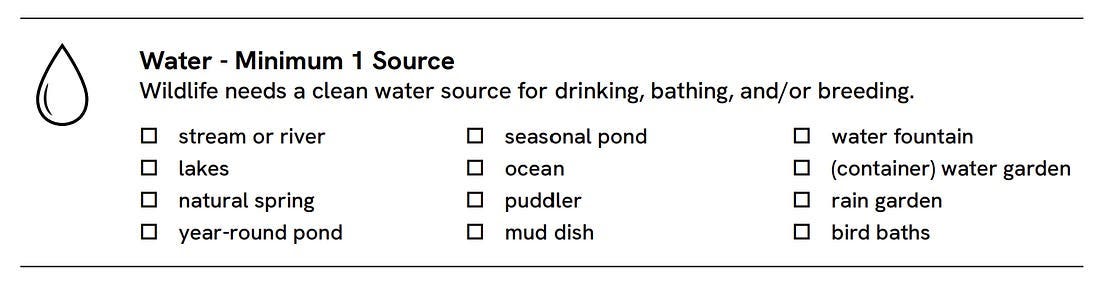
The National Wildlife Federation does not require you have a pond to become a Certified Wildlife Habitat, an achievable guideline for responsible land stewardship. They only require a source of fresh water, which can be as small as a dish of water. Only you know which option is best for you and your household. Whatever you choose, pat yourself on the back for creating wildlife habitat.
Dear Design Your Wild, I have a 20-by-12-foot native garden in front of my house and am considering adding a pond. However, my garden ends at the street, with a wooded area on the other side of the road. It’s not a super busy street, but... Is it irresponsible to create a “destination” water feature that could imperil the wildlife coming from the woods? The deer and foxes are pretty savvy, but I fear for things like frogs.—Kristen
An ecological trap? Like a bird feeder patrolled by an outdoor cat? Or milkweeds planted in the middle of a busy highway? Something to think about…
I applaud you for attending to amphibians! According to the International Union for Conservation of Nature (IUCN), two out of five amphibian species globally are threatened with extinction, making them the most threatened vertebrate group. And they often die crossing the road to find breeding pools after wintering among damp leaves and decaying wood in forests.
The timing means that many of these small critters migrate at exactly the same time. On the right damp April night, hundreds of thousands may be on the move. Unfortunately, migration usually means crossing roads, and each spring scores of amphibians are crushed by traffic as they laboriously make their way across. A smaller number are hit as the adults make their way back from the breeding pools, and when the young leave the pools on their way to adult habitats. In certain areas, road mortality can be incredibly high.—JStor Daily
There is insufficient research on frog dispersal and homing to know for sure, but if the amphibians in your area find your pond and breed in it, they probably need the additional breeding habitat. And you’ll be attracting and supporting a host of other small and microscopic organisms. So I say, go for it.
Good day, wild ladies :) I’m on a slight hill and my house looks down on my neighbor’s junk and deteriorating outbuildings. We’ve tried to chat about a clean up; he just doesn’t get it. I’d like to plant trees, but our properties are separated by septic beds. I’m even OK forfeiting some of my property to install something closer to my house. Suggestions?—Janice, Val-des-monts, Quebec
It’s true you should not plant shrubs or trees on the septic beds, but you can plant them nearby. The rule of thumb is to locate woody plants at least their mature height away from the edge of a septic field. And don’t plant species with deep, water-seeking roots like willows, ashes, beeches, birches, elms, maples, sweetgum, or tulip trees. Based on the sketch you sent, you can safely plant 10-foot shrubs along your lot line and 30-foot trees halfway between the two septic beds.
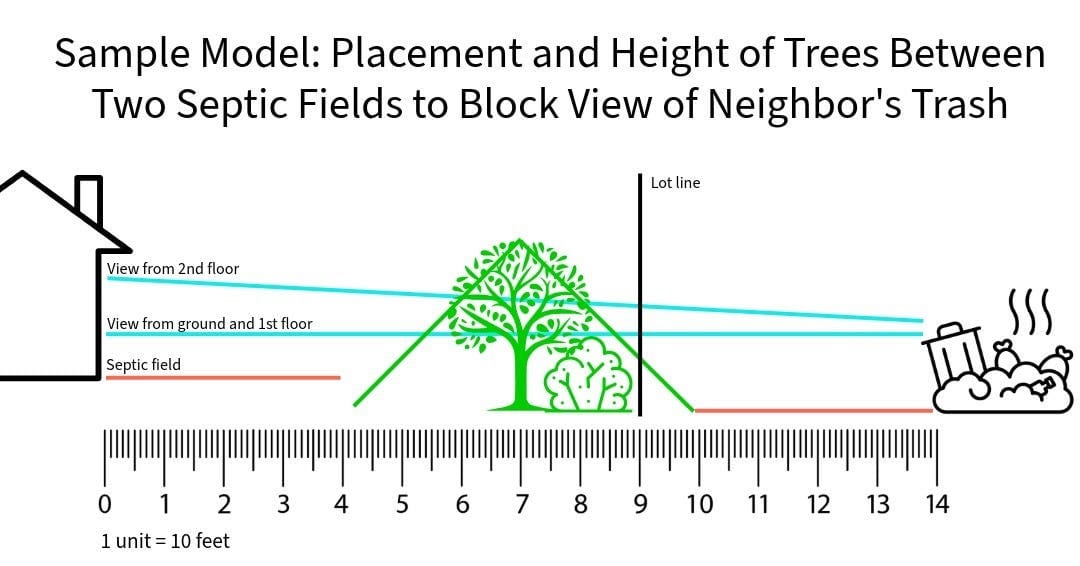
My suggestion is to create a microforest. You won’t be forfeiting your property, you’ll be gaining a gorgeous woodland. Your view will go from awful to alluring—in fact, you’ll probably want to create a path to stroll along it—while providing vital cover and food for birds. (See Here’s How to Welcome Baby Birds to Your Yard.)
Design a planting pattern using the above formula without the canopy trees, with shrubs toward your neighbor’s house and a mix of trees and shrubs toward yours. And buy as many plants as you can afford. When you pack them in, they compete for sunlight and grow faster.
Fortunately, there’s an online seller of native shrub and tree plugs for $7.25 to $9 each. (They will only ship within Ontario, so you’ll have to get help from a friend in nearby Ottawa. Ecosystems don’t honor political borders.) Species in septic-safe genera, with links to their website, include:
Serviceberry, 35’, but usually smaller (Amalanchier laevis)
Sweet crab apple, 30’ (Malus coronaria)
Redbud, 30’ (Cercis canadensis)
Wild plum, 25’ (Prunus americana)
Flowering dogwood, 20’(Cornus florida)
Dwarf chinkapin oak, 15’ (Quercus prinoides)
Winterberry holly, 10’ (Ilex verticillata)
Northern bayberry, 10’ (Morella pensylvanica)
Highbush blueberry, 8’ (Vaccinium corymbosum)
Worried your microforest will take too long to grow in? It should be impressive in three years. In the meantime, your temporary fencing will somewhat obscure your neighbor’s junk and create a distracting eyesore on your side of the lot line:)
—Heather
P.S. There’s still time to join Zoe’s Less Lawn More Life challenge, a series of 12-weekly emails on creating a healthier yard, starting with a test of your yard’s health, the Wildr Score.
Wow: Edgy Woodland in the City
Landscape designer Stefano Marinaz created this woodland garden with a container pond in his client’s 30 by 30-foot turf yard. Explains Marinaz,
“She wanted her daughters to enjoy the space, but during our conversation I was encouraged to hear that the garden itself could be the playground. If the garden is an exploratory space for kids to play in, they don’t necessarily need to have playground equipment.”—The English Garden (Spring 2026)
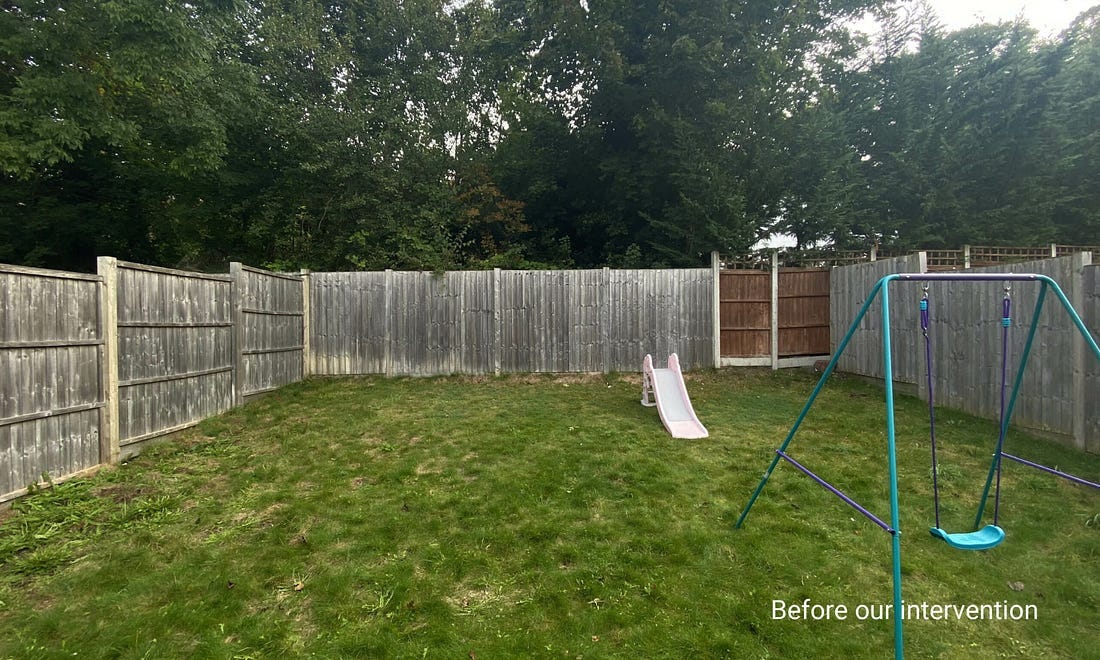
And so work began on a complete transformation, turning that square of plain grass into an atmospheric and richly planted space. An area for dining was a priority, but so too was creating a beautiful view the clients could enjoy from inside the house. “It’s cold and rainy for six months of the year in England, so you’re mostly going to see the garden from inside,” says Stefano, wryly. “That’s why the furniture is pushed to the furthest point of the garden, and it’s filtered by meandering paths that make the journey through the garden longer than a straight line from A to B. When you’re inside you can see the picture. You have planting beds that are right there as you open the door.”—The English Garden (Spring 2026)
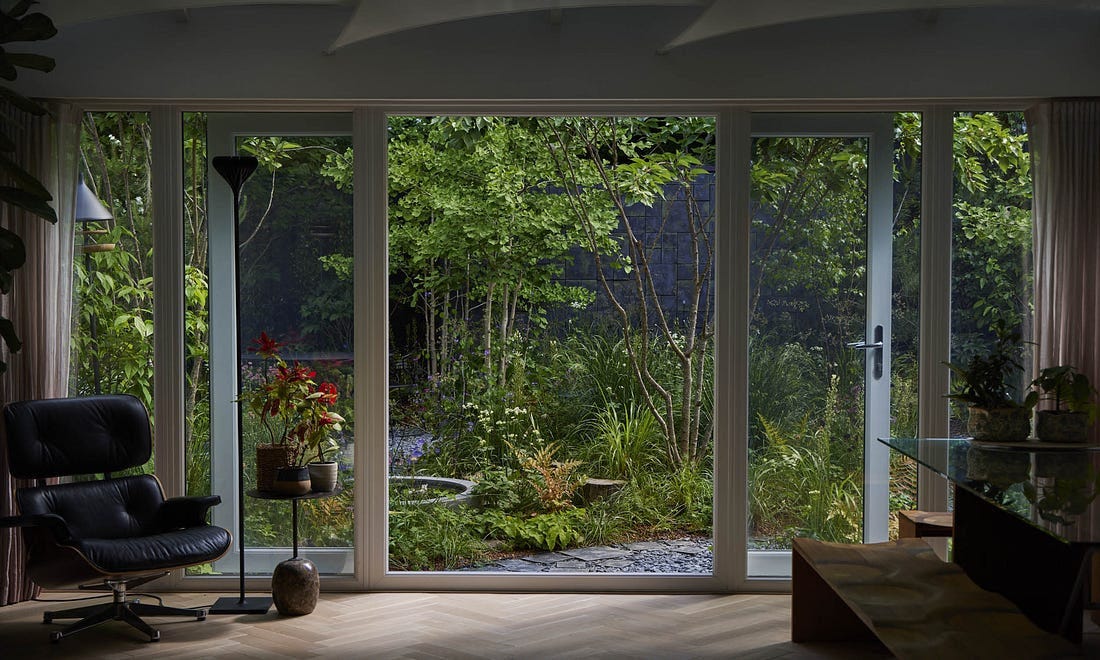
To ensure the view is predominantly green year-round, Marinaz included evergreen trees, shrubs and grasses. (You can search for evergreens native to your state using the combination search at wildflower.org/plants.)
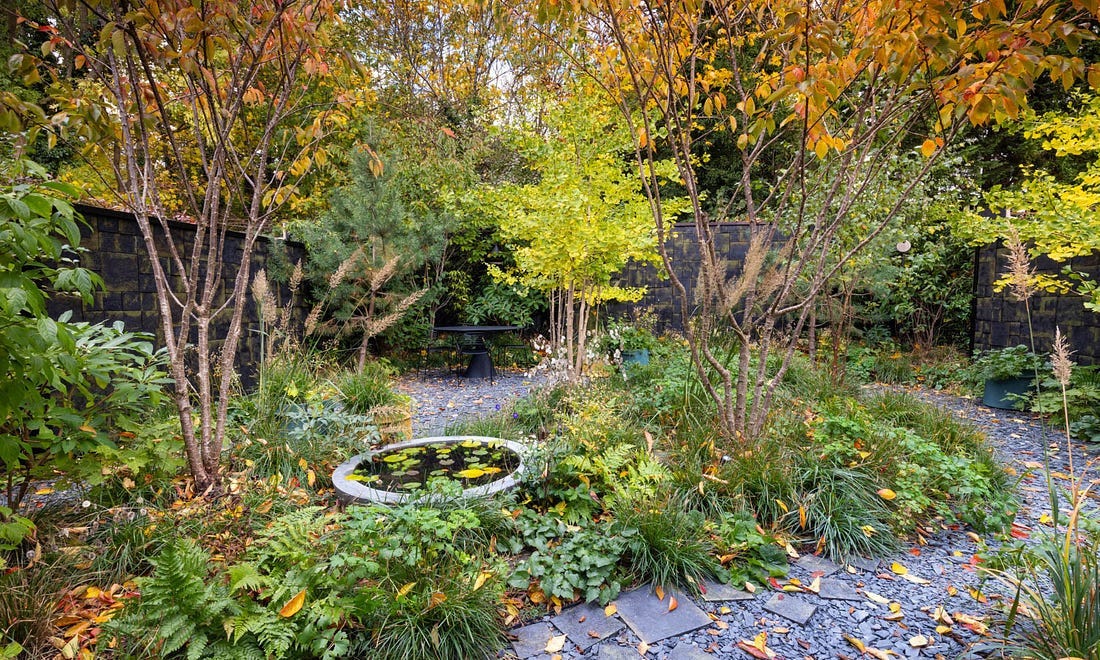
In this roughly 1,000 square foot space, Marinaz included nine trees—three each of three tree species—to provide year-round interest: pines for winter greenery, a Prunus for spring flowers, and a species with yellow leaves for fall. Small North American trees that turn yellow in fall include American witch hazel, eastern redbud, sassafras, and flowering dogwood.
“The garden is in full sun but young children need a bit of shade to be able to enjoy the garden, and rather than putting in the usual parasols and umbrellas, we used the power of nature instead. The canopy of the trees filters the light so the garden still has bright shade.”—The English Garden (Spring 2026)
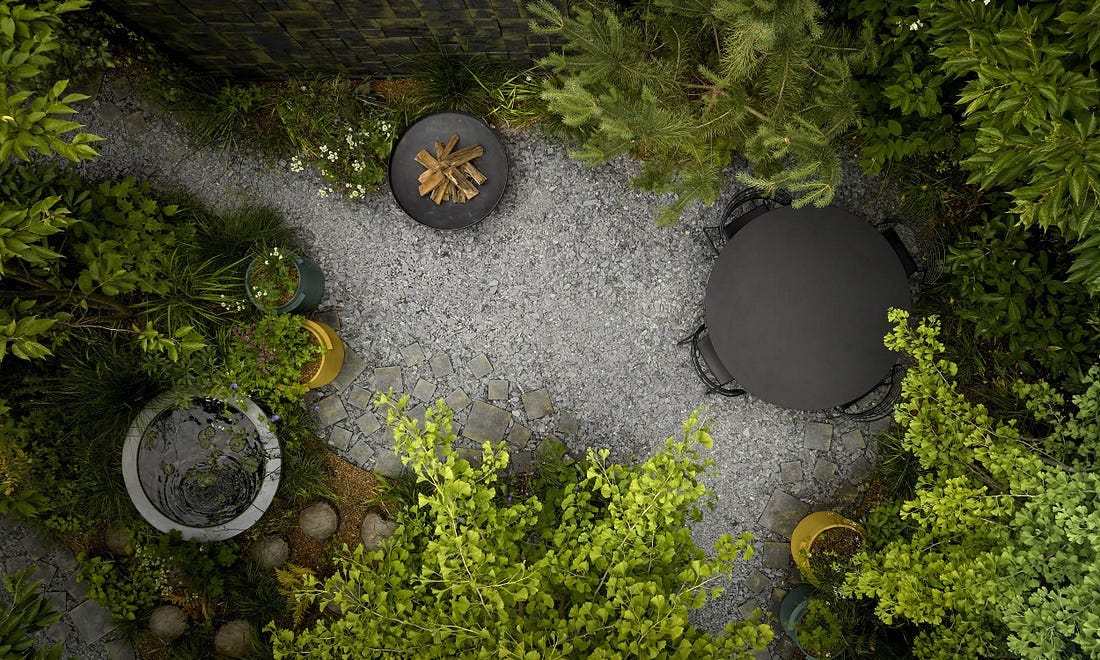
Some may balk at the idea of planting nine trees in a small garden like this, but Stefano has no regrets: “I always say we don’t have enough trees in our gardens. People always ask: ‘What if they grow too big?’ But first, you choose the right trees to put in and second, if they do grow too big, you can always cut them down. If a tree becomes an issue in 25 years’ time, you’ll have enjoyed benefits from it, nature will have benefited from it, then you cut it down and start again. Where is the issue? Don’t be afraid of trees!”—The English Garden (Spring 2026)
See more images at stefanomarinaz.com.
Digging Deeper
The Wildr Places app Zoe is helping to develop is now in beta. “Zoe’s Wonderland” and my “Rhody Retreat” are featured gardens and I’m having a blast acting as an expert tester. Download the app here or learn more about it in Margaret Roach’s Wildr: a new free app to guide us on our ecological journey.
Need new tools? My exact go-tos are a needle fruit pruner, a bypass pruner, and a Hori/soil knife, which I carry together in Joe Gardener’s Ultimate Gardening Sheath. The only shovel I manage to push through the soil is this Root Slayer.
I like these suggestions from Home & Gardens’ on How to Give Your New Backyard ‘Instant History.’
It’s garden tour time! Local botanic gardens, Garden Conservancy Open Days, and the New York Times’ recent article on nine unforgettable gardens [gift link] are great sources of inspiration. If you’re going to be in Dallas, don’t miss the garden at the George W. Bush Presidential Center (or gawk at it here).
Many years ago this site would have been a breathtaking Texas prairie. Today the park is planted once again with a native habitat for birds, butterflies and other wildlife. Visitors can experience this site’s beautiful natural environment in the center of Dallas.—Former First Lady Laura Bush

Here's the correct Root Slayer link, which was wrong in this morning's email: https://a.co/d/045HeI1A
Very interested in a microforest in my small yard and as a privacy screen for good, but looming neighbors. I'm encouraged by the "three-year" time frame to visual enjoyment -- at 79 years of age I don't invest in green bananas.