

Dear Design Your Wild, I am helping my niece with her 1990s first home and backyard planning—not a single tree, on a hill, corner lot, terrible soil, not even grass grows. I think the first year will focus mainly on soil building for future planting beds… A colleague at the extension office said many homes built in this time period had the top soil scraped off and the homeowner had the option to buy it; many didn’t.—Nancy, Burlington, WI
“Not even grass grows!” If I had a penny for every time I’ve heard that, I’d have… um,... at least a dollar. European cold season turf grasses—which make up lawns in northern states—are NOT the easiest plants in the world to grow. Sure, they germinate quickly. But if they were easy to maintain, we wouldn’t have a $12 billion per year lawn chemical industry.
My attitude toward soil is similar to the Scandinavian attitude toward weather and clothes: There’s no bad soil, only bad plants. The idea of “poor soil” comes from agriculture, the source of many incorrect notions about ornamental horticulture. By all means, one soil will grow bigger tomatoes than another. But nutrient-dense agricultural soil favors invasive plants and makes native perennials grow so fast and tall they flop over. As always, the north star is right plant, right place.
Yes, the developer of your niece’s lot probably scraped off and sold elsewhere the top soil that had developed there over hundreds of years. The inorganic subsoil that remained—a mixture of clay, sand, silt, and broken-down rock—compacted into a stable, solid base for the foundation, preventing settling over time. This subsoil lacks organic material, but there are plants that evolved to grow in similar conditions.
Whole communities need “bad” soil
Flash floods, landslides, glacial movement, even wildfires can expose subsoil or deplete the soil of organic material. The plants that manage to establish and grow in the aftermath of such disturbances are called “pioneer species.” Their roots and shoots—but mostly roots—develop the soil structure that enables other species to follow.
Fungi, insects, birds and other wildlife also evolved to live in these disturbed environments. In fact, areas where topsoil has been removed are so valuable to invertebrates that they are classified as priority habitat in the UK. To maximize biodiversity, British horticulturalist John Little plants into sand, crushed construction waste, and even crushed asphalt and coal.
Many of the aggregates have very low nutrient levels allowing wildflowers to thrive without grasses and other plants out-competing them. ... To reduce fertility and increase the stress, so plant communities evolve more slowly, John sometimes strips the topsoil and uses it elsewhere, such as a vegetable patch.—Royal Horticultural Society
Plants build soil best
My recommendation? Save time and money by skipping the “building the soil” stage and start planting pioneer species that will do the work for you—and do it better. Recent research shows it’s the roots, not the shoots used to create compost, that build soil structure (see “Why?”). An added benefit is that you and your niece can support the wildlife that depend on them, as well as create privacy for her, by installing pioneer plants on her property (e.g., quaking aspen, paper birch, jack pine, sand cherry, prairie willow, American hazelnut, sweetfern). As maturing Wisconsin forests shift toward shade-tolerant species, forest species adapted to disturbance are in decline.
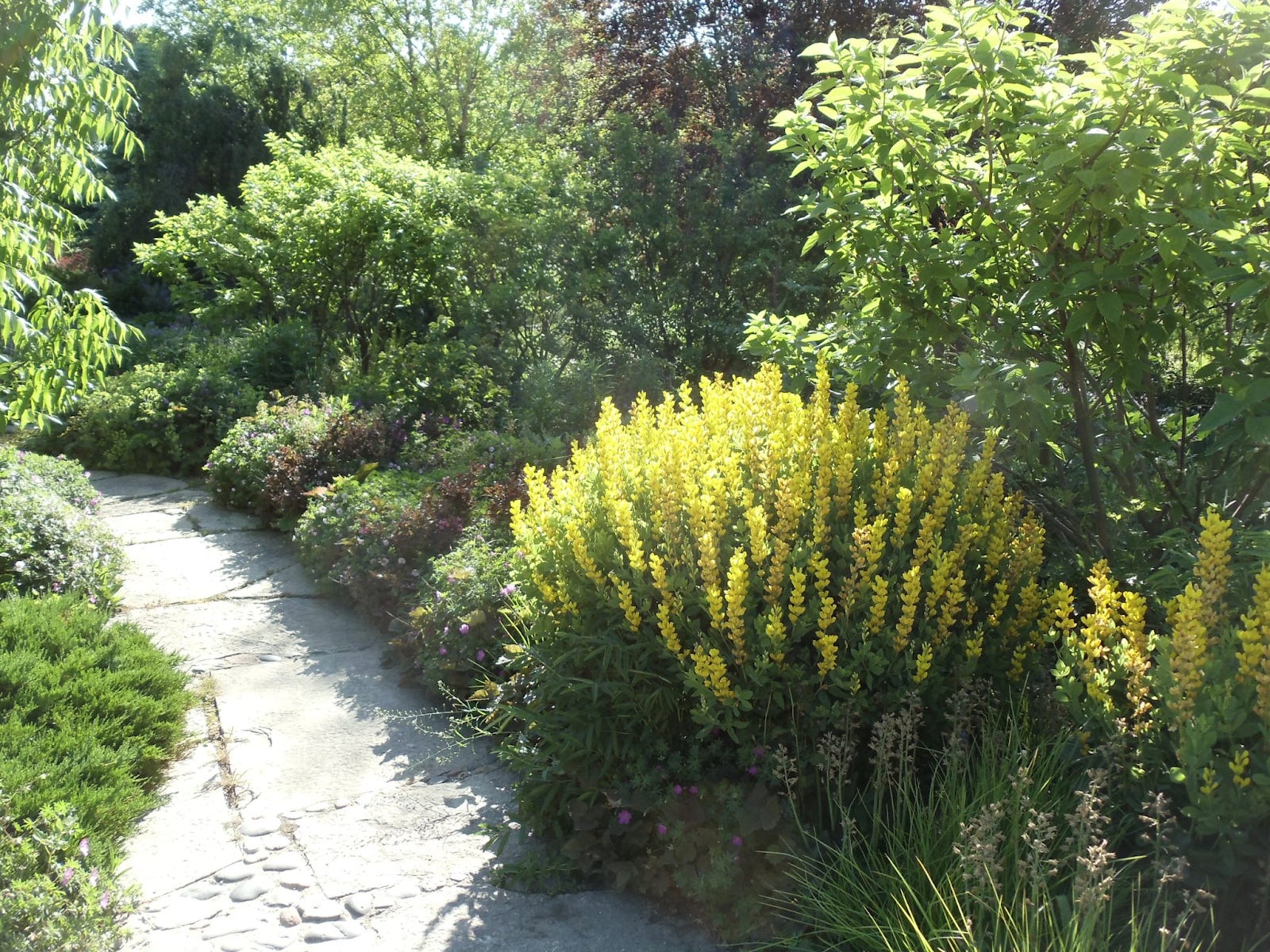
So here’s some exciting news: World-renowned Roy Diblik’s nursery, Northwind Perennial Farm, is in your hometown! Diblik has been a longtime partner of Dutch garden designer Piet Oudolf and, for example, played a crucial role in the creation of Chicago’s Lurie Garden in Millennium Park, growing, supplying, and helping to install more than 25,000 perennials for the project. Ask his team to recommend plants that will thrive in the conditions on your niece’s lot.
Happy digging!
—Heather
Why, How, Wow!
Why? Healthy soil = lots of necromass
As Robert Pavlis of Garden Myths points out,
The latest studies show that the best way to build healthy soil is with necromass. Necromass is defined as a collection of dead organisms, but in soil it consists mostly of dead microbes. Even though most gardeners have never heard of it, it is essential for increasing soil organic carbon and building healthy soil.
Microbes have short lives and naturally die off quickly. … Accumulated necromass is responsible for aggregate formation—that crumbly soil all gardeners want. Better aggregation results in more soil organic carbon, better drainage, better aeration and larger pore spaces for plant roots. These aggregates have been found to be very stable and seem to be the best way to sequester carbon in soil.—Garden Myths
The best way to build necromass is to increase the volume of microbes in the soil by feeding them. And the most efficient way to feed microbes is to grow plants, not add mulch or soil amendments, which are derived from dead plant shoots (above ground material). Microbes expend a lot of energy to decompose the large lignin and cellulose molecules in shoots. In contrast, the “exudates” plants excrete through their roots, which represent up to half the molecules they produce from photosynthesis, are small and easily digested by microbes.
Initially it was thought that exudates consisted mostly of sugars and other carbohydrates but it is now known that they include a wide range of compounds including amino acids, proteins, fatty acids, sterols, anthocyanins and flavonoids, to name a few. …
Some scientists estimate that living roots may be as much as five times more effective at building healthy soil compared to organic matter from shoots.—Garden Myths
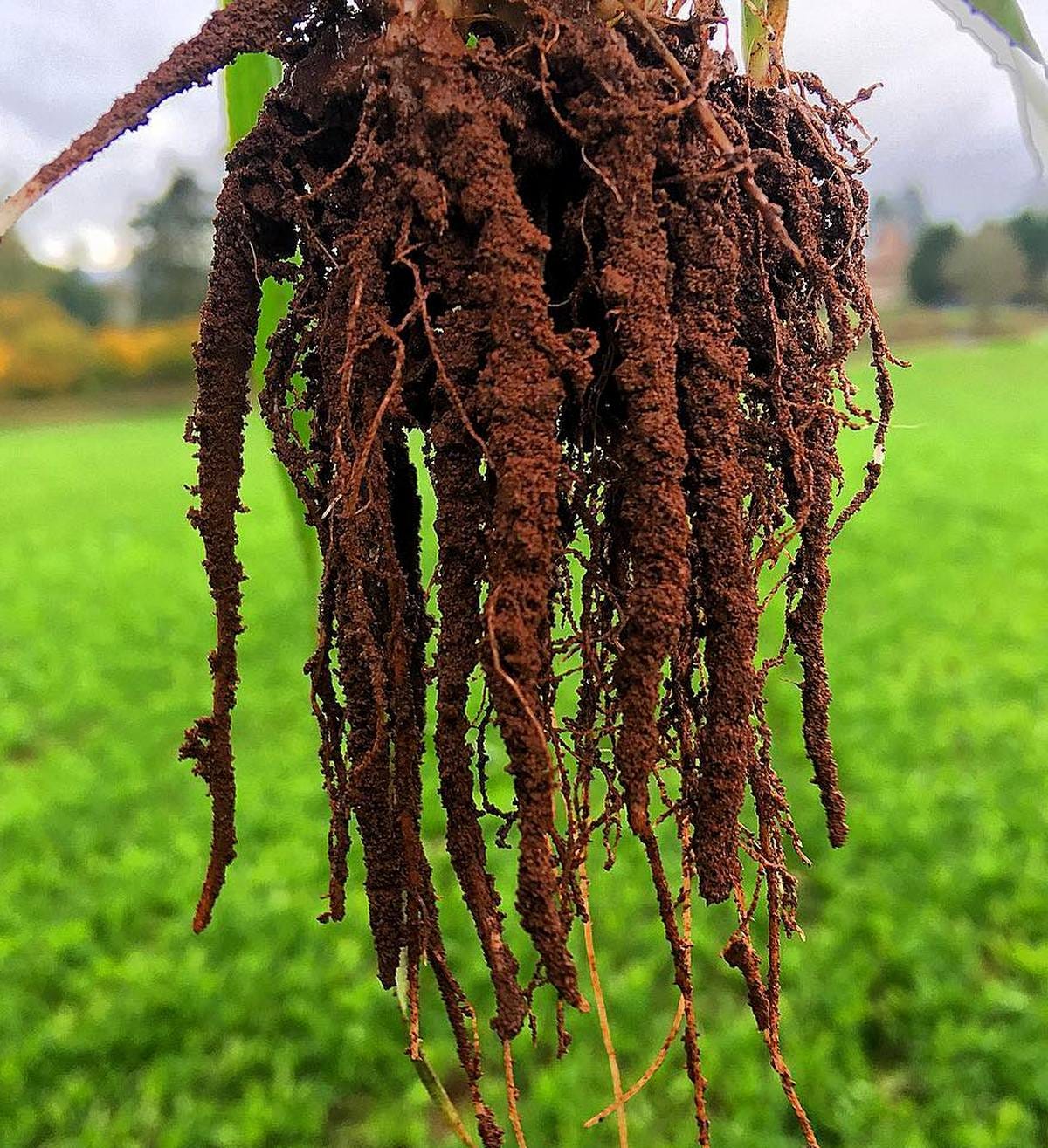
How: Keep living roots in the soil all the time.
Based on the latest research, Pavlis concludes,
The new focus should be directed towards growing lots of roots and keeping living roots in the soil all of the time.
Here are my tips for building soil structure ecologically, derived from Pavlis’s analysis:
Do not leave soil bare.*
Everywhere except paths and rooms, install dense layers deep-rooted of native plants—groundcovers, shrubs, trees. Cover soil around new plants with a temporary mulch of up to three inches of dead leaves.
Plant different species to increase the microbe diversity.
Disturb soil as little as possible. Tilling destroys the structure of aggregates and speeds up the loss of necromass.
Rather than removing turf, consider treating it as a cover crop and plant into turf.
Seed bare soil with an inexpensive cover crop like Canada or Virginia wild rye, which will grow quickly while slower perennials and grasses establish.
Leave non-seeding weeds unless they are causing a problem. Weed roots are better than no roots.
Ensure new plants get enough water to establish (e.g., equivalent to one inch of rain per week for six months).
Close the nutrient loop by using “chop and drop" method, leaving dead wood, stems, and leaves to decompose where they fall.
* Leave some sunny, bare soil for bees. Around 70% of native bee species nest in the ground and prefer patches of bare ground without a lot of mulch or dense vegetation. The spaces around native clumping grasses and wildflowers are sufficient. (See Xerces Society’s Clear Space for Bees.)
Wow! Lush gardens through the seasons
Have blooms started to emerge in your area? They have here in north Florida. I’m carefully watching the succession of spring blossoms on native trees and shrubs so I can fill in any gaps in my new garden. So far, in order: flatwoods plum, redbud, red buckeye, fringe tree.
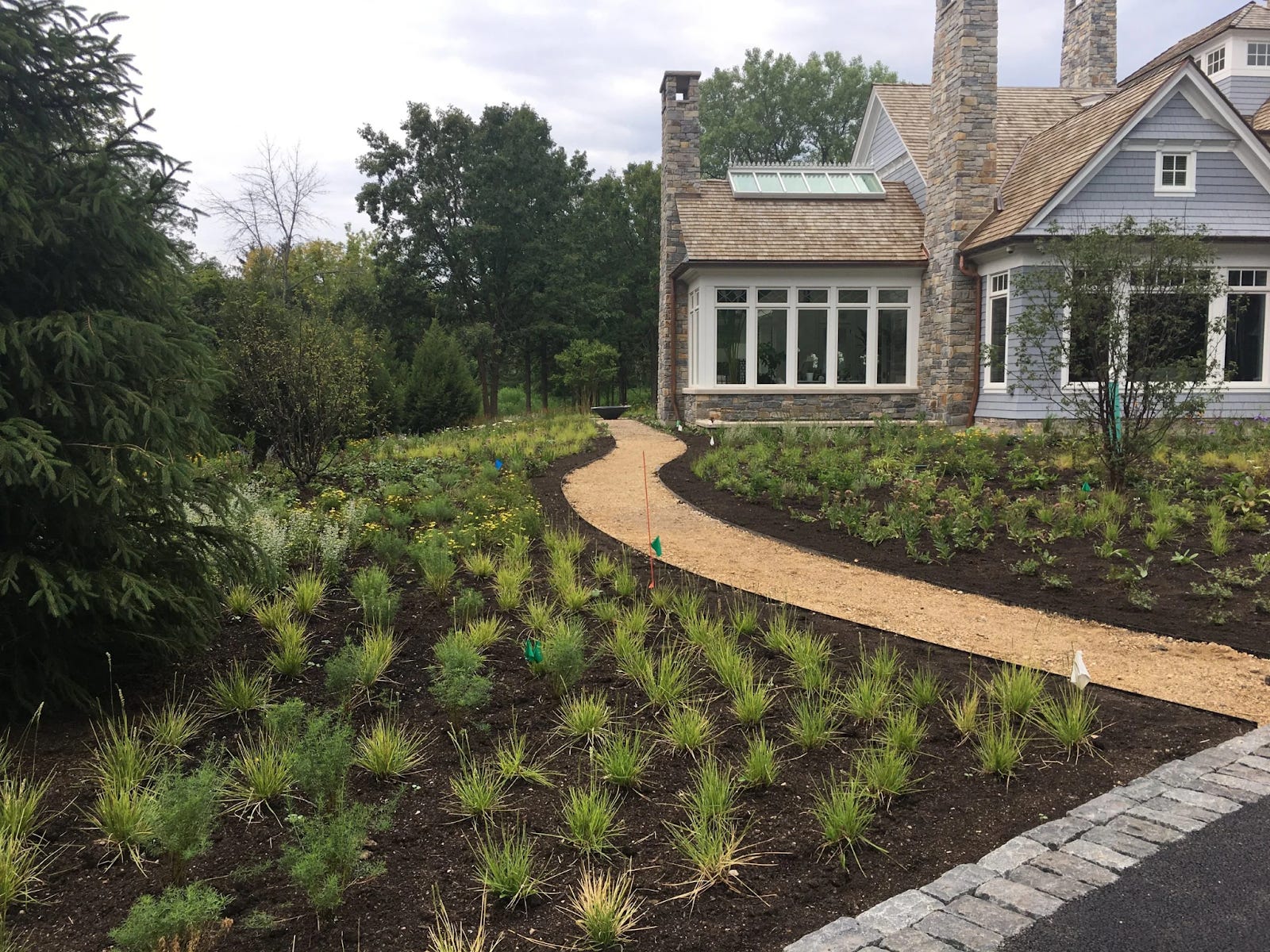
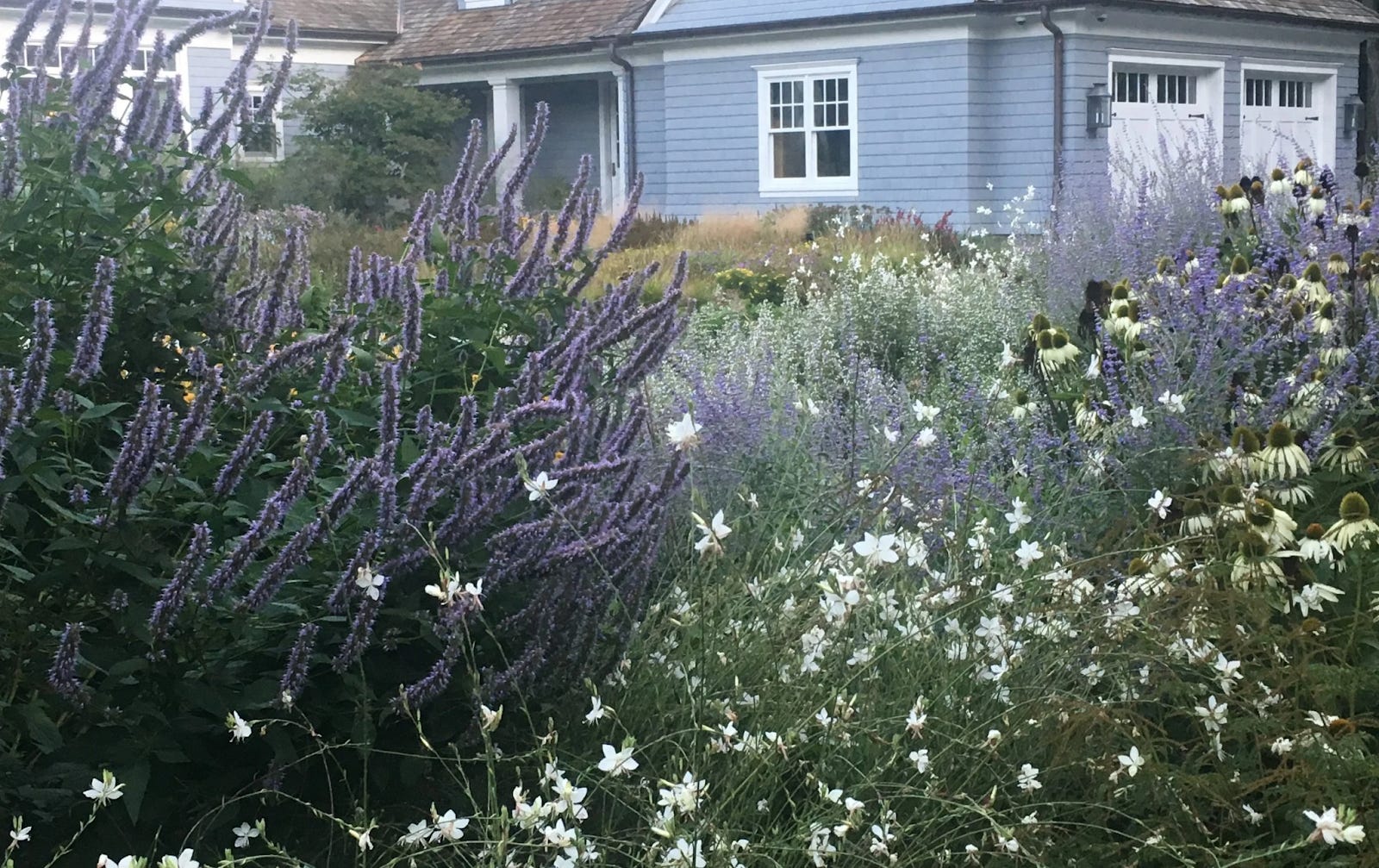
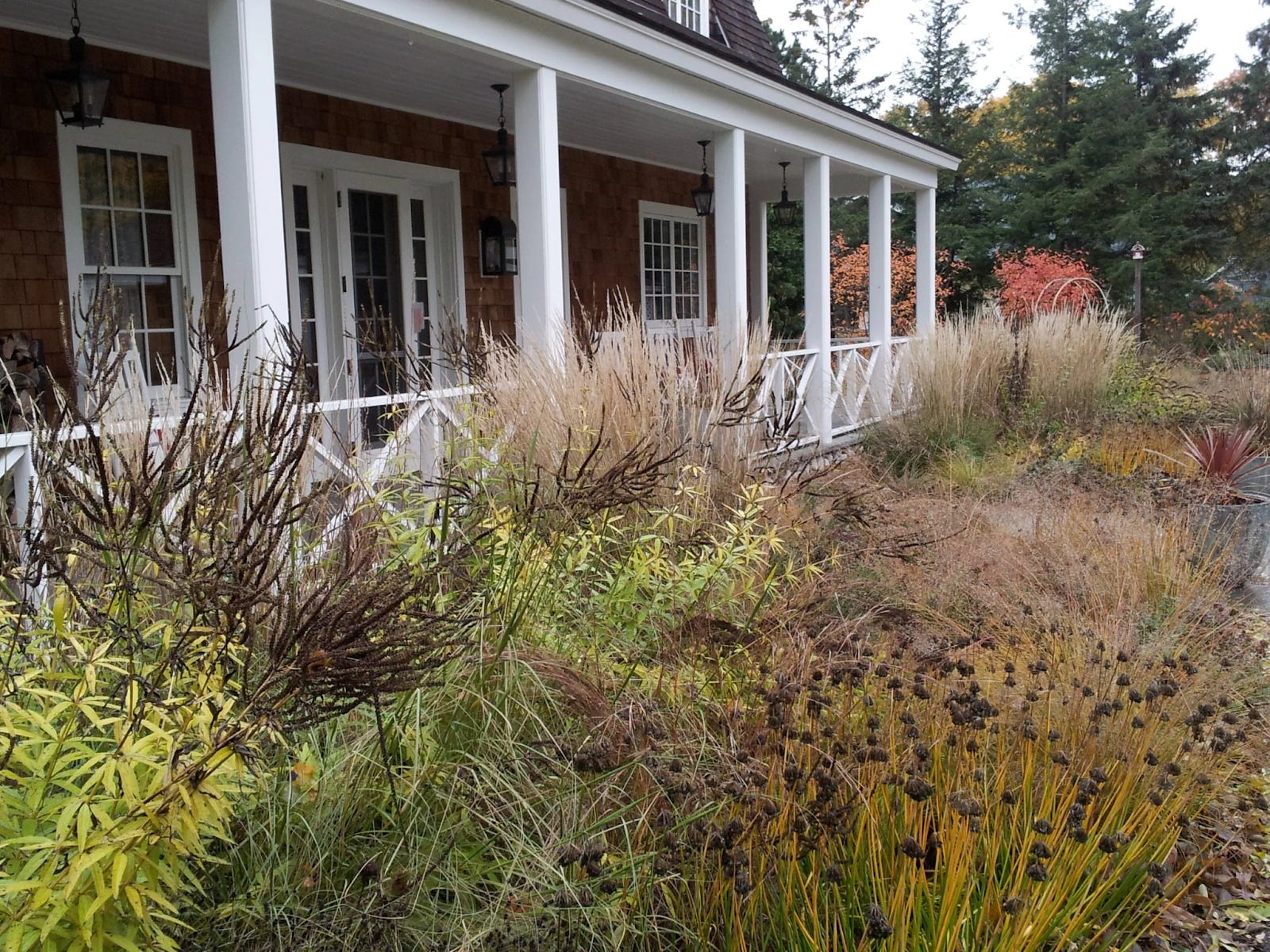
These residential gardens by Northwind Perennial Farm illustrate the succession of perennial blooms from summer through fall. I especially love the pink-white Lindheimer’s beeblossom, native to south Texas and Louisiana.
Digging Deeper
Love birds? Here’s a secret recording of our Designing Gardens for Birds workshop, hosted last week by Cornell Lab of Ornithology.
Talk about areas inhospitable to plants, there’s a once-in-a-decade superbloom right now in Death Valley, the driest place in North America and hottest place on earth. Learn more
Rethinking hardscape: A new analysis finds that some 44% of Los Angeles County’s 312,000 acres of pavement may not be essential for roads, sidewalks or parking, and could be reconsidered. Learn more
The surprising health benefits of natural light exposure: Even an extra 5 to 10 minutes of sunlight each day can help regulate your sleep, mood and more. Learn more [gift link]
Planning summer travel? Some of my favorite gardens in the world are on this list of the most beautiful gardens to visit in southern England from Travel & Leisure.
For Premium Subscribers
Ditch the AI, Grab a Tablet: Real Garden Design Sketching
NEXT WEEK: Tuesday, March 24, 6 pm E.T.
Want to actually see what your design will look like before you dig? In this hands-on workshop, artist and landscape designer Liza Kiesler of Viburnum Gardens will teach you (and Zoe and me) to test your ideas by sketching them onto photographs. Sketching will also improve your attention span, ability to stay focused, and your ability to think outside stereotypes (The Cognitive Benefits of Art). No drawing experience necessary—but iPads and Apple Pencils recommended.
Here’s Exactly How to Build Your Wildlife Pond
Tuesday, April 7, 6 pm E.T.
If you’ve always wanted to create a small pond but have been too intimidated to start, this is for you. Wildlife need clean drinking water to survive and many threatened species breed or live in water. Unfortunately, many sources make pond building overly complicated—and less valuable for wildlife. By the time you leave this interview with author of Building Natural Ponds (and Garden Myths) Robert Pavlis, you’ll be ready to build your wildlife pond—without pumps, filters, or chemicals.
Can’t make the live webinar dates? Recordings will be available for a limited time after the event and will only be shared with people who registered in advance.
To register
Subscribe now to receive registration links to all three webinars.
Already a premium subscriber? Use the registration links here. (If you can see those links, you’re a paying subscriber.)
So helpful—I’m really interested in your advice to plant directly into turf grass rather than try to remove it. Is the idea that the native plants will eventually overpower the turf grass? I’m in the Hudson Valley and have a shadier area that is a mixture of violets (great) and turf grass and I haven’t wanted to mess with the violets but want to get rid of that grass. Was thinking of putting in other aggressive spreaders such as Canada anemone, etc, but thought I should remove grass first—not doing that would sure save me a lot of work!
Great stuff!