

Dear Design Your Wild, I didn’t really understand the golden ratio. Were you talking about plant bed shapes?—Design workshop participant
Nope. We recommend using the golden ratio—or a rough approximation—for sizing oval and rectangular garden “rooms,” not beds. Making destinations like your patio or play lawn or fenced edibles garden regular shapes signals to your brain “you have arrived.” Plant beds around these garden rooms are often irregularly shaped.
Using the golden ratio, the length of the long side of a rectangle is 1.618 times the length of the short side. We use this very loosely, so Zoe’s patio is a 20 by 30-foot oval (1.5 times), for example. The concept keeps us from making uncomfortable, bowling-alley-like spaces. (See “Why?” below for examples of the golden ratio in nature.)
Dear Design Your Wild, How do I make my kids’ full size soccer goal fit into our third-acre yard? And all the other sporty equipment they love?—Kate, Kansas
Your average size lot has space for MANY garden rooms—including a soccer goal and practice area. Think about it: The average house, garage, and driveway take up less than 4,000 square feet. That leaves an enormous 11,000 square feet of outdoor living space.
Let’s assume you want to participate fully in Doug Tallamy’s Homegrown National Park challenge and replace at least half your lawn with native plants. If your outdoor space is currently mostly lawn, that’s 5,500 square feet of layered native plantings and an equal amount of open space. Still a large outdoor house!
Remember to sign up for—and tell your friends about—this year’s all-new, always-free Less Lawn More Life challenge before Dr. Robin Kimmerer kicks it off on May 7.
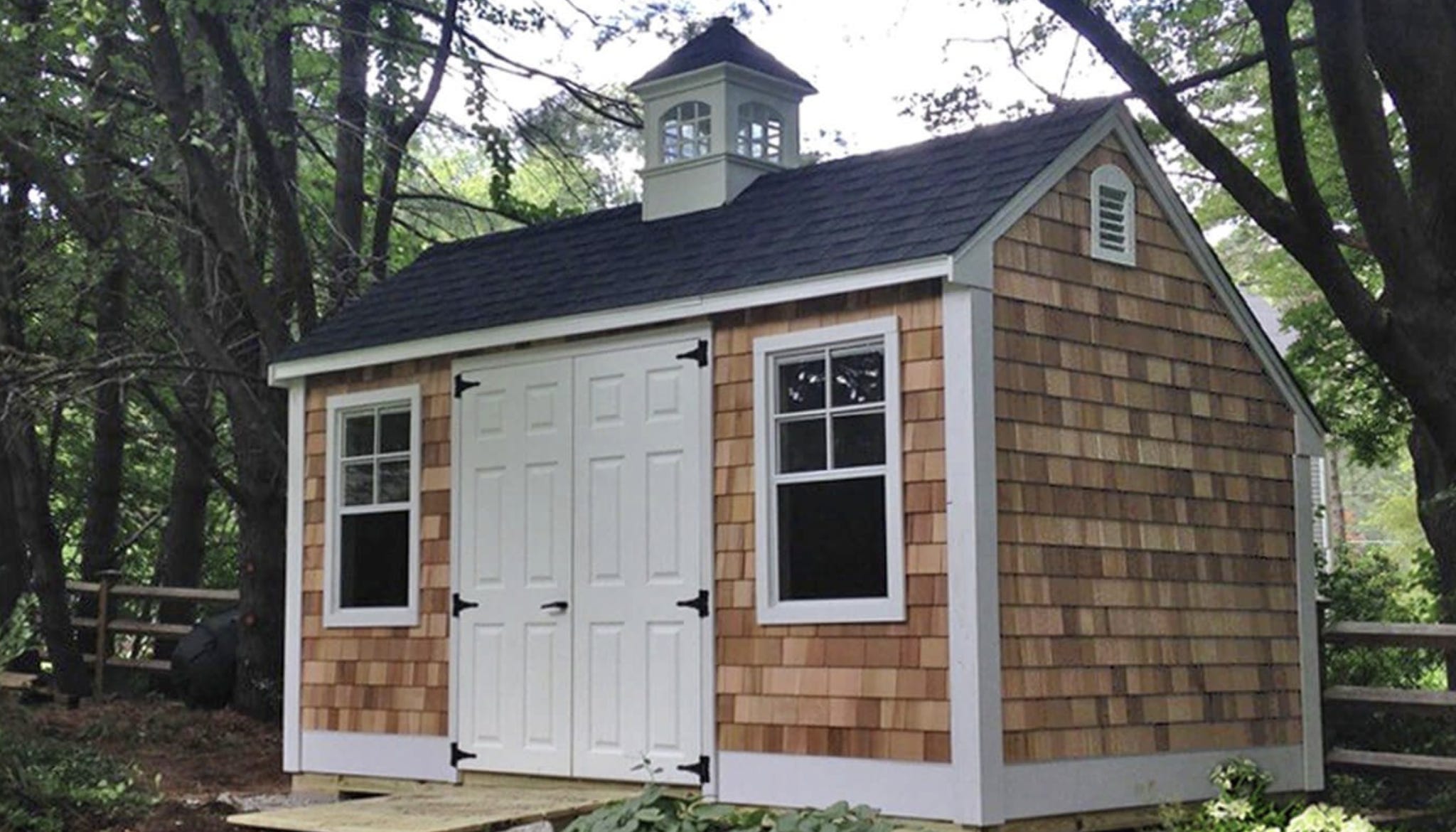
For the kids, I suggest leaving a big, rectangular sports field and buying or building an equipment shed. A full-size high school soccer goal is 24 feet wide. Using the golden ratio as a starting point, you might make a 30 by 48 foot games field. To balance the visual weight of the goal, consider aligning a generous equipment shed longwise along the opposite end. (Check out Reeds Ferry, which built ours, for examples of attractive, well-constructed sheds. Pete’s going to DIY the next one. Stay tuned.)
That still leaves 3,000 square feet for your other garden rooms. In fact, even if you make a generous dining area and outdoor kitchen, an edibles garden, and a 4-foot wide path circling the house, you’ll still have space for more rooms or plants. Plus, when the children are older, you can transform the equipment shed into a gym, studio, or office.
What fun!
Dear Design Your Wild, What’s the smallest pond that can be sustained without an external filter and pump.—Teresa
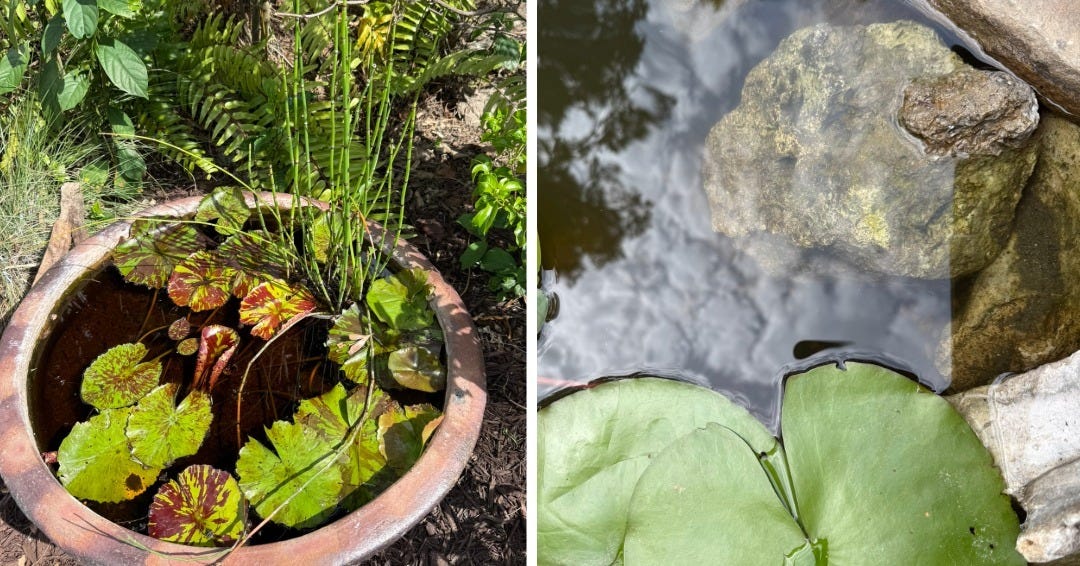
A large container—say, 24 inches wide by 18 inches deep, placed in a sunny spot. You’ll recall that in our “How to Build a Wildlife Pond” workshop, Robert Pavlis recommended covering at least a third of the surface area with plants. One native fragrant water lily (Nymphaea odorata) is sufficient, though an additional tall margin plant ups the drama. Expect to divide the water lily each spring to avoid overcrowding (less often with bigger ponds).
Contrary to most of what you’ll read online, wash off any soil from the roots and replant them in gravel or rocks at their preferred depth. And do not fertilize. Add a large rock or two so birds can bathe and other critters can climb out. If mosquitoes are a problem, add a Dunk or tiny gambusia fish; eventually, dragonfly larvae should control the mosquito larvae.
Dear Design Your Wild, Is there a specific distance from your house that you need to build a pond? Also, is there any issue with dogs and ponds? (I have two labs.)—Nancy-Jean
Distance from the house is mostly a matter of design—which you know all about;) Think proportion: a small pond to view from a patio near the house, a large pond as a destination further away. We are so enjoying watching the birds splashing and dragonflies zipping around our new pond, about 14 feet from our patio seating and 35 feet from our dining room window.
As for dogs, we’re training Sukey, successfully so far, not to drink from or go into the pond. Patti Cochran of Ohio, on the other hand, built a sturdy pond where her dogs enjoy swimming (and shared this gorgeous reel).
I used RPE liner and sandwiched it between underlayment to make sure dogs cannot puncture liner. As far as plants go, the worst thing they do is maybe tip one over. My 40 [pound] dog swims in pond; my big 90 pound dog just likes to get in and cool off, no swimming. —Building Natural Ponds Facebook Group
Your pond, your dogs, your choice.
Why, How, Wow!
Why? The golden ratio appears often in nature.
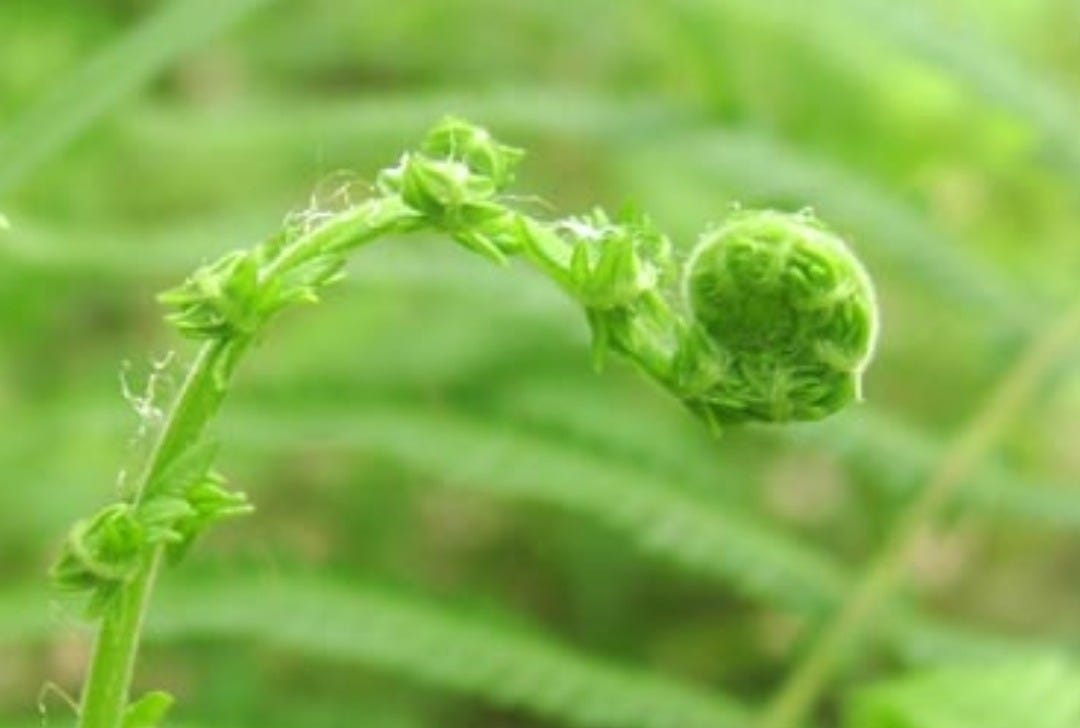
Yesterday, I planted 50 wood ferns from four-inch pots, some with their fiddleheads still unfurling. Fiddleheads, nautilus shells, and the arrangement of seeds in a sunflower and leaves around a stem all reflect the golden ratio.
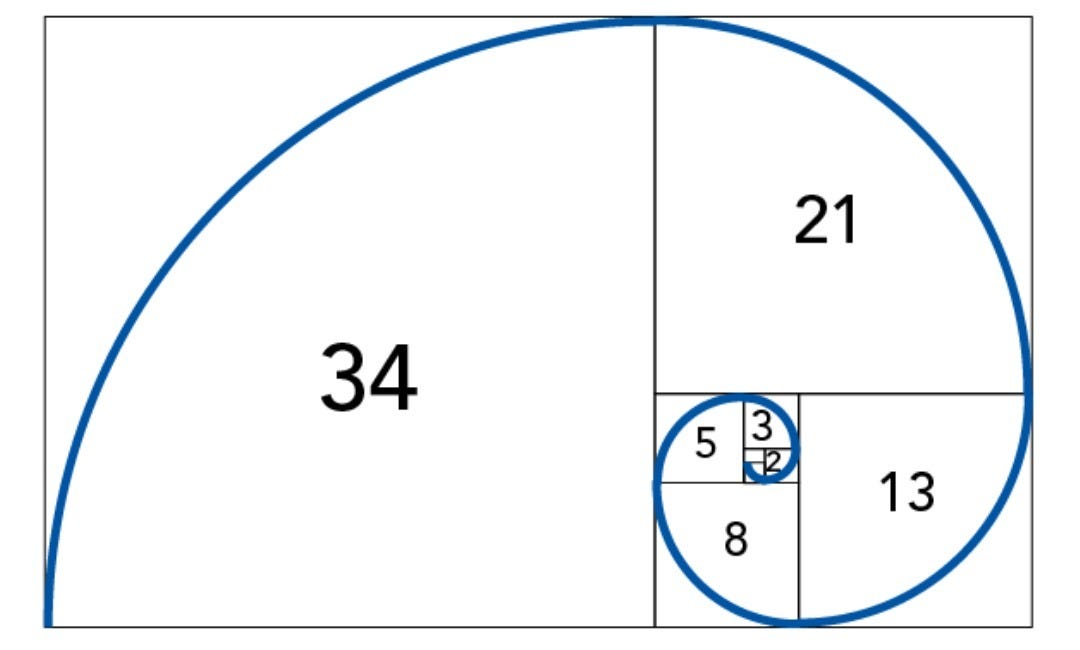
Like pi, the golden ratio—known to mathematicians as phi—is a constant found in nature. Phi equals approximately 1.618. (It’s an irrational number, like pi, so the decimal places continue on and on to infinity.) There’s a mathematical formula, but the ratio is most associated with the Fibonacci sequence, where each number is the sum of the two preceding ones, as in: 0, 1, 1, 2, 3, 5, 8, 13, 21, 34, 55, 89, 144, etc. Throughout the sequence, the ratio between consecutive numbers closely approximates the golden ratio, becoming closer and closer to it as the sequence progresses.
In a Renaissance book illustrated by Leonardo da Vinci, friar and mathematician Luca Pacioli suggested the ratio was divine, sent from heaven by the “Supreme Architect.” Generations of designers have used the ratio to establish structural order, including Modernists like architect Le Corbusier and painter Piet Mondrian. However, studies have failed to prove its innate superiority, which is why Zoe and I use it loosely.
[C]ritics argue that prevalence of the divine ratio in nature is often exaggerated, or the result of confirmation bias or selective measurement. Many of these occurrences are approximations rather than exact matches, not least because the golden ratio cannot be applied precisely because it’s an irrational number. What’s more, measurements are too often imprecise or even subjective, taken between points according to the chosen narrative.—Discovery UK
How: The golden ratio and garden rooms
Using plants to divide outdoor spaces into geometric rooms makes a yard feel larger—there’s more to explore—and its spaces more comfortable and intimate. I recommend designing your yard plan around spaces where humans feel comfortable, as opposed to around planting beds, to make a garden where humans will want to spend time. And the wildlife couldn’t care less about the shape of your planting beds.
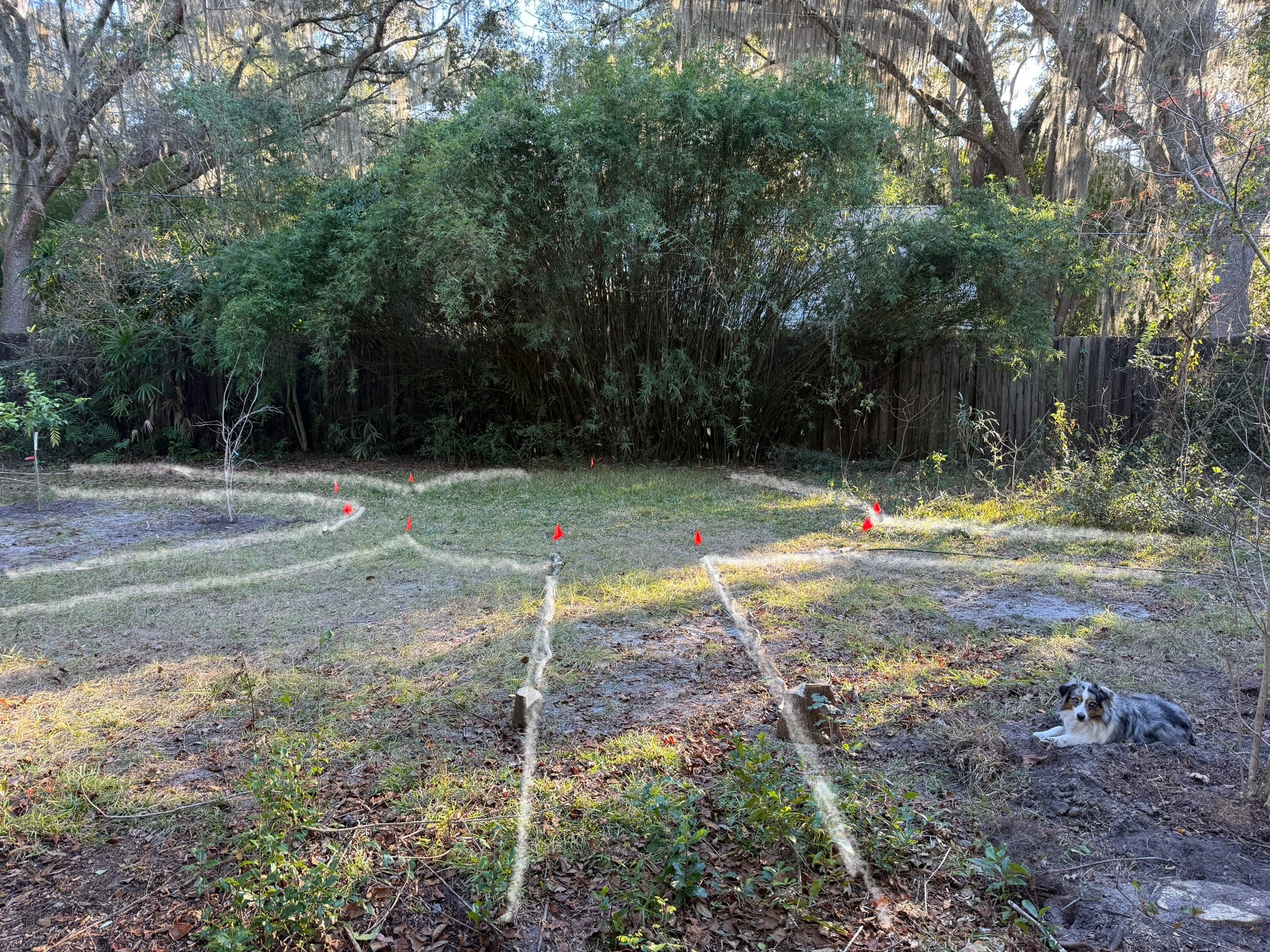
In my new Gainesville garden, I used flags and branches to mark out the human spaces—rooms and the paths that connect them—before we installed any plants. I used ovals and circles, rounded shapes that fit into golden ratio rectangles and squares. (The first rectangle in a Fibonacci sequence is a square, one by one.) It looks crappy right now (let’s face it), but I’m confident it’ll become fabulous and I’ll share its progress over time.
Wow! Dividing outdoor spaces into comfortable places
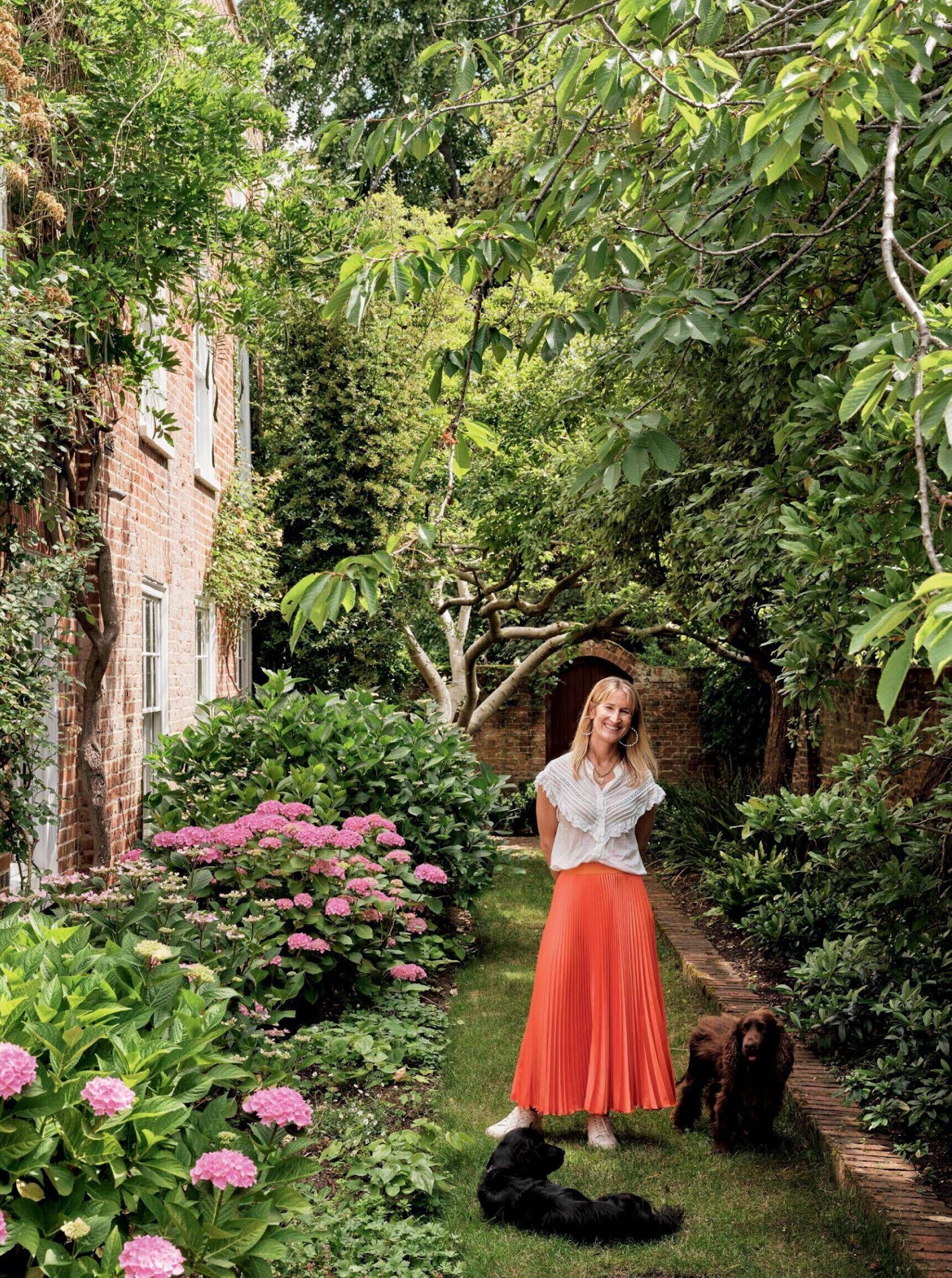
The picturesque Walk in the Park plantings at the home of Amy Eld, founder of vintage interiors retailer Rock the Heirloom, illustrates transform narrow, shady side yards into pleasant places to stroll by making them appear closer to a golden rectangle. The sculptural tree in the back, planted almost in the middle of the width, makes the length seem shorter than it is. And varied, multilayered shrubs, vines, and trees add visual interest and “blur the boundary,” making the yard feel wider.
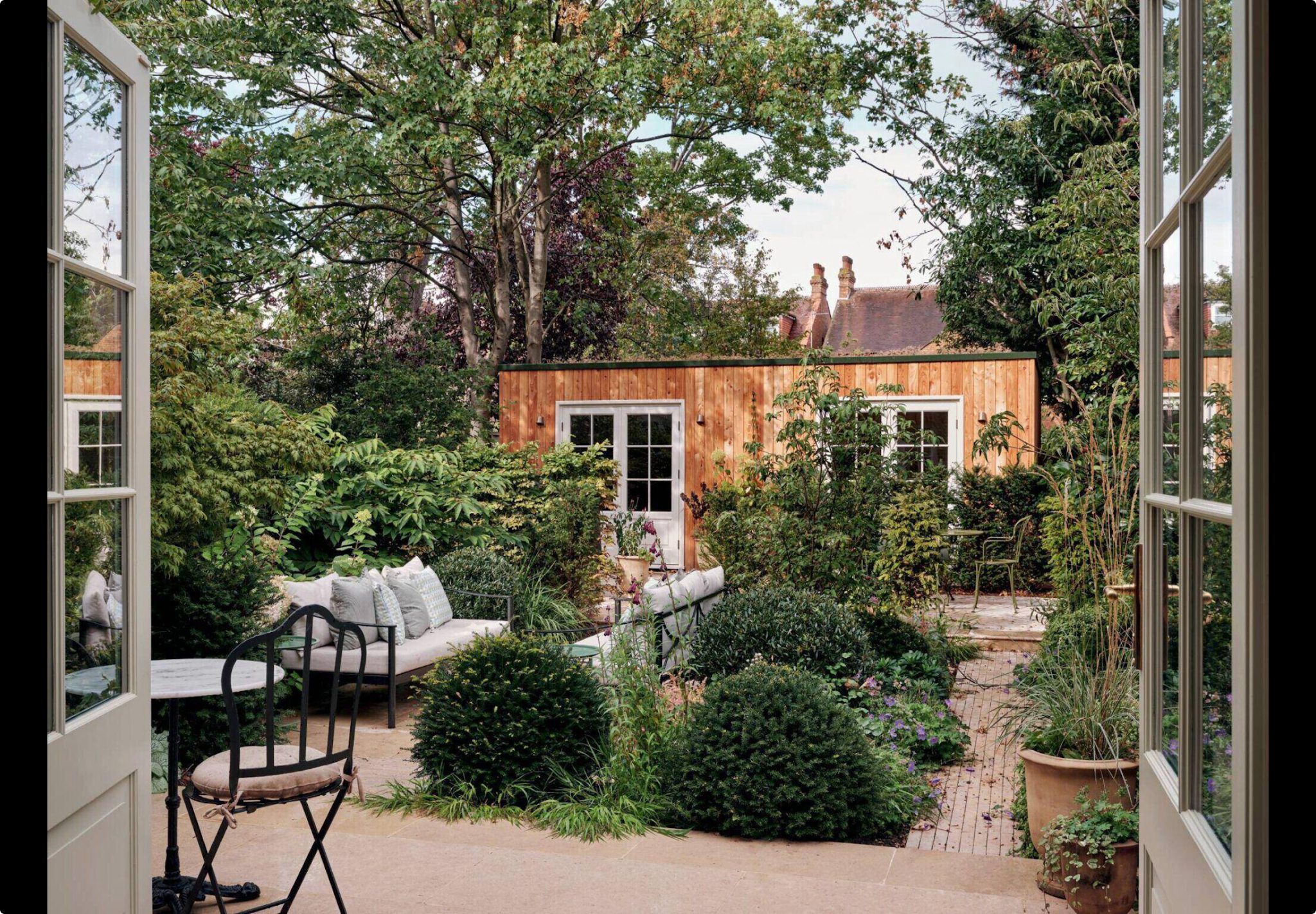
The garden behind designer Elizabeth Macfarlane’s Victorian rowhouse illustrates how even a small yard can be divided into multiple golden rectangle rooms. A central bed with evergreen globes divides the yard into three rectangular seating areas and a path. Trees and shrubs around the exterior connect the garden to the broader landscape, making it feel larger, rather than smaller.
‘The garden, like the house, was a complete disaster,’ recalls Elizabeth, who called on garden designer Cali Rand to transform the outdoor space into distinct, functional areas, including a dining space and two separate seating areas. ‘We had some really nice mature trees to work with, and Cali did a really great job of planting out the rest.’—The English Home
At the back of the yard is what the English call a “garden room”—a separate structure in the garden, not to be confused with a room within the garden—that pulls you through the garden. Macfarlane quips, “The garden room is where we hide all the ugly stuff.” That’s a worthwhile function, too.
Digging deeper
It’s spring! Time to buy more seating for your yard! But first, review my guide to outdoor furniture, including its dirty downside. I favor buying used; search for quality brands like Fermob, Brown Jordan, Janus et cie., and vintage Salterini and Umanoff. But if you prefer to buy new, check out these Westport chairs (a deal), bistro sets, and luxury brands.
Removing invasives can seem a Sisyphean task, so this recent headline cheered me: Rat eradication sparks record-breaking seabird breeding on Wake Atoll. It also reminded me that Alberta, Canada, has also eradicated the world’s most costly invasive. There’s hope.
Margaret Roach’s recent New York Times column explains how to choose the sexiest cultivated varieties of native plants that will also deliver the best ecological performance. [gift link]
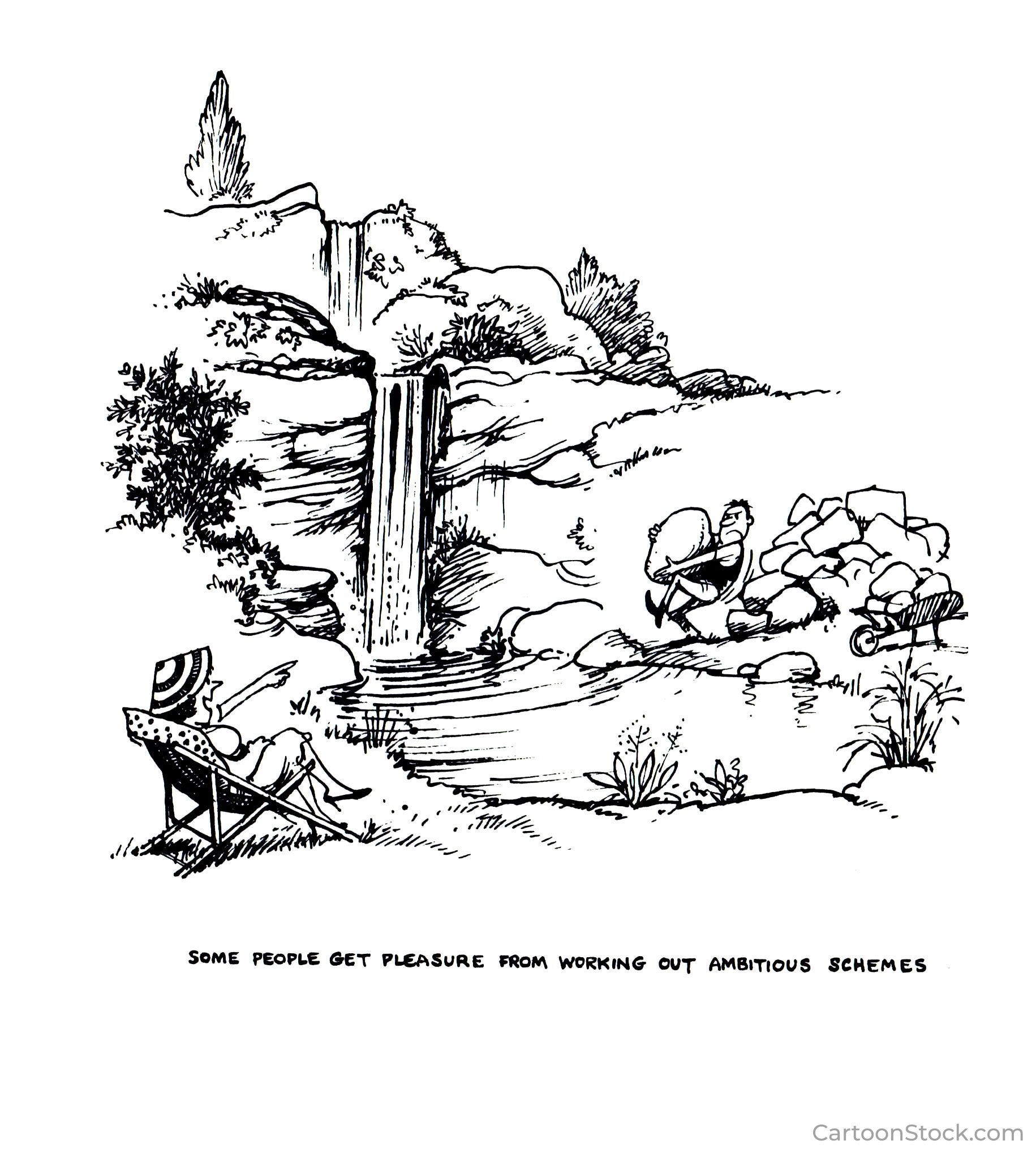
Got me excited and waiting for the AFTER as well!
Smiles,
Gisela
I’ve always loved the Fibonacci sequence so it’s fun to think of it’s use in the garden. Thanks, Heather. And I love seeing your Gainesville backyard!