

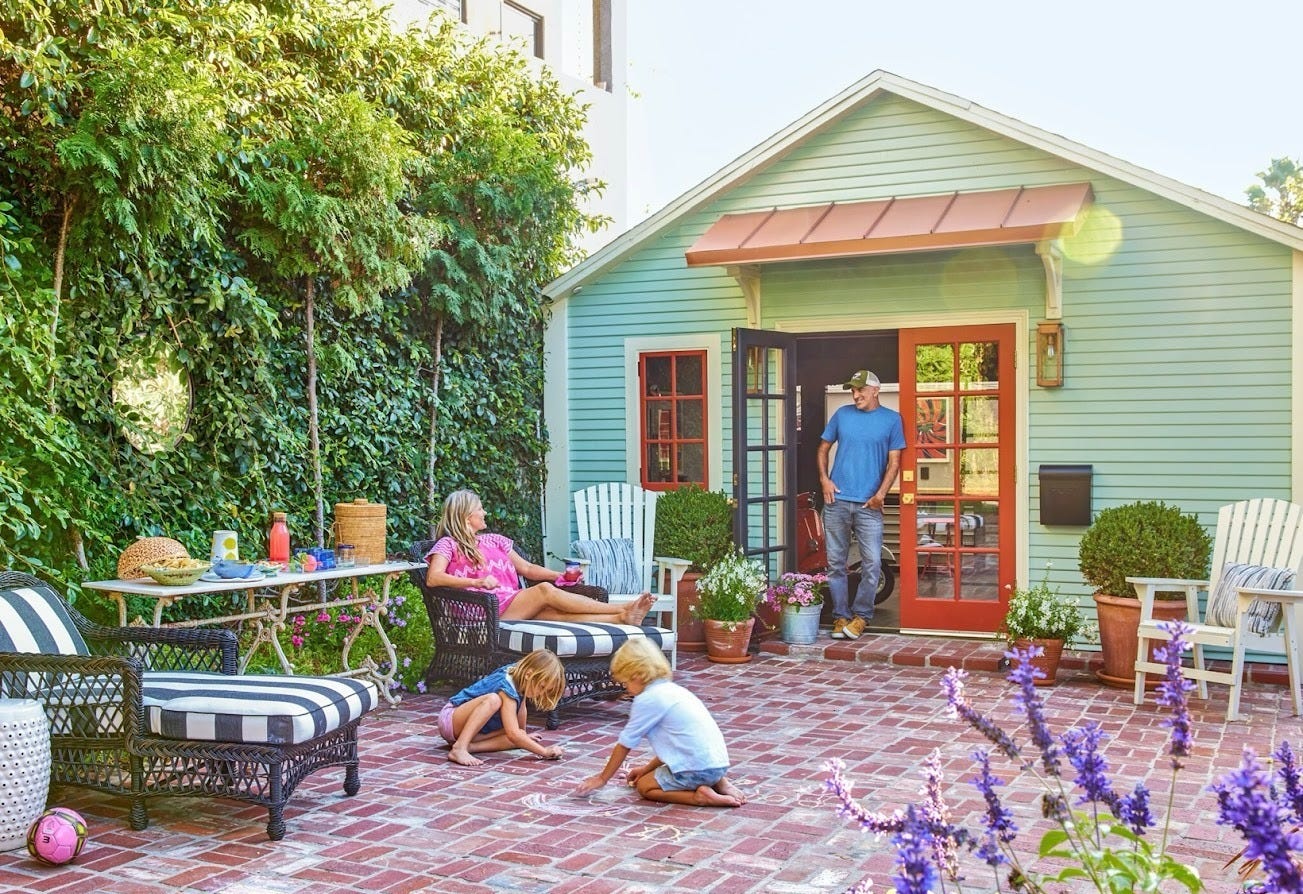
Dear Design Your Wild, I’m meeting with a landscaper next week and need some concrete (lol!) ideas on materials to replace our badly cracked patio. I have a large, narrow back yard that I plan to “terrace” into rooms to slow water runoff. My rooms will be a patio, a water feature, a bed of native, sun-loving bloomers around a tree, a green space for dogs, and a quiet shady area with a hammock. I have thought about slate, but I don’t want to introduce too many colors. We have a brown deck with black metal railings and my Colonial house is three sides brick, one side hardy plank.—Kim, Richmond, VA
I love your idea for a stepped series of rooms to solve your runoff issues and draw you into your backyard! And I applaud your hesitation about adding another hardscape material. In fact, to keep the materials palette cohesive, I advise planning any retaining walls and steps at the same time, even if you intend to build them later.
In addition to the existing materials, sources of inspiration include local stone, the history of your region, the architecture of your house, and the style of yard you want to create—your yardenality. I also recommend taking into account cost and environmental impact.
Too often homeowners spend most of their budget on hardscaping, making plants an afterthought. Lush, layered planting will make your back yard fabulous—and absorb much more stormwater than lawn, too. I advise using the minimum amount of hardscape necessary to make your yard a place you and your household will want to spend time and enjoy viewing from inside.
In fact, simply removing your cracked patio and replacing it with a patch of lawn surrounded by native plants is an inexpensive, sustainable, and attractive replacement for your cracked patio. You can certainly enjoy sitting in chairs around a firepit on lawn. Whatever surface you choose for the patio, I suggest moving the patio further away from the house so you can add plenty of green enclosure between the house and the patio, and between the fence and the patio.
Brick hardscaping: Sustainable and chic
A brick—ideally, used brick—patio, steps, and low retaining walls will complement your home’s Colonial style, connect the back of the house to the brick facade, and reflect Richmond history, the spirit of place (”genus loci”). All the historic hidden gardens of Richmond have brick hardscaping. Brick also fits stylistically with the classic design of your black railing. And brick is relatively inexpensive and sustainable and will contrast beautifully with the greenery.
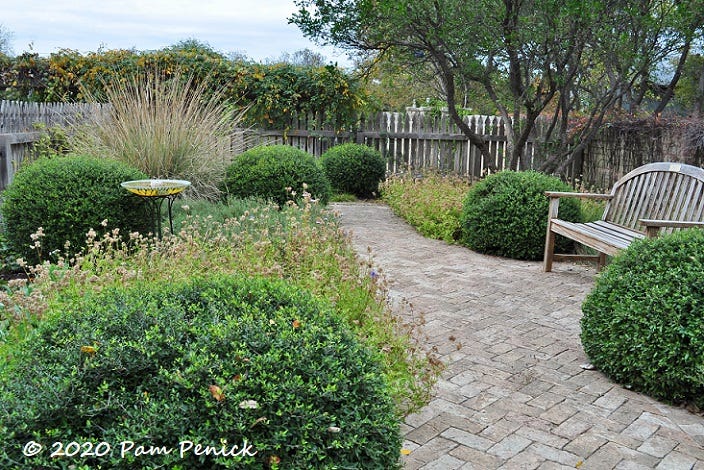
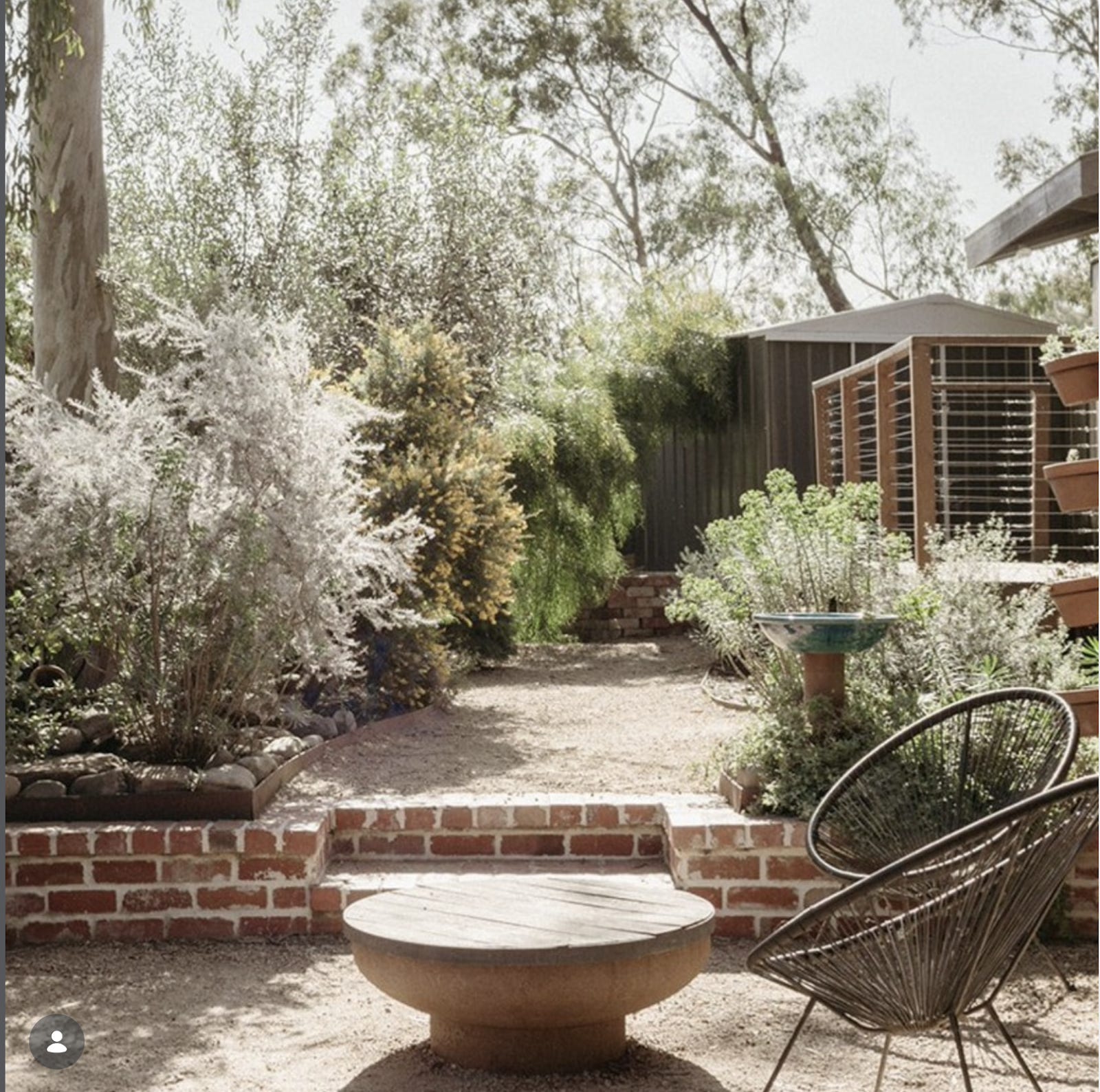
I hope you aren’t scared away by the formality of traditional Virginia gardens with brick walkways, a yardenality Zoe and I call Courtyard Chic. You can certainly incorporate lots of native plants into Courtyard Chic, as in the example below in Texas (with a fence that reminds me of yours). But brick is also characteristic of Blooming Romantic gardens, like Vita Sackville-West’s Sissinghurst.
Timber: Lowest carbon footprint
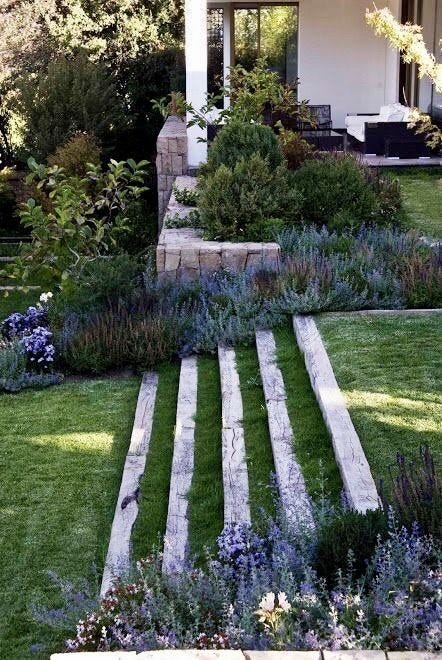
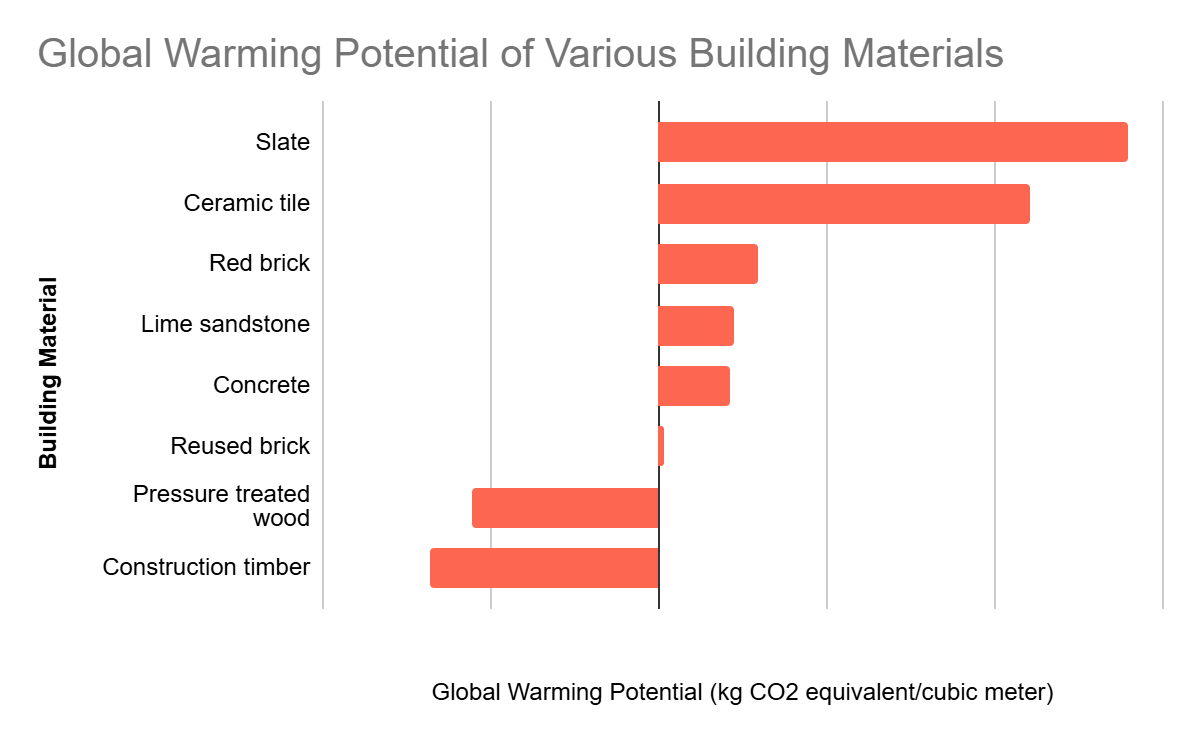
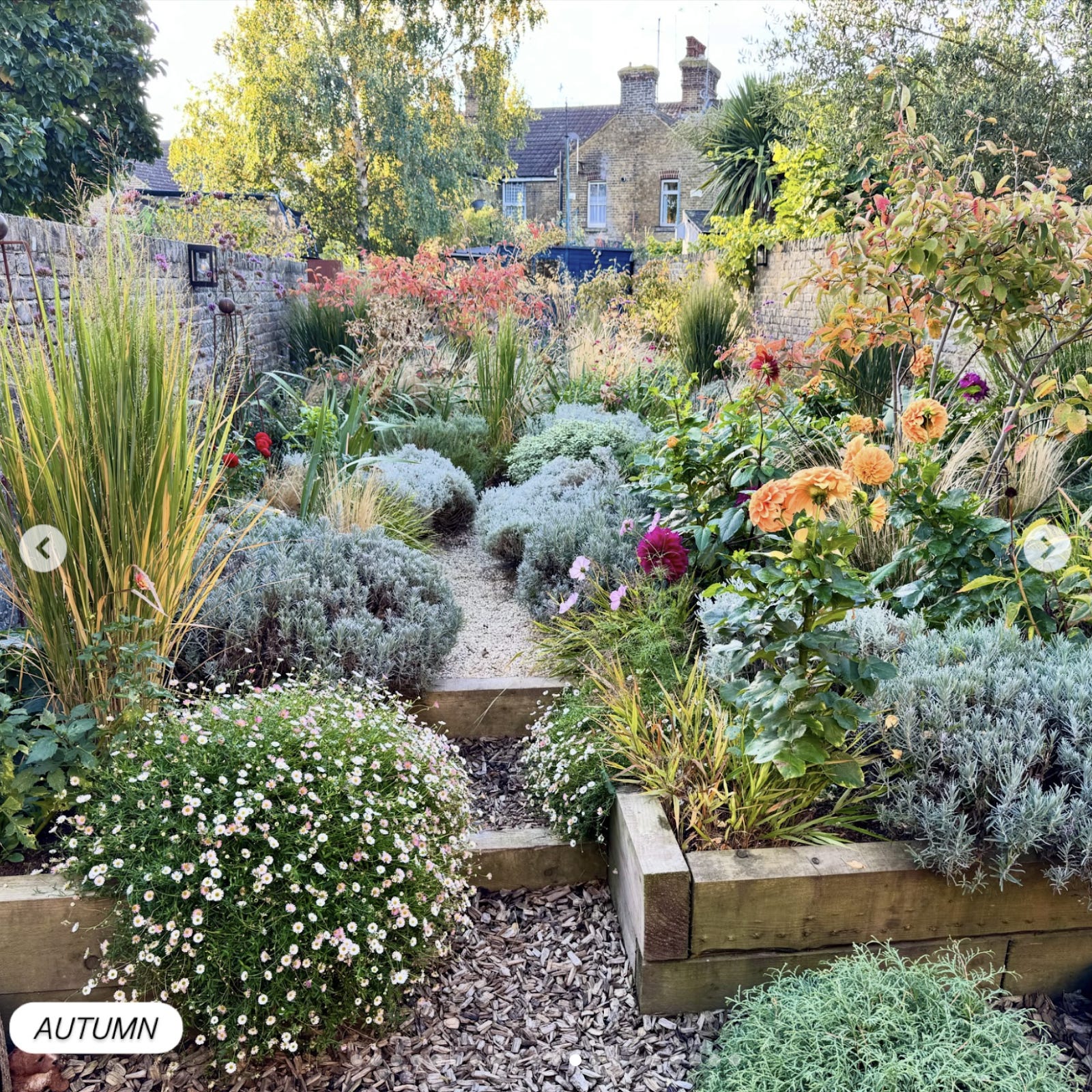
Or you can lean into the more naturalistic A Walk in the Park yardenality with a wood patio, steps, and/or retaining walls. Natural timber generally has the lowest carbon footprint of any hardscaping material, other than stone, wood chips, or used materials sourced on site or locally. I like timber used sparingly for steps and low retaining walls, like you see below. Wood is lightweight and easy to work with, making it a good DIY choice. It’s not as long lasting as stone, obviously, but it probably lasts long enough. (You may be wondering about pressure treated lumber; see “How” below.)
Tip: To make a wood patio look built-in, build a solid step up to it and choose plants that will hide the edges. If you don’t DIY, you may have to hire a carpenter instead of a landscaper.
Gravel—on its own or in combination
Gravel is another cost-effective, relatively sustainable patio material, which you might combine with brick or timber. For example, you could use brick or timber for the retaining walls, stair risers, and patio edges, then use brown or grey gravel (or natural lawn!) for the stair treads and patio floor. Four to six inches of pea gravel is an inexpensive and relatively sustainable hardscape solution that suits many yardenalities. Small, locally sourced stones cost less, require fewer resources to produce and transport, and—unlike concrete—allow rainwater to soak into the ground instead of being sent elsewhere as runoff.
But pea gravel is not maintenance-free. In Richmond and other areas with adequate rainfall, plants will seed into the gravel and someone will have to remove them periodically—manually, with horticultural vinegar or, as Zoe does, with a blow torch (seriously). Whatever you do, do not use landscape cloth underneath; it does not prevent weeds and eventually breaks down into a mess of plastic bits, leaching toxic microplastics into groundwater that eventually find their way into our drinking water (and bodies).
Above all, enjoy!
—Heather
P.S. Curious about yardenalities? Read Design Shortcut for a Backyard Makeover: Yardenalities™ 2.0.
Why, How, Wow!
Why? The cost, climate, and ecology calculus
I love the clarity of planting natives: It’s a good thing. Unfortunately, choosing the “best” hardscape material requires balancing competing priorities with inadequate information. When adding a new surface, permeability is a must. Using natural materials sourced on site—e.g., branches, wood chips, rocks, shells—is always a good thing. Beyond that, we must each develop our own imperfect algorithms to balance cost, carbon footprint, ecological impact, and personal health and enjoyment.
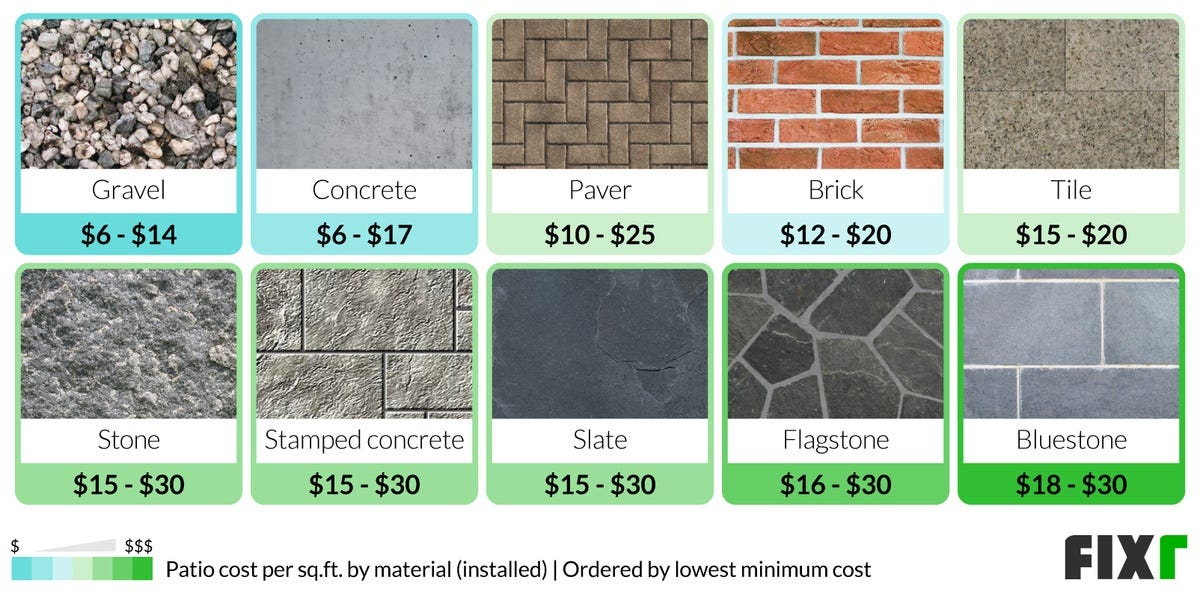
To assist your decision making, here is some data on cost and global warming potential of various hardscape materials. Unfortunately, I was unable to a comparable comparison of the ecological impact of chemicals leaching from these materials into the soil and groundwater—something I’m trying to take into account in my own yard.
How: My personal algorithm in practice
For a 20 to 25 foot walkway from the existing cement patio between two ponds to our backyard, I’ve been researching pressure treated pine, given its much lower cost compared to natural cedar (about a quarter of the price) and its ready availability in the sizes we need. Beyond our little yard, safe, inexpensive, long-lasting timber is important to solving the housing crisis with the lowest climate impact.
It turns out most online information about pressure-treated wood is obsolete. Arsenic hasn’t been used for residential applications for more than 20 years, for example. Nor is copper or other heavy metals used to treat the Severe Weather brand available at our local Lowe’s.
Severe Weather treated lumber contributes points toward a building's certification under the National Green Building Standard™. According Dupont, the biocide used in Severe Weather (DCOI) biodegrades quickly in both soil and water (see details here). But I’m skeptical of any biocide—and especially skeptical of what chemical companies claim about the safety of their products.
What would you choose if you were me—cedar or Severe Weather pressure treated lumber?
Wow! Recycled bricks add style in native gardens
Prism Landscapes designed this beautiful, informal yard with recycled brick, gravel, and native plants.
Digging Deeper
A new study in the journal Science suggests the need to plant natives to support birds is even more pressing than previously thought: population decline among a quarter of tracked species is accelerating. Declines are greatest in warmer areas, such as the Southeast, while acceleration is greatest in areas of agricultural intensity. To learn more about how to help turn this around, join Zoe and me this Sunday at 5 pm E.T. for a free yard design workshop focusing on features for birds through Cornell Lab of Ornithology. Register here.
In an article about glyphosate driving a rift in MAHA, Scientific American describes why its impact on humans is difficult to nail down, with this frightening conclusions:
“We’re just at the beginning of studying glyphosate, but we absolutely must study it, given it is the most commonly used herbicide in the world,” she says. “Even a small, tiny effect, if it’s real, can have a huge public health impact because so many people would be exposed.”—Scientific American
For Premium Subscribers
Ditch the AI, Grab a Tablet: Real Garden Design Sketching
Tuesday, March 24, 6 pm E.T.
Want to actually see what your design will look like before you dig? In this hands-on workshop, artist and landscape designer Liza Kiesler of Viburnum Gardens will teach you (and Zoe and me) to test your ideas by sketching them onto photographs. Sketching will also improve your attention span, ability to stay focused, and your ability to think outside stereotypes (The Cognitive Benefits of Art). No drawing experience necessary—but iPads and Apple Pencils recommended.
Here’s Exactly How to Build Your Wildlife Pond
Tuesday, April 7, 6 pm E.T.
If you’ve always wanted to create a small pond but have been too intimidated to start, this is for you. Wildlife need clean drinking water to survive and many threatened species breed or live in water. Unfortunately, many sources make pond building overly complicated—and less valuable for wildlife. By the time you leave this interview with scientist and author of Building Natural Ponds Robert Pavlis, you’ll be ready to build your wildlife pond—without pumps, filters, or chemicals.
Can’t make the live webinar dates? Recordings will be available for a limited time after the event and will only be shared with people who registered in advance.
To register
Subscribe now to receive registration links to all three webinars.
Already a premium subscriber? Use the registration links here. (If you can see those links, you’re a paying subscriber.)
When we moved into our current home, there were some concrete pavers and many old bricks in a storage space in the garage. Over the years, we've just used those when we wanted to create some hardscaping. I like reusing what's already been manufactured. Of course, our yard is pretty small, so we haven't had to do any large-scale hardscaping. It's good to know treated lumber isn't as toxic as it used to be.
We have had great success reusing hardscaping materials. When we bought our house, we pulled the brick pavers and reconfigured them in a smaller footprint for a more attractive patio, and used the remaining pavers elsewhere. We have been successful finding flagstone for free via Craigslist and Freecycle to make a pathway/slight berm in our backyard to protect the house from flooding.
I’ve seen really attractive stuff done with urbanite (ie used concrete) particularly when it is stained earthier colors.