Dear Design Your Wild, I am so excited to share this picture of the new soft landing area we created under our front yard red maples. We built a stick fence to hold in the leaves! I’m hoping the six- to eight-inch layer of leaves will kill the lawn grass. My question is what natives plantings would you suggest for this area? I’m worried that digging to plant shrubs might destroy tree roots, so I’m thinking shade-loving perennials are probably best?—Sheila, northwest Pennsylvania
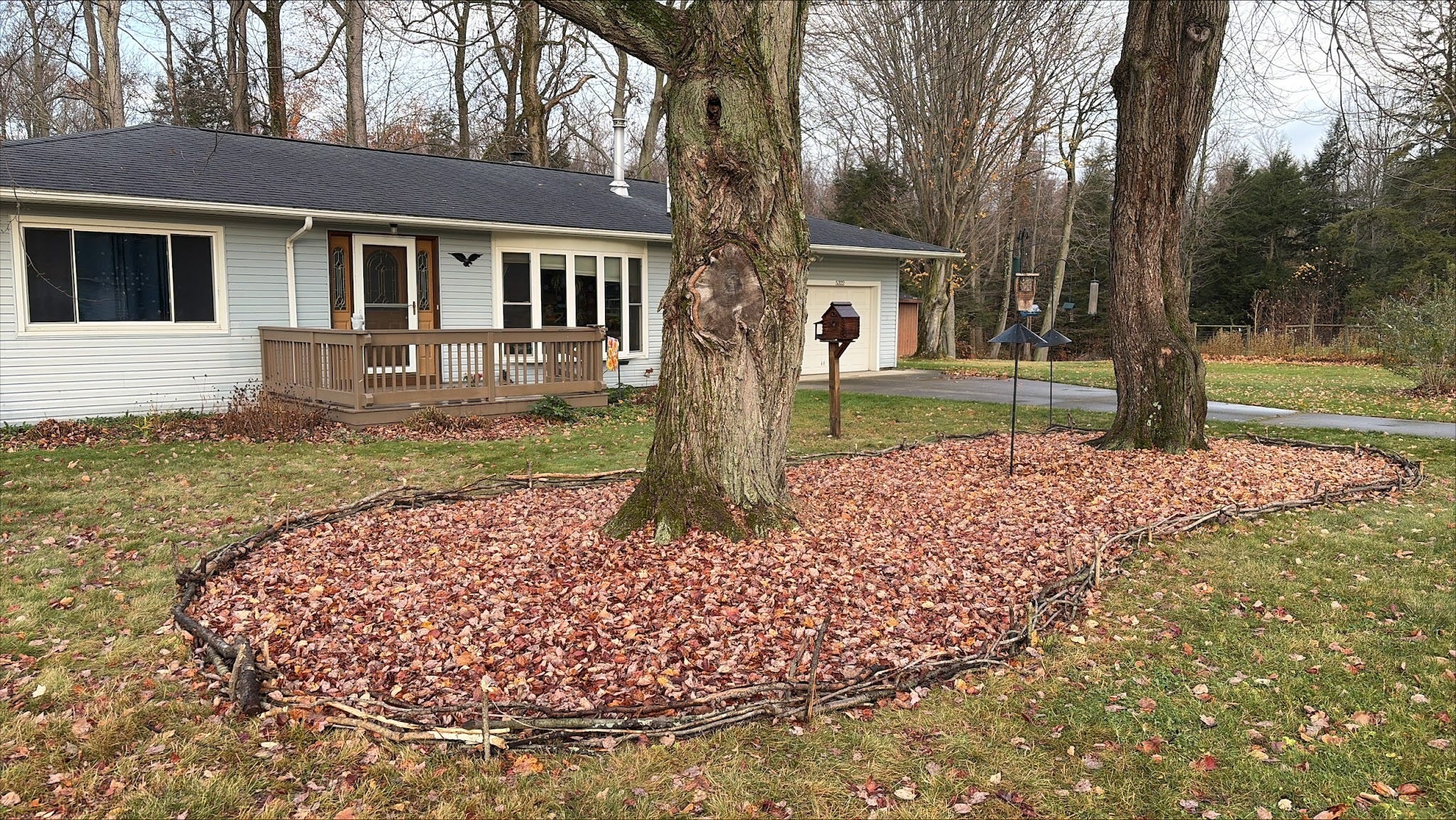
I love your wattle edging! And your charming birdhouse. And I agree, your thick layer of leaves will make an excellent planting bed by spring. The key to planting under a tree is to choose species that tolerate dry soil, because the roots of a single established tree can drink up 50 gallons a day, leaving what gardeners call “dry shade.”
As for damaging the tree roots, the rule of thumb is not to cut a root thicker than your thumb. My daughter Zoe and I agree: We have both cut many larger roots to plant under trees, but do as we say, not as we do. Bare root shrubs require only a narrow slit, so you could plant a thicket of bare root shrubs for privacy or vertical interest, plus habitat and caterpillar hosting value.
Whatever you choose, it’s a good idea to start now, either by placing your order—nurseries generally know now what they’ll have in spring—or sowing seeds or taking hard cuttings of shrubs. Especially ornamental dry shade shrub options include, from short to tall, northern bush honeysuckle, sweetfern, highbush blueberry, and ninebark (available here). Among the many herbaceous plug options, I like these from Pennsylvania’s North Creek Nursery via Izel: spring flowering wild petunia, late summer through fall flowering common blue wood aster, and semi-evergreen Christmas fern. For more inspiration, see my lists below.
Happy planting!


Dear Design Your Wild, I have a question that will sound like a joke, but I’m perfectly serious: how do you “leave the leaves” when dealing with high winds? (And I mean straight-line winds, not gentle breezes.) We’re on our third year of attempting to leave our leaves, but I spend fall watching them blow into our neighbors’ yards OR watching them pile up spectacularly in between our house and our east neighbor. (Stating there were two-and-a-half foot drifts would not be an exaggeration. 😂) We have a *massive* silver maple out front—it might be the biggest tree on our block—and I feel a deep sense of responsibility to clean up after myself.—Jen, East Kansas
I admire your conscientiousness, but give yourself a break! The reason to leave the leaves is to nurture caterpillars, fireflies, and other insects that overwinter in them, as well to return nutrients to the soil, avoid sending organic material to landfill where it generates methane, and eliminate the noise and air pollution generated by gas-powered leaf blowers.
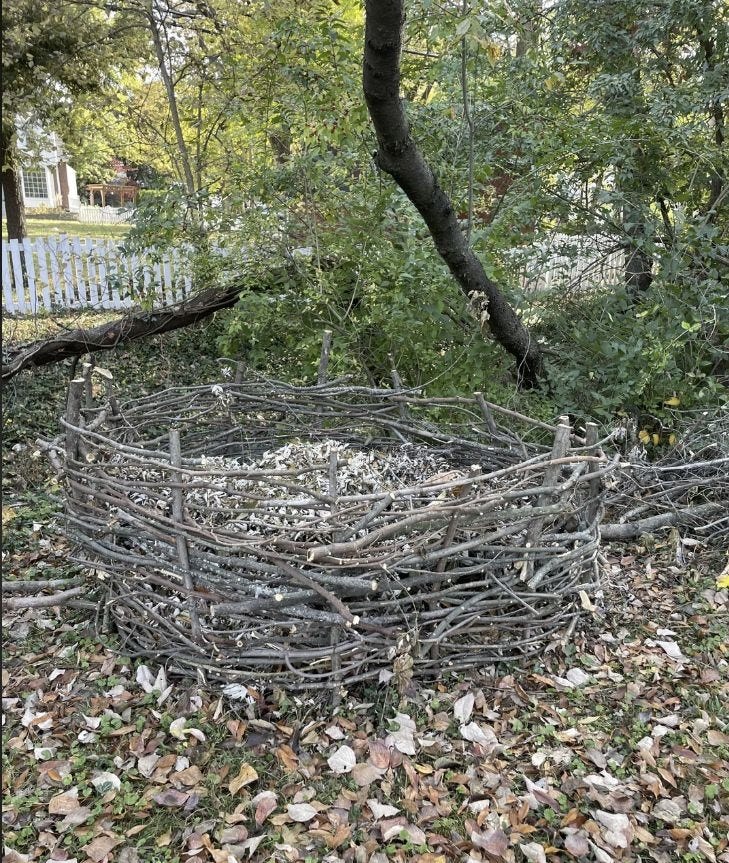
You can achieve most of these goals by gently raking the whole leaves and moving them by wheelbarrow into a protected area in your backyard. If they won’t stay in place, make a leaf bin from branches or chicken wire and consider planting shrubs to hold more leaves in place in the future. You can use saved leaves as mulch in the spring or just let them rot down to nothing. A “leave the leaves” sign can also help with neighborly relations—and invite conversation around this important topic.
Why, How, Wow!
Why? The importance of the daily stroll, again
Zoe and I really, really, really want you to create a path around your house (or as much of your yard as you can) and to stroll it daily. There’s so much science behind the mental and physical health benefits of walking, closely observing, and spending time in nature—all of which are elements of the daily stroll. And a path that leads you through your yard, with plants close by on either side, and guides your eyes to slowly reveal its wonders, makes the walk through even a small yard a fascinating trek. If you haven’t already created your circuit, winter’s a great time to plan it. You can learn how, free, from our video, Design a Yard You Love: Quick & Easy Layouts.
Meanwhile, you can use this Washington Post tool to quantify the benefits: How much life can a ten minute walk buy you? [Gift link]
How: My unglamorous gardening gift guide
When it comes to gifts (and pretty much everything), I’m with Arts & Crafts movement leader William Morris, who said in an 1881 lecture,
Have nothing in your house that you do not know to be useful, or believe to be beautiful.―William Morris
So, here is a list of things I absolutely know to be useful, some of which are quite beautiful in a utilitarian way, too. Zoe and I both use every one of them regularly. I imagine your loved one (or you) may appreciate them, too.
Source: Joe Gardener
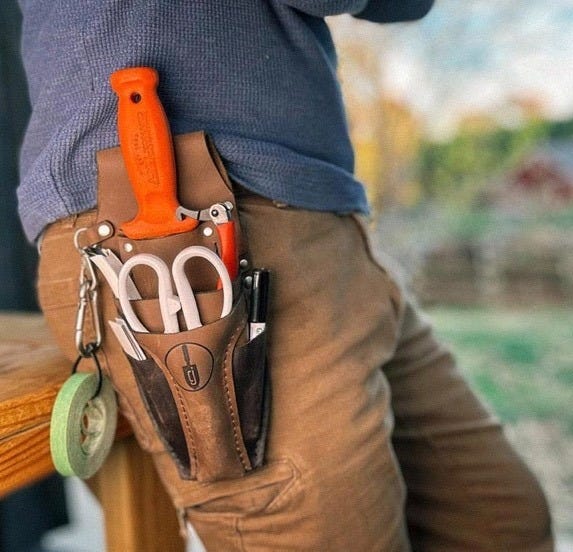
Joe Gardener says he designed the leather Ultimate Gardening Sheath for himself, because there’s no other carrier for the three essential gardening tools. I bought one for myself and gave another to Zoe, and it’s my absolute top recommendation. The exact tools I carry in it are a Nisaku hori-hori, Felco bypass pruners, and ARS needle-nosed snips (Amazon says I’ve bought five of these). By the way, if you listen to podcasts, I recommend Joe’s—starting with his interview with Zoe.
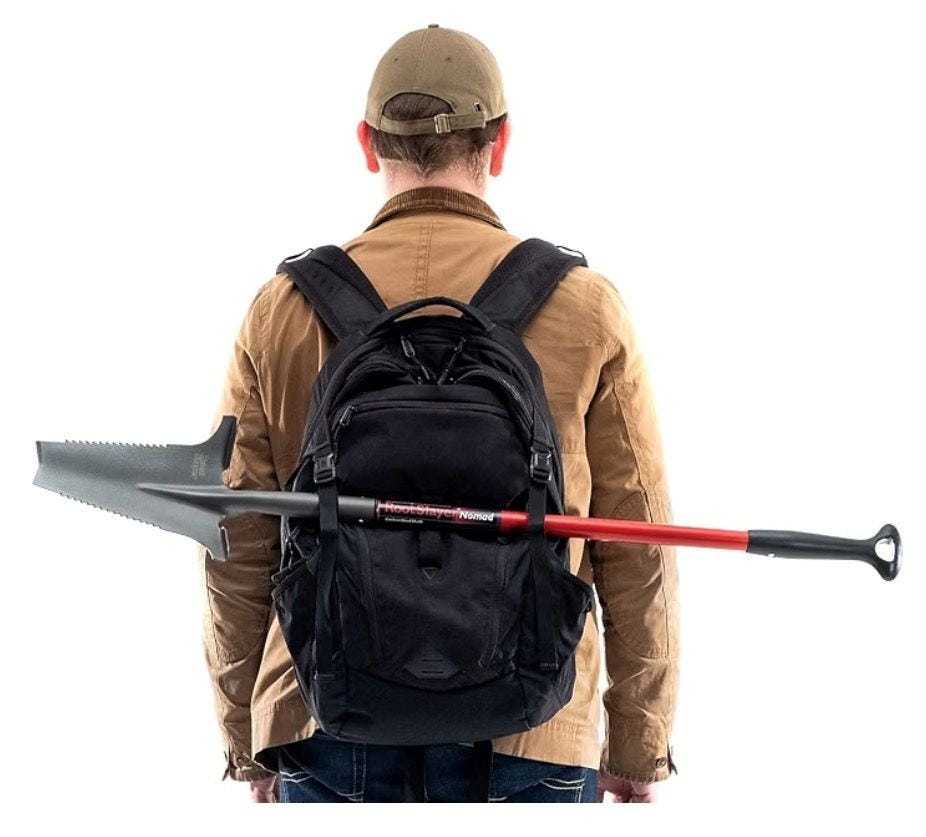
We all swear by Root Slayer shovels and have used the regular size for years. Pete and I recently bought the cute Nomad, above, and it has quickly become indispensable for gallon-sized plants. (Don’t tell Zoe, but I just realized the Nomad is a perfect gift for her.)
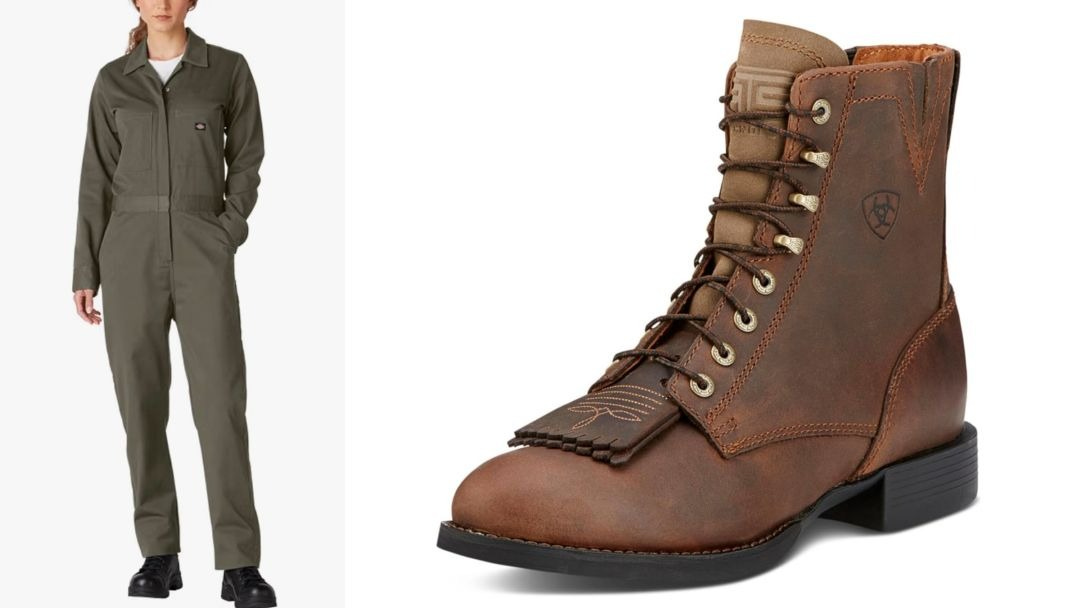
Zoe and I are most often seen outside in a Dickie’s 100 percent cotton coverall and these Ariat riding boots. The boots are handsome, comfortable, and–importantly–have a tough sole with which to push a shovel into soil.
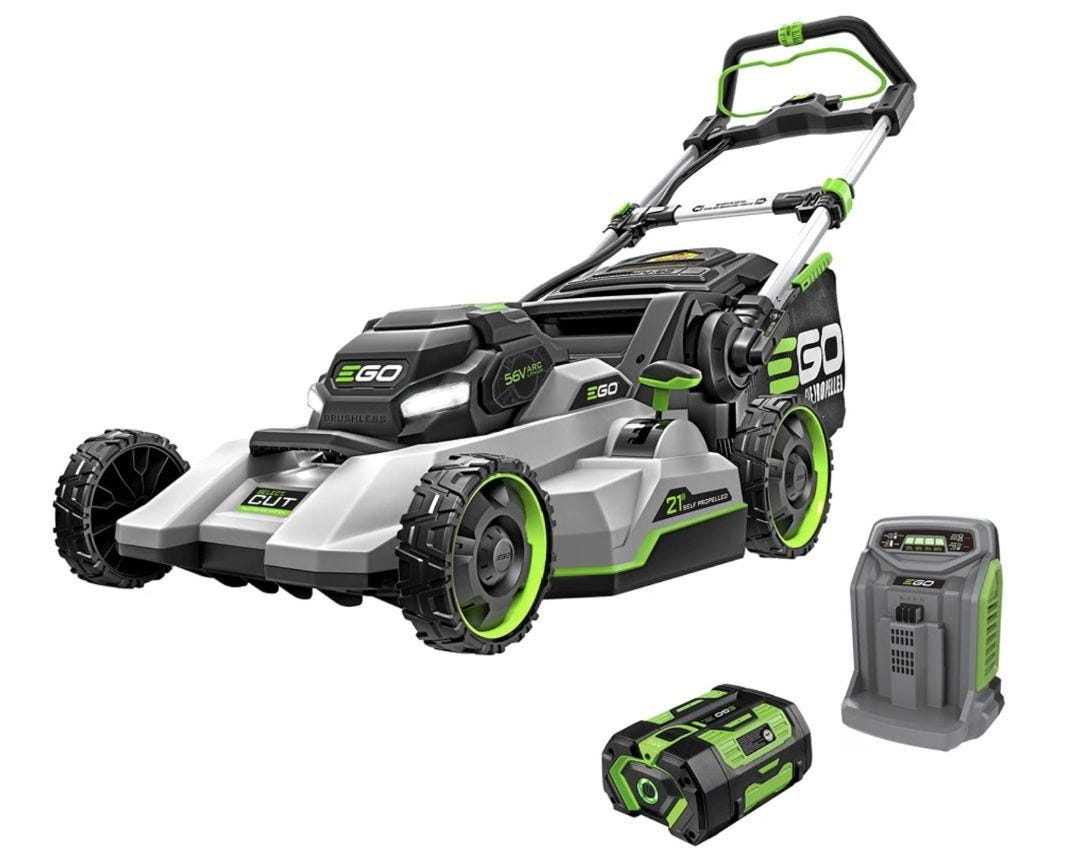
The only lawn mower I have ever used is our Ego battery-powered one. Pete, who does most of the mowing, says make sure to buy the battery with the mower, because they are wicked expensive by themselves.
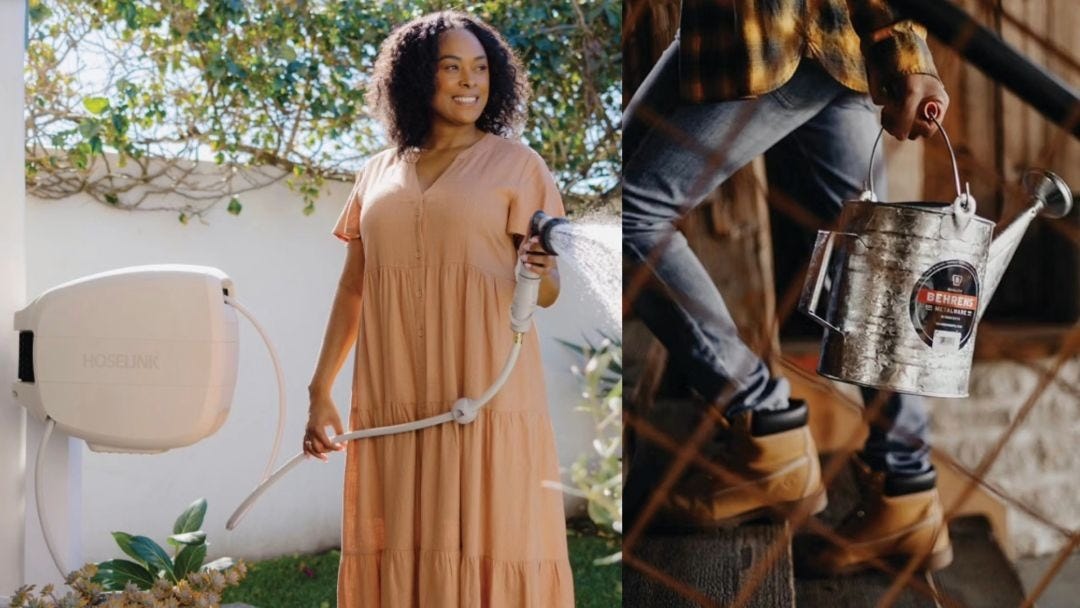
I’ve written how—after killing thousands of plants—I’ve gotten into the Zen of hand watering new plants until they establish. My favorite tools are Hoselink automatic retractable hose and a galvanized Behrens watering can. I often find it easier to carry the classic can (without the sprinkler head) to individual shrubs and trees than to haul any hose around.
Note: This post contains affiliate links. As an Amazon Associate, I earn a small fee from qualifying purchases, at no extra cost to you.
Wow: Snow reveals winter structure
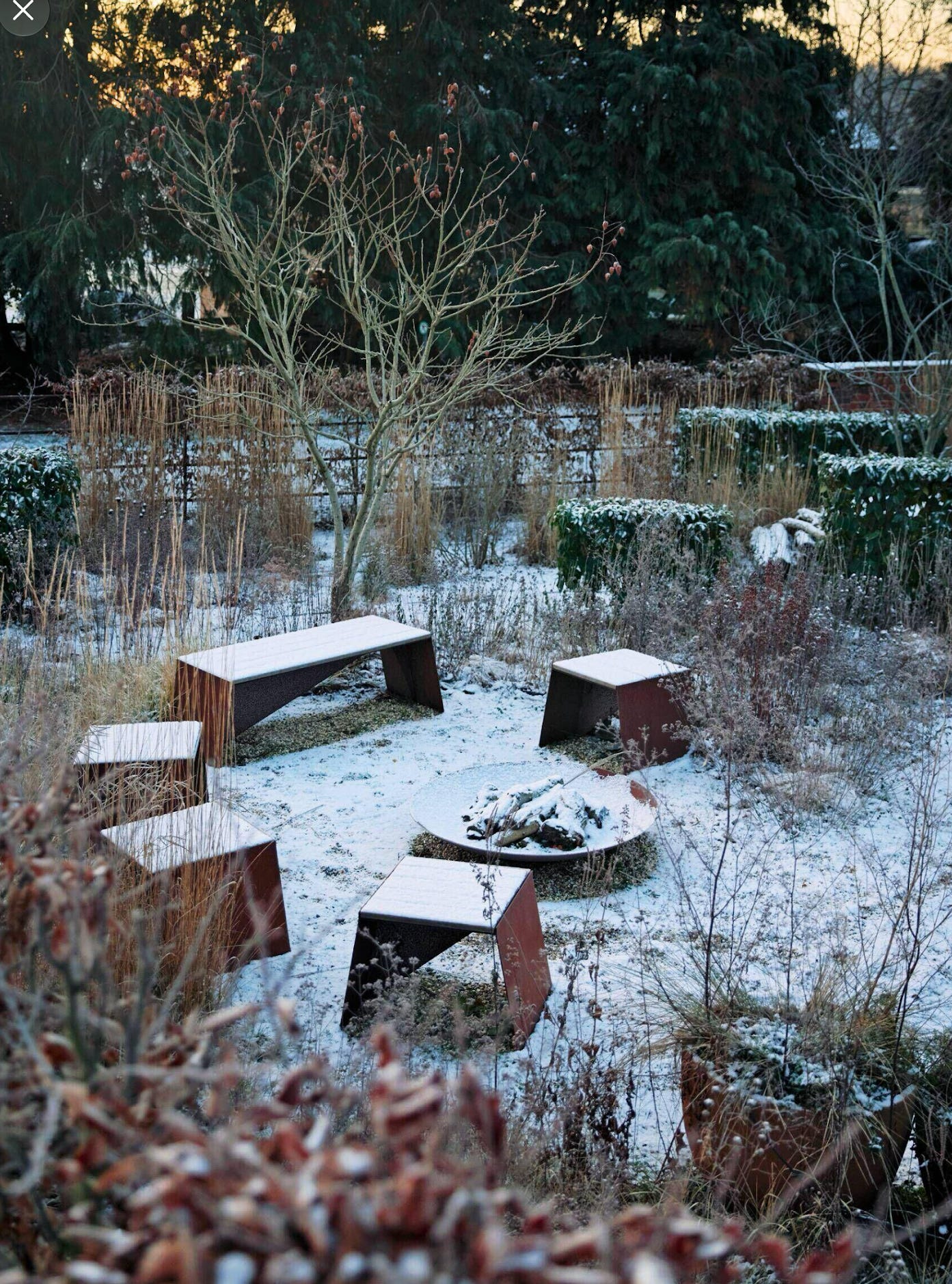
Snow has arrived! Not here in Florida, but in some areas of the country… so today I’m sharing a beautiful picture of a garden in winter. The graphic Corten seating and firepit, the branches of the small, multi-stem tree, and the contrast between the tawny grasses and evergreen shrubs and trees create lots of visual interest at the greyest time of year.
Digging Deeper
ICYMI last week, you can watch the recording of Zoe’s fabulous Wild Ones webinar, How to Make Your Yard Better for Wildlife: The Habitat Check-Up.
The most intriguing garden I saw this week is interior designer Bunny Williams’s, with an entire village of architectural birdhouses like the one in Sheila’s yard, above. Williams is adding yet another, based on an historic building, from Jim Sidon. Wouldn’t that make a great gift? (Hint, hint, Pete.)
Have you tried Fleuryx? If so, please share your experience in Comments, below. Their pretreated native seeds are beautifully packaged and seem an easy introduction to growing wildflowers. I’m planning to give them to myself (and maybe Zoe).