

Quick note from Zoe: Happy Spring, everyone!!! Did you know that April is National Native Plant Month? I just love how much this movement is growing. 🌱
And if you know your native plants, I have a favor to ask… The Less Lawn More Life challenge is back this May, now powered by a new tool we’ve been building at Wildr. At its core is a native plant recommendation engine grounded in research, real data, and on-the-ground knowledge… and we need your help to make that happen.
So if you're a botanist, ecologist, master gardener, or just someone who knows your ecoregion's native plants inside and out—PLEASE apply to be a Wildr Expert!
Now, back to Heather!…
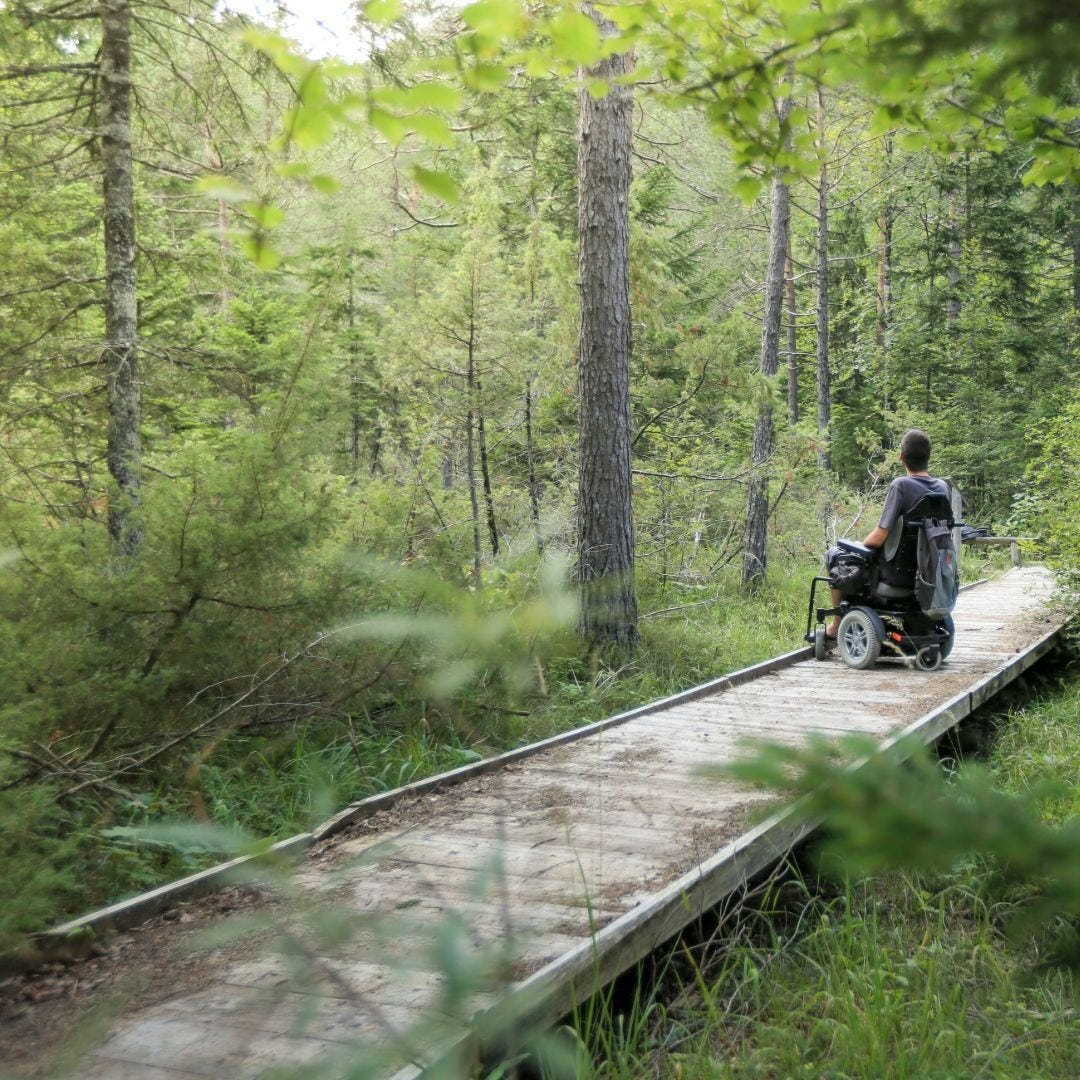
Dear Design Your Wild, Do you have any thoughts on permeable pavers like True Grid?? I have thought about this where I help garden (adding many natives). On the grounds, we have a path which is gravel, many years old and gets very weedy. We would like it to be ADA compliant for our cane, walker, and wheelchair users. This is a non-profit religious place with not a lot of money, lots done by volunteers.—Esther, Rochester New York
Not a fan. There are other options that are permeable and ADA compliant—and not plastic. The emerging research on microplastics has hit me like a ton of bricks, so I’m trying to avoid it whenever possible—in the landscape, on my body, in my home (see “Why?” below).
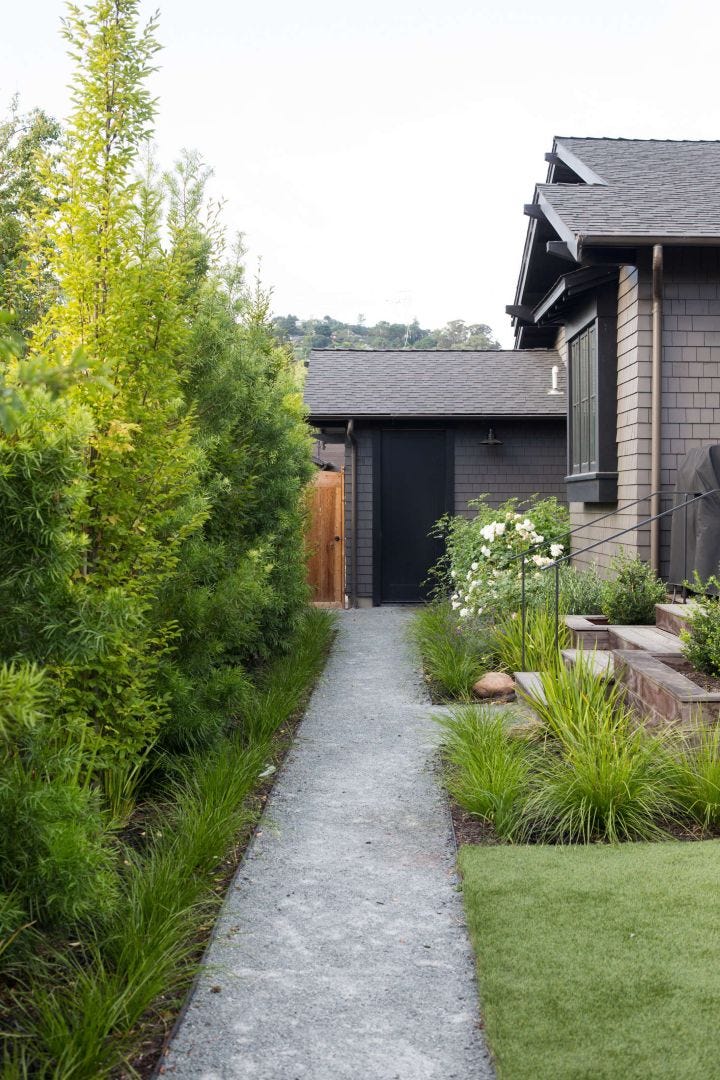
True Grid “pavers” are plastic grids designed to hold gravel in place or create a hard surface under turf. They claim to be ADA compliant, but in my experience such grids become exposed over time and represent a tripping hazard, especially for cane users.
According to the federal agency that develops and maintains requirements under ADA,
Most loose materials, including gravel, will not meet these requirements unless properly treated to provide sufficient surface integrity and resilience. Binders, consolidants, compaction, and grid forms may enable some of these materials to perform satisfactorily but require repeated maintenance.—U.S. Access Board
ADA compliant paths from natural materials
If the current path is straight and its surface even, your least expensive option might be to cover it with Cocopath, an all-natural coir version of the mats used to make beaches accessible.
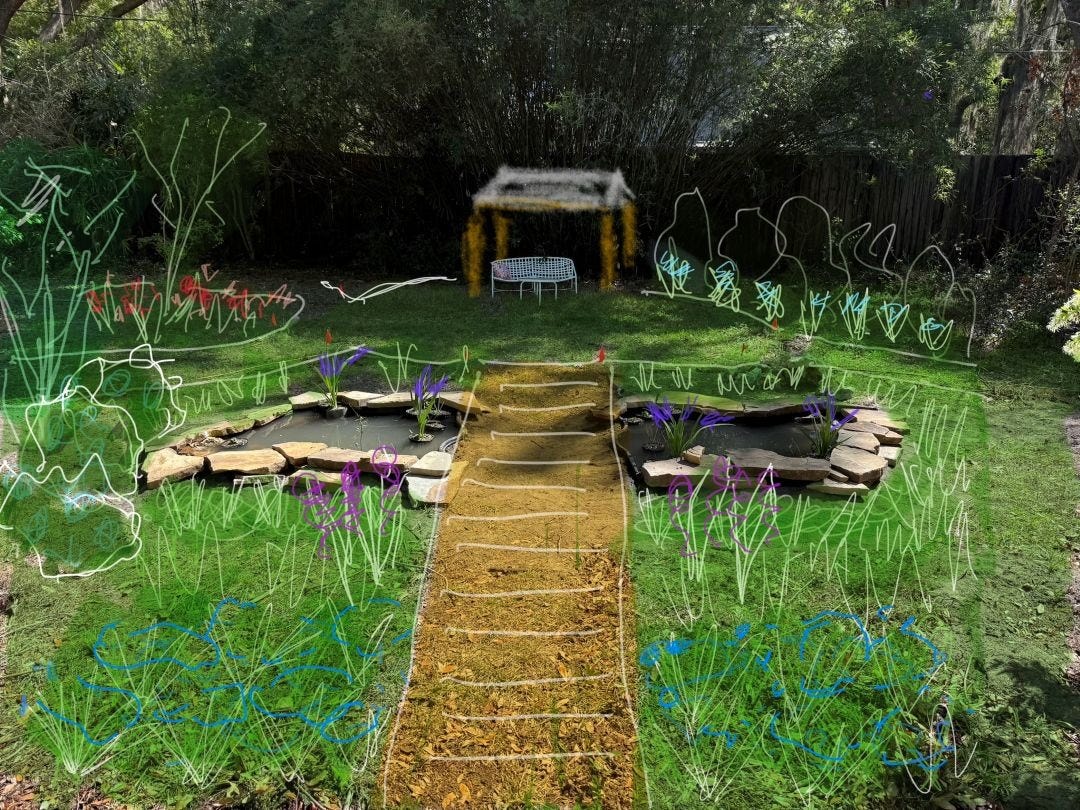
Wood decking is another accessible, permeable path surface. If you have volunteer carpenters, the cost can be quite reasonable. The lumber and concrete deck blocks for a four-foot-wide path we’re building between our ponds cost $4.50 per square foot.
An option used in major ecological landscaping projects like Brooklyn Bridge Park and the Old Chicago Post Office rooftop is decomposed granite with Organic-Lock stabilizer, sold by Kafka Granite in the U.S. and Envirobond in Canada. The plant-based stabilizer makes the path wheelchair-safe while allowing water to pass through. Installation requires digging the path below grade, laying four inches of stone, then compacting three inches of stabilized decomposed granite. Too much for your volunteers? Have them check out Kafka’s installation video.
Brick, stone, and concrete pathways can also be made permeable and ADA compliant. They are more expensive than decomposed granite and require a similarly deep base of crushed stone (and sand) to remain smooth and level.
Dear Design Your Wild, One thing I don’t like is all the mosquitoes in my yard. Is there a recommendation to get rid of the mosquitoes? Or what do you do with this situation?
You’re in good company! So many readers complain about mosquitos that I delved deep into the research and even visited a Florida mosquito lab. You’ll most likely want to implement a combination of strategies to maximize enjoyment of your yard. For my top recommendations, including which repellents to use, how to eliminate breeding areas, and how to build a DIY screen house, read Avoid Mosquito Bites in Your Yard.
—Heather
Why, How, Wow!
Why? Microplastics everywhere
All of a sudden, scientists are finding microplastics everywhere—in our bodies, in organic vegetables, and even in remote forests.
They drift in through the air, settle onto leaves high in the canopy, and slowly make their way down to the forest floor. Over time, they build up in the soil, turning forests into hidden storage sites for plastic pollution. … To understand how this buildup happens, researchers studied several forest sites in Germany. … Using advanced measurement techniques, they traced how much plastic had accumulated and where it came from. … Their findings suggest that forests have been collecting airborne plastic since at least the 1950s.—earth.com
Although these plastic bits have been building in us and our environments for decades, little is known about their impact on us and the ecosystems we inhabit. Nor is much known about the PFAs (“forever chemicals”) used to make plastics resistant to heat, oil, stains, grease, and water, but what is known is deeply frightening.
While less than 1 percent of the 12,000 or so PFAS compounds have been tested for toxicity, the (abbreviated) list of maladies linked to them, even at tiny concentrations, includes decreased fertility, pregnancy complications, weakened immune systems, kidney and testicular cancers, liver damage, obesity, and hormone interference, according to a review of the scientific literature by the Environmental Protection Agency. Infant deaths tripled for mothers living downstream from PFAS-contaminated water, a 2025 study found.—The Washington Post [gift link]
The solutions to microplastic and PFA pollution will be big and systemic—like plastic-eating bacteria, plant-based plastics, and large-scale PFA filters. But while scientists develop these, I’m trying to decrease my use of plastic, especially with respect to sources of microplastics, both to lessen my personal impact and to send a message to manufacturers that consumers don’t want plastic. I’ve found the easiest way to do this is to stop buying synthetic textiles.
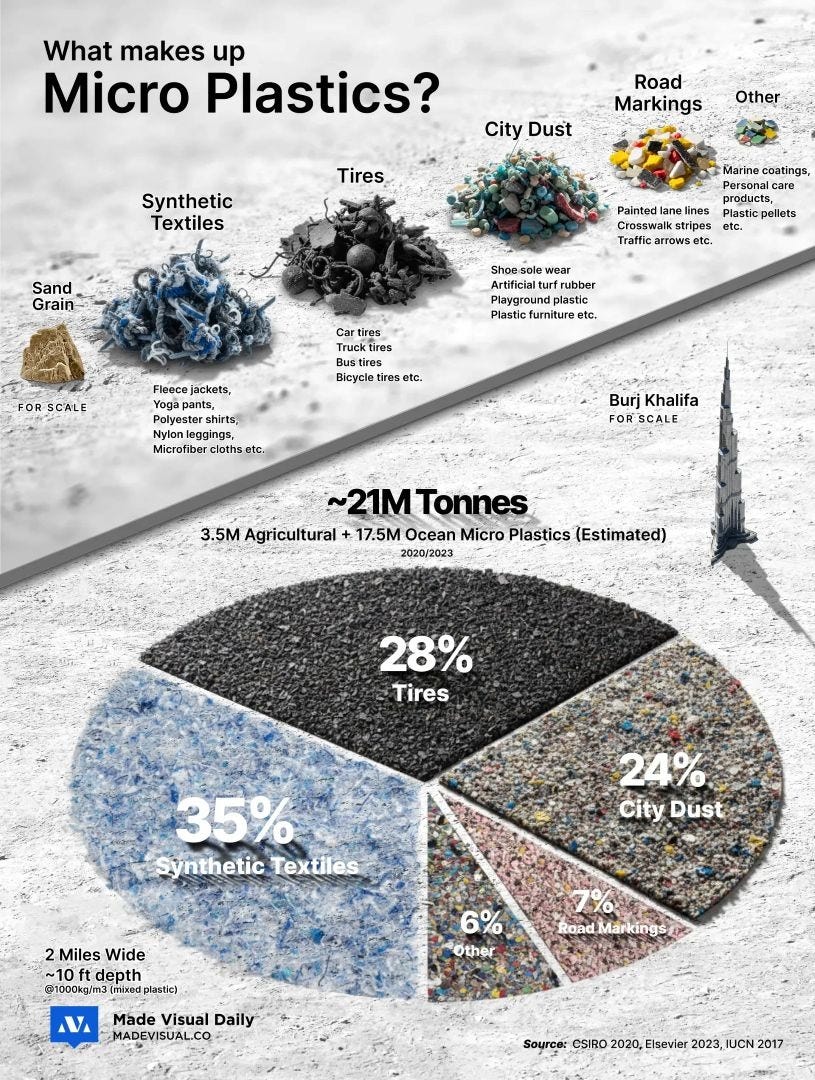
Fleece jackets, yoga pants, polyester shirts, nylon leggings, microfiber cloths, and other synthetic textiles are the largest source of microplastics. For me, it’s easy to limit my new clothing to wool, linen, cotton, silk, and rayon/viscose (sometimes with a bit of synthetic for stretch). I’m also looking into washing machine filters, because a single wash of synthetic clothing can release hundreds of thousands of fibers. (Please let me know in the comments if you’ve done the research and can recommend a filter.)
How: Reducing plastic in the yard
Contemporary landscaping involves a lot of plastic, too. Here’s how I’m trying to avoid introducing them into my yard:
Recycling plastic nursery pots or giving them to a small nursery that will reuse them.
Not buying bags of soil, fertilizer, or other amendments. (If you missed it, read Why the World Needs “Bad” Soil.)
Never using landscape fabric, which doesn’t work anyway. (Read Cass Marketos’ On the Problem of Landscape Tarp.)
Favoring wood and metal patio furniture. Keep in mind that vinyl, acrylic (used to make Sunbrella), and polyester filling are all forms of plastic. So is much outdoor furniture marketed as “rope” or “rattan.”
Stopping solarizing with plastic.
Banning plastic edging and vinyl fencing.
Choosing tools made of wood and/or metal whenever possible.
After much research into alternatives, however, I concluded that plastic pond liners are currently the most feasible option that’s healthy for other organisms. Galvanized steel, for example, leaches zinc, which can be toxic to fish. Concrete is difficult to work with, not a sustainable material, and risks creating a big concrete mistake—and related waste. To me, the wildlife value of backyard ponds offsets the negative effect of the plastic. Within a day of installing our ponds this month, more birds and butterflies arrived in our yard.
Wow! Natural, ADA compliant pathways
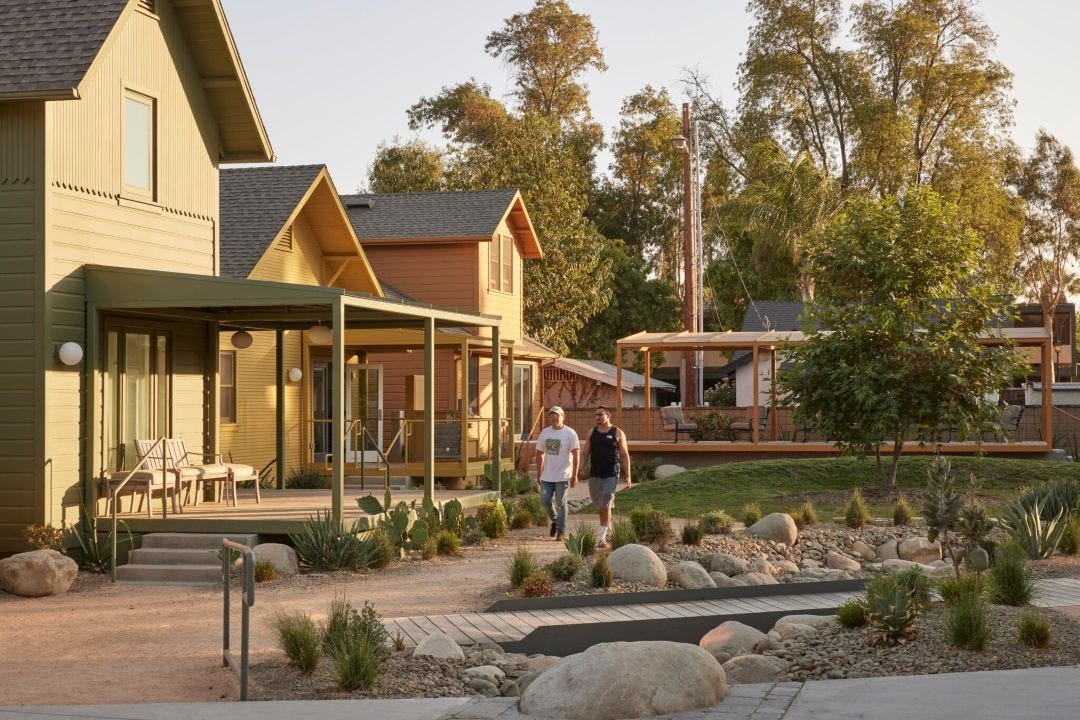
Terremoto landscape architects used decomposed granite paths and wood bridges to connect areas of a shared community garden in Riverside, California. The garden also includes bleacher seating, a large central meeting tree, an activity plaza, vegetable beds, a stormwater swale and vibrant native plantings. Around the garden are 1920s craftsman-style bungalows developed as a safe, inclusive, and nurturing environment for the formerly homeless, LGBTQ+ community, senior citizens, and young people coming out of the foster care system.
In addition to converting the bungalows into transitional housing for up to 50 persons, the [Hopson Rodstrom Design] architects incorporated covered porches that modulate between the homes with some jutting out and others wrapping around corners at the rear of each house. Simple yet substantial, these shaded outdoor spaces sport wood decking and standing-seam metal roofing painted to match the house color. They help foster a neighborly environment for the residents but also act as transition zones between each of the homes and the public garden.—Terremoto

Final Live Webinar for Premium Subscribers
Here’s Exactly How to Build Your Wildlife Pond
Tuesday, April 7, 6 pm E.T.
If you’ve always wanted to create a small pond but have been too intimidated to start, this is for you. Wildlife need clean drinking water to survive and many threatened species breed or live in water. Unfortunately, many sources make pond building overly complicated—and less valuable for wildlife. By the time you leave this interview with author of Building Natural Ponds (and Garden Myths) Robert Pavlis, you’ll be ready to build your wildlife pond—without pumps, filters, or chemicals.
Can’t make the live webinar date? The recording will be available for a limited time after the event and will be shared with people who registered in advance.
To register
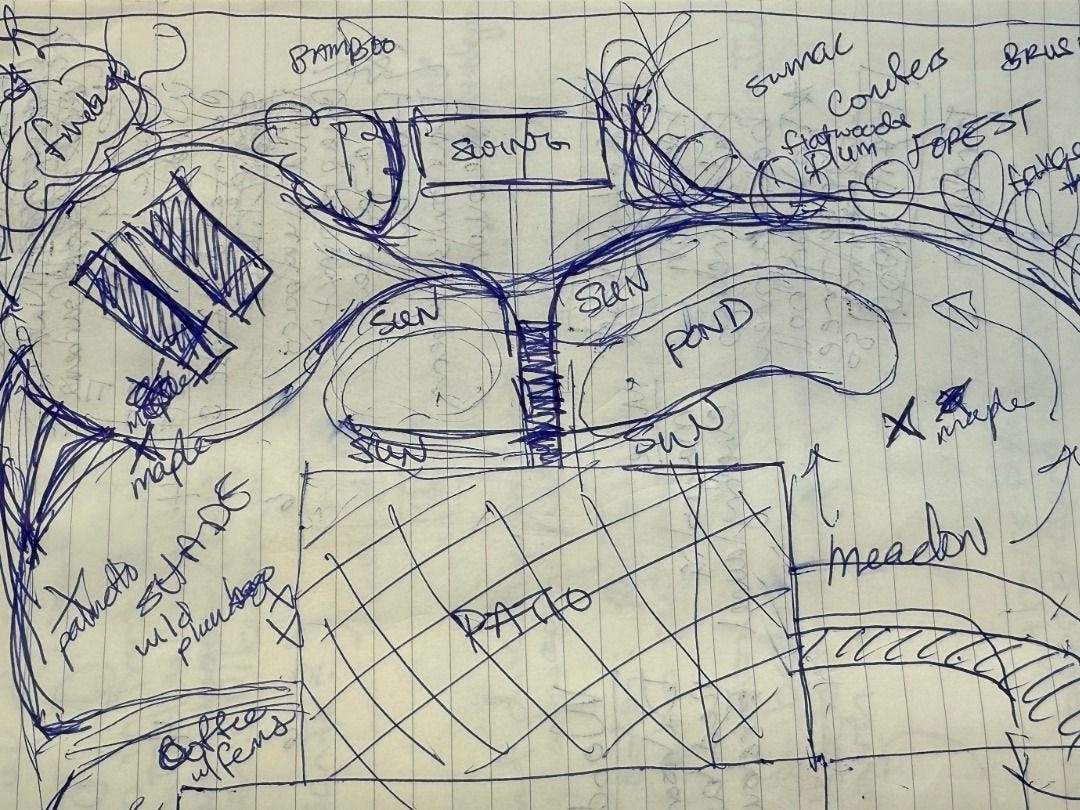
Subscribe now to receive the registration link, plus recordings of our sketching and small yard design workshops.
Already a premium subscriber? Use the registration link here.

Please share any info you find on washing machine filters. I’m embarrassed at how much fleece I own, but don’t think tossing it is a good idea either.
Excellent article overall, especially the part about not using plastic and landscape cloth in gardens.
However, I must disagree on the use of plastic pond liners. There is a safer and more natural (and longer lasting) alternative, natural rubber sheeting. A bit more expensive, yes, but we are talking about the environment here. Natural rubber, from rubber trees, not synthetic, is an environmentally friendly and sustainable alternative. Even better, if you are in an area with it occurring naturally, is clay lined. Areas where there is a high percentage of clay in the soil offers the completely natural solution. Even large ponds (many acres) are built in these areas using only locally sourced clay. Ask any farmer in New York State!