

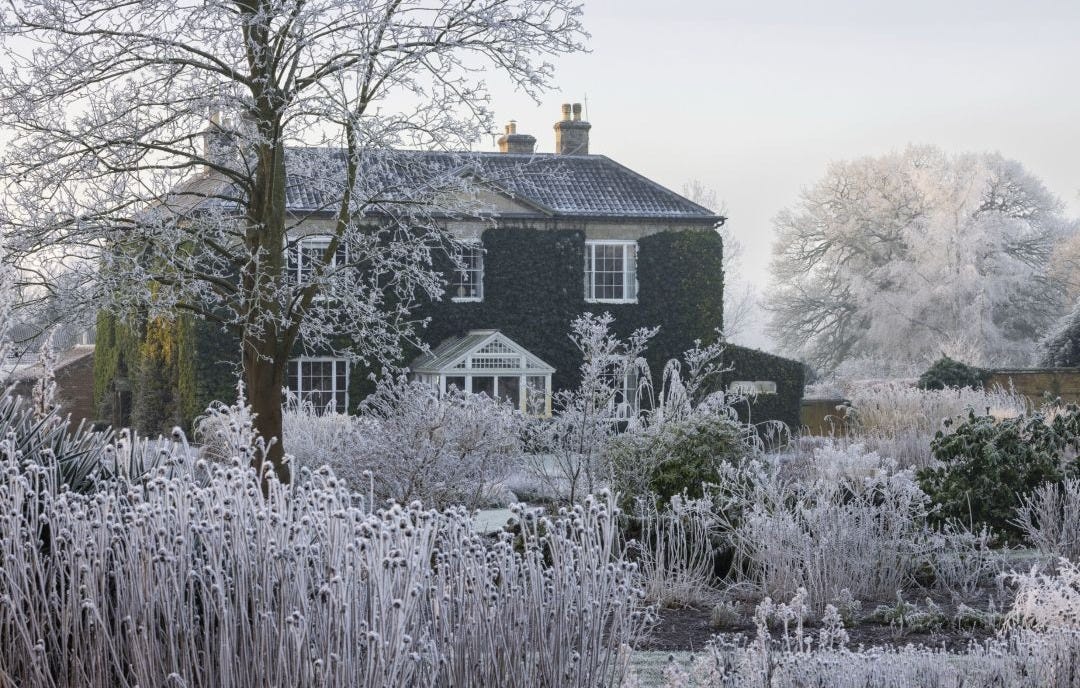
My daughter Zoe and my latest yard design workshop, hosted by Wild Ones last week, was a wild ride! If you’re not one of the thousands who joined live—yes, it was nerve-wrackingly popular—you can watch the recording here. This week, I’m going to start answering the many questions participants wrote in the chat. But first, a timely question from a longtime subscriber:
Dear Heather, Could you tell us about winter sowing? I bought some wonderful plains oval sedge seeds. Initially I used pots, but the line I am making is so long I’ll go broke. Prairie Moon thought winter sowing would work and now it’s beginning to be winter and I am wondering how to begin. So I bought about 3 oz to give it a try. What can you teach me?—Marsha, Kansas
Is that a trick question, Marsha? I ask because, as an experienced ecological landscaper, you must know that sedges are notoriously difficult to grow from seed. But I’ll roll with it, because growing from seed is by far the most cost effective way to grow native plants—and now is indeed the time to do it.
Please read my comprehensive guide to direct seeding, Have You Ordered Your Seeds Yet? However, I have to warn you that growing from seed is always something of a crap shoot, no matter which method you use. With the pot method you mention, I get tons of seedlings, but then lose most of them either over the summer or after transplanting into the ground in fall. With direct sowing, some species come in too plentifully—I’m talking about you, blue vervain—while others, zilch.
Here’s the super-lazy method I’m personally using this year, just before a rain, when feasible:
In bare soil: I scratch it up a bit and then cast seeds onto it, at a much higher rate per square foot than recommended. Done.
In turf or among native plants: I get down on my hands and knees, find a patch of soil between the existing plants, scratch the soil a bit if it’s compacted, press a bunch of seeds into the area (also more than recommended), move to the next area and repeat. Done.
Fingers crossed!
—Heather
P.S. Reader, which native plant species have you grown successfully by direct seeding? Please share species and tips in the comments, below.
Snappy answers to workshop chat questions
My house is a colonial—thoughts on leaning into the linearity vs. softening when making paths and borders?
Personally, I would lean into the linearity of your colonial home with straight paths, letting your plants do the softening as they explode over the edges in what we call the Blooming Romantic yardenality. But naturalistic paths in the A Walk in the Park yardenality would work well, too. At Mt. Cuba Center in Delaware, the style is linear and symmetric close to the house and more naturalistic further away, a traditional approach captured by the phrase “the garden curtsies to the house.” Learn more in Design Shortcut to a Backyard Makeover: Yardenalities 2.0.
Hard to put a destination in a 20’ x 25’ garden.
Do you think destination means a resort? Any seating area, even a single chair, is a destination. Your garden is the size of a large living room! Even if you plant three sides to soften the edges, as we recommend, you’ll still have enough room for at least two seating areas—for example, a fourtop with chairs in one area and a couple of Adirondack chairs in another. Separate these seating areas with plants, including one or several shrubs or multistem trees. Learn more in How to Make Small Awesome.
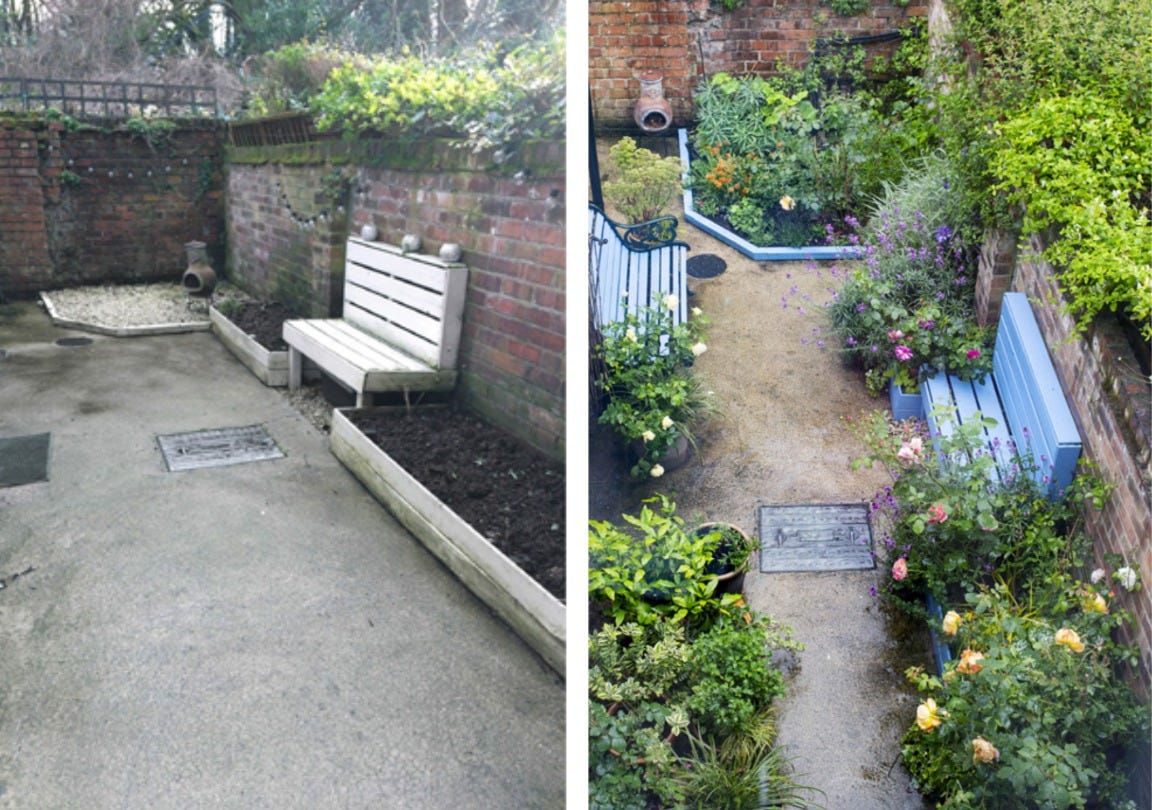
Hey, dumb question—if my backyard is only 120 ft deep by 50 ft wide, can I really have small paths? Or maybe just destination areas?
Not dumb, maybe semantics? Perhaps we should be saying “rooms, doorways, and halls” rather than “paths and destinations.” Your 6,000 square foot property is the size of a huge house with many rooms, doorways, and halls. Remember, plants are your walls. Two shrubs or small, multistem trees on either side of an opening makes a doorway. A three-foot strip of lawn between perennial beds is a hallway—and you certainly have room for such a path. Look at the Wild Ones sample garden designs for ideas; they are generally about the size of your yard.
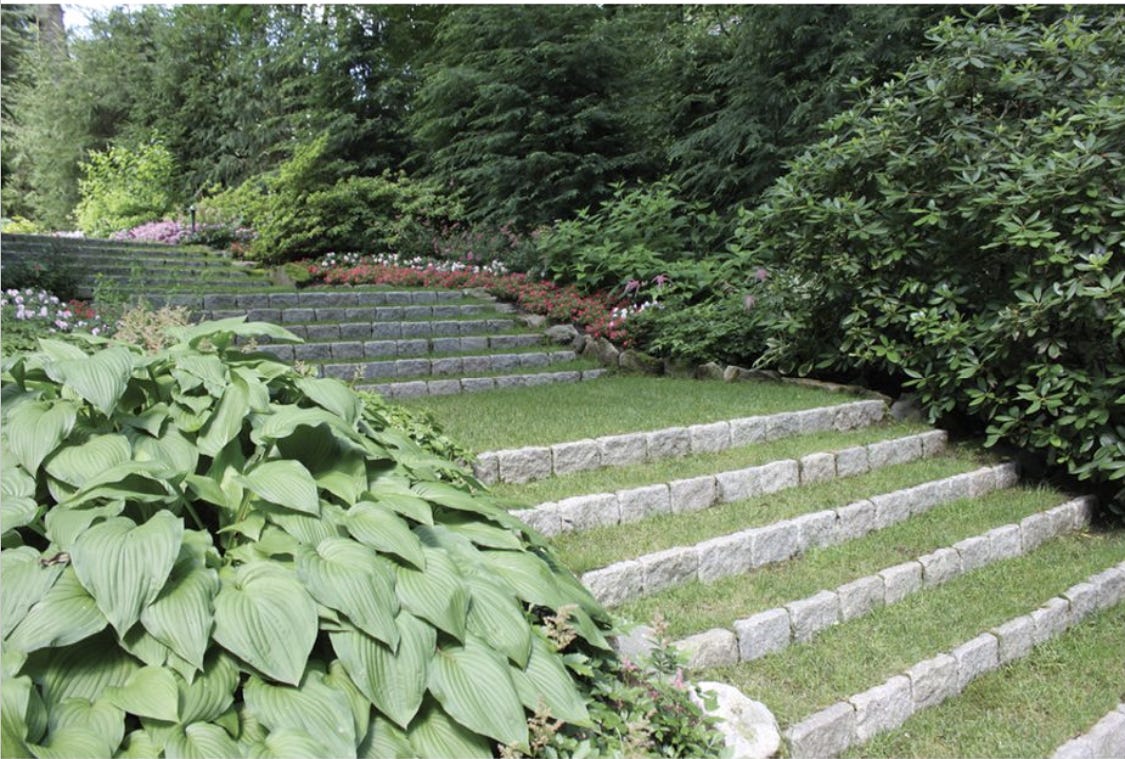
Back of our house we have a steep hill going down to the pool. It is all lawn and people have a hard time walking it. Can’t have any “rooms” there. I don’t know what to do?
Cut stairs into the turf, with railroad tie or cobblestone risers, to give people easy access to the pool below. You can DIY this! To lessen the slope, zigzag the stairway down the hill. Then plant natives into the turf on either side—a perfect place for tall plants, because no one’s walking there anyway. A seating area overlooking the pool on a “landing” halfway down would be nice, but you may need a landscaper to create a terrace ten feet deep or so. In any case, your pool is a fabulous destination.
I have 2 acres with lots of invasive plants. Any tips for removing and cleaning the yard as a do-it-yourselfer?
The counterintuitive, science-backed approach to tackling invasives is to tackle areas with the fewest invasives first, cutting or pulling them until they are under control, then work from pristine to less pristine. This is one of those chores that are worth outsourcing to an ecological landscaping crew, if you can afford it, asking them to teach you to identify the most prevalent ones so you can remove them when they reappear, as they inevitably will. Read The Latest on Weeds. If you have large areas with invasives, also read Solutions for Invasives.
What about deer?
Dear, dear deer! We protect all our young shrubs and trees with temporary fencing, removing it and spraying them with naturally minty Deer Out in summer. For more ideas, read Keep Your Plants Safe 🦌 and Advice About Deer Fences.
How to deter ticks?
Seed an anti-tick border of native mints around your main seating area or pathways. Monardas and mountain mints are some of our most prolific and beautiful native wildflowers, so it’s a win-win. Read about why this works and other research-based tactics in How to Protect Yourself from Lyme Disease If You Love Wildlife.
Wow!
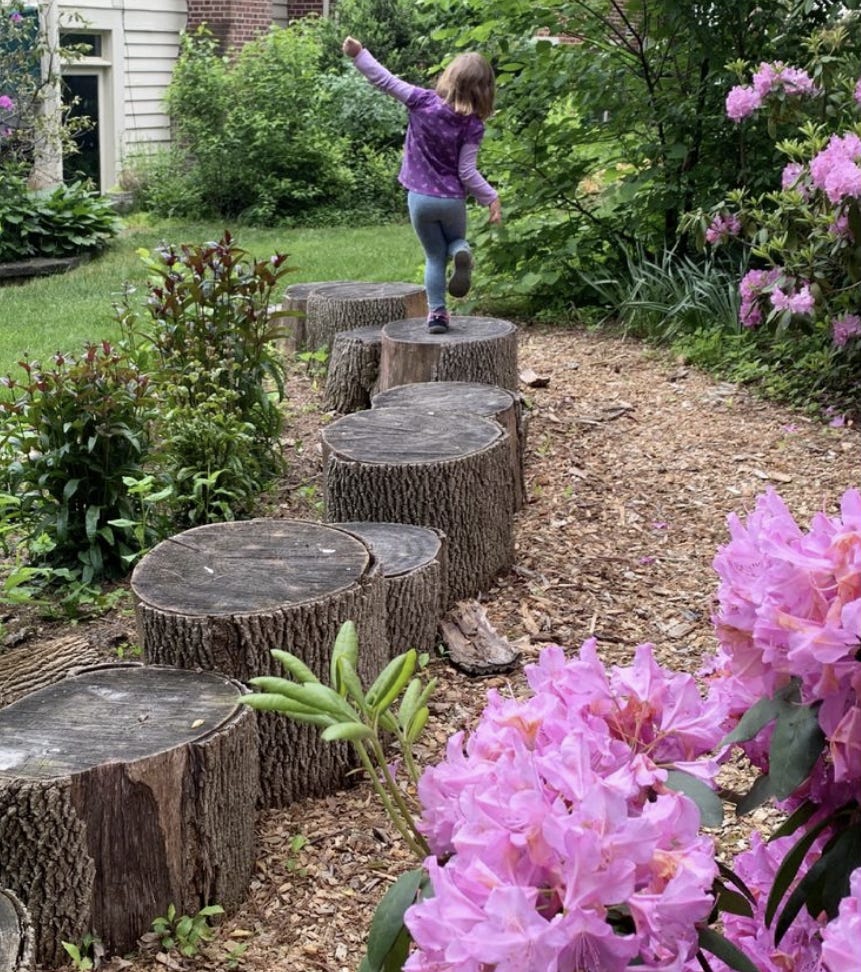
Lisa Doseff, a participant in our workshop last week, recognized her own garden—and granddaughter—in our presentation. Zoe and I adore the image of the joyful girl in a naturalistic play area, don’t you?
It turns out, Lisa wrote an award-winning picture book about creating that garden with her granddaughter, called Grandma Lisa’s Humming, Buzzing, Chirping Garden. A last-minute stocking stuffer for the child in your life?
And, lastly…
I love to share articles on ecological landscaping on mainstream sites, hoping to encourage the editors to publish more, as well as for your benefit. Unfortunately, mainstream content about native plants often contain misinformation and—especially—misidentified images, as a sharp reader noticed in the article on propagating from cuttings that I shared in the last newsletter. My bad for not catching it!
ICYMI, a seminal journal article that found glysophate safe has been recalled.

A few tips: I smothered half of my yard with 4 in mulch, killed the grass and diligently weeded. I layed down seed mixed with sand (1:7 ratio...sand helps to see where you spread) after the first hard frost. Seed to soil contact is important (I just lightly stepped where I sowed). A lot of these seeds need exposure to cold temps (stratification), so they sat all winter. I also added plugs of native grass (little bluestem) for visual and structural support for the flowers. I added some annuals as well to suppress the weeds and add some "pop" for the first year. Weeding is crucial: creeping charlie wants in! The result: a stunning meadow, my own National Park in my yard! Bird populations have increased, insects are thriving, the soil is teeming with life (and sequestering CO2 at 4x the normal yard). It is a true oasis in a suburban savanna!
Growing from seed in a SE yard: Asclepias tuberosa,Chamaecrista fasciculata, Coreopsis lanceolata,Coreopsis tinctoria, Dracopis amplexicaulis, Echinacea purpurea, Lupinus perennis (big surprise with that one!), Ratibida columnifera, Rudbeckia hirta, Gaillardia pulchella.