

Dear Heather, I’m sending a picture of a mundane marital and gardening dilemma: Every year D. & I disagree about leaf raking. I leave whatever falls, wherever (I do pick up gallons of pine needles). D. wants to remove most leaves that fall on the grass, saying over winter they will become a soggy mush and block light from grass in the spring. I trust it will all dissolve.—H., Providence, RI
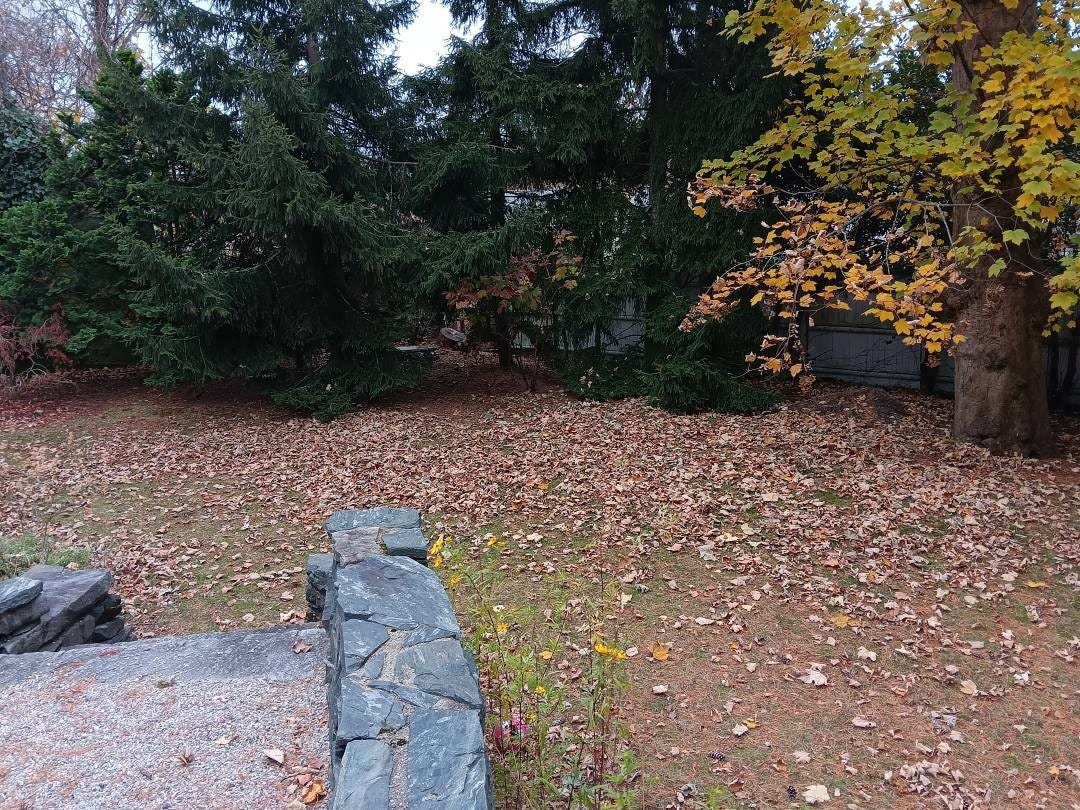
Good news: You’re both right! It’s a matter of degree. You are correct that the light leaf cover in the foreground of your photo—20 percent or less—will break down and feed the lawn (if they don’t blow off first). D. is correct that the heavier leaf cover toward the trees may damage the turf.
Have you considered planting native flowering shrubs among and in front of the trees? If so, consider leaving a layer of six to eight inches of leaves to kill the turf and prepare for spring planting. You can research shrubs with Native Plant Trust’s Plant Finder. Shrubs will add beauty and a greater sense of enclosure (blocking the view of your fence and the neighbor’s house) while reducing the amount of raking necessary next year. Native plants, unlike turf, benefit from up to six inches of dead leaves, which also provide winter habit for beneficial insects.
I’m curious why you’re removing the pine needles. It’s a myth that they make the soil more acidic (learn why). Pine needles and other evergreen leaves do take longer to break down than deciduous leaves, so thick layers of them deter growth, making them useful for paths and mulch. (Read more on leaving leaves in my article, Mulch Ado About Mulch.)
—Heather
P.S. I appreciate the increasing number of comments on my posts. I love your ideas, feedback, and questions.
Why, How, Wow!
Why?
As you know, I’m a HUGE fan of making a habit of strolling around the yard daily—or, if you work at home, as I do—multiple times each day. We’re all less likely to go outside when it’s cold and the flora and wildlife are less interesting, but recent research found people benefit from walking in nature even when they don’t enjoy it. So, just do it!
In our studies, people who took 50-minute walks in nature showed about a 20 percent improvement in working memory compared to walks in busy urban areas. Even viewing photos or listening to nature sounds for 10 minutes helps, though not as much as the real thing.
Interestingly, enjoyment isn’t required. People who walked in a cold Michigan winter, and didn’t like it at all, still showed the same cognitive boost as those who walked on a warm summer day.—Marc Berman (author, Nature and the Mind) in Psychology Today
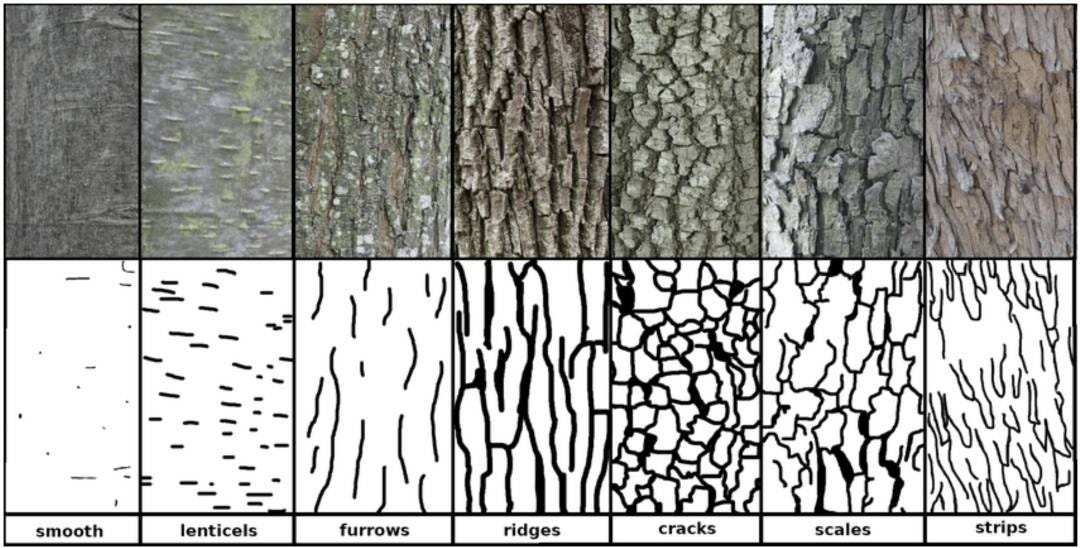
To continue to engage with nature—and reap the cognitive benefits—in winter when there’s less going on, double down on mindfulness exercises during your daily strolls. For example, learn to ID trees from their bark. (Here’s an eight-minute video introduction to bark identification. Who knew?!)
How
Here are more thoughts on staying engaged with your garden through the winter:
Relax. Enjoy the downtime. In general, ignore old agricultural adages like “They won’t thrive if you don’t strive,” as well as contemporary articles like “How to Winterize Coneflowers in 5 Simple Steps.” Nature doesn’t winterize coneflowers and neither should you. It’s not that complicated.
Direct sow seeds if you must do something. For how, see Have You Ordered Your Seeds Yet? You can also propagate native shrubs from cuttings (here’s how); if you’re experiment fails, you’ve only lost a few twigs. Seed inspiration: the plants Piet Oudolf used in the Nantucket garden below; rare seed sources for California and the Mountain West; for pastures, native forage mix like this one from Roundstone.

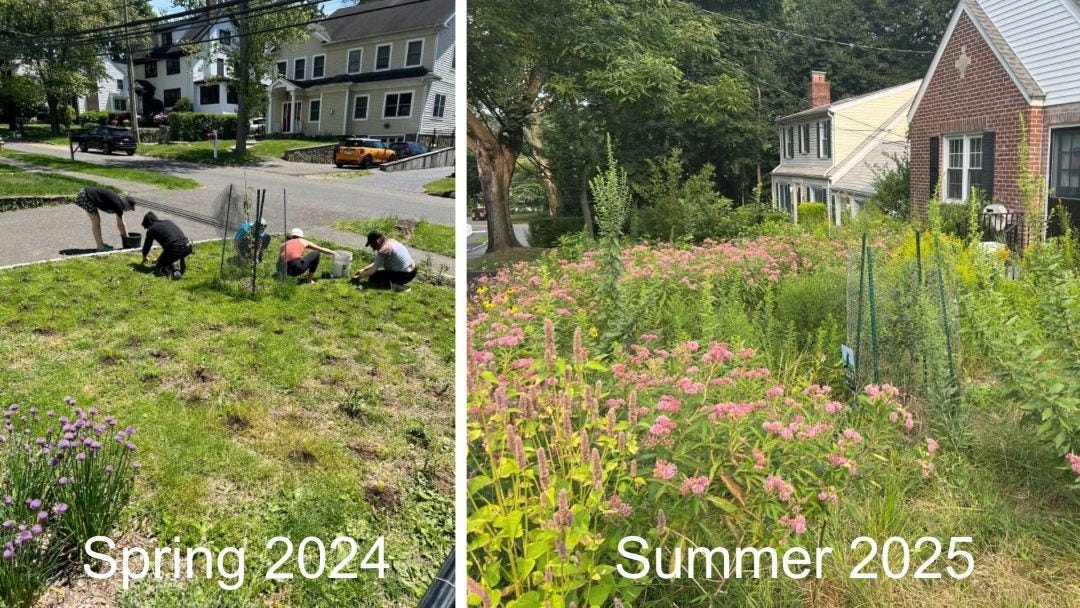
Native plantings designed by Piet Oudolf at a Nantucket home (source: Architectural Digest, photo: Plan (aka, dream). Planning is fun and reassuring for some, anxiety-producing for others. Whatever your response to planning, I recommend you devote 90 minutes next week to my daughter Zoe and my free workshop for Wild Ones on creating a master layout (register here). If you start now, you’ll have plenty of time to dream about your overall layout, identify what you’ll tackle next year, and complete your plant research in time for spring. That’s what our former student Rosa did and she’s loving her yard a year later:

My garden exploded this year! I’ve added a few fern varieties in my backyard, a pawpaw tree, a second spicebush, and recently installed a hammock (bliss!). I am in awe of the amount of bees and other insects that are enjoying my plantings. I call it Bee TV! I’ve had a few great conversations with neighbors about it and I’ve inspired some to plant more natives!—Rosa, Greenwich, CT
Improve your seating. Adding seating instantly adds a sense of comfort and a place to go in your yard, among the very top attributes of a restorative landscape. If you have carpentry skills, consider making Adirondack chairs (plan) or Dan Benarcik’s modernist version. If you’re a sewer, you can make throw pillows for your seating. I recently bought a fabulous outdoor fabric from Quadrille’s discount outlet (25 percent off with code CYBER-25). I also like the prints from the Blockshop x Sunbrella collab. In Veranda’s new book, garden designer Scott Shrader of Los Angeles says,
It’s my job to get people out into the garden and keep them there. … I am always looking for a new arrangement to engage people and give them something to do, even if it’s simply spending time together.—Veranda Enchanting Gardens: Inspired Landscape Design

Learn something new. Check out webinars from your local native plant society or botanical garden (find both here). If you haven’t already, get ready for spring by completing the 12-week Less Lawn More Life challenge, which you can now begin at any time. Even experienced ecological landscapers like Rosa find it helpful.
I’ve been following the Less Lawn More Life updates all summer, super cool work!—Rosa, Greenwich, CT
Wow!
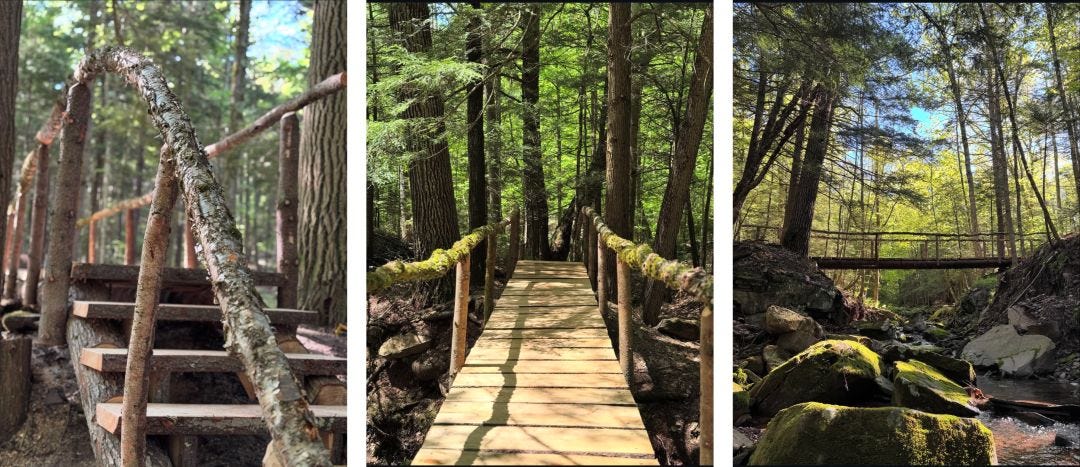
My friend—and designer extraordinaire—Jonathan Hansen took seriously Zoe and my advice to create destinations to draw him and his family and friends into their woods. He designed and built an awesome bridge across a creek from trees felled on his property. As he wrote on Instagram,
Some projects take a year of planning, a few weeks of felling trees, and a lifetime of dreaming.—Jonathan Hansen
Miscellany
Looking for gifts for fellow nature lovers? Check out Laura Fenton’s lists of recent books about low impact gardening and stocking stuffer guide for gardeners. (To anyone in my family who has read this far: I’d love the tool cleaner—and a sharpening stone to go with it:)

This article studied the little things that live in the leaves and discusses not mulching.
https://www.sciencedirect.com/science/article/pii/S0048969725004565
Those fabrics are nice! I consider Winter the sewing hobby, since I'd prefer to be in the garden during the warmer months.