


Dear Yardener,
There’s still time to register for tonight’s workshop, Plan Now for a Small Backyard You’ll Love [registration info below], our first winter webinar. I’m so excited to share the new process we’ve developed to quickly design restorative small (200 to 2,000 square foot) outdoor spaces. But the steps to a fabulous yard are essentially the same whether you have 200 square feet or 18 acres. Here’s an overview, originally published three years ago and updated with our latest methodologies.
—Heather
Dear Design Your Wild, My wife and I bought an 18-acre farm-turned-golf course, complete with six acres of greens and an acre pond. The rest of the property is wooded. We’d love to restore it into a permaculture wonderland, full of botanical surprises and sacred space. We planted a small wildflower meadow and an orchard in the front yard. However, we need a bigger vision to create something beautiful (and environmentally responsible) for our family’s future. We’re on a limited budget and will be doing a lot of the work ourselves.—Christof, Freedom, ME
“Botanical surprises and sacred space.” I love that! Here’s how to create a bigger vision—a overall plan that you’ll implement over many years. It will help you prioritize, budget, establish appropriate scale, minimize regrets, and bolster your patience.
Step 1: Imagining
What features and destinations can you imagine drawing you into your landscape so you can fully occupy it? In our follow-up Zoom conversation, you mentioned several uses in addition to the meadow and orchard: a vegetable garden, a rose garden, a sauna hut, and a path and chapel in the woods. You’ll also want an outdoor sitting and eating area off the house and a large, flat grassy area for outdoor games like boules, badminton, and croquet. What else? A labyrinth? Allee? Treehouse? And how about practical needs—privacy hedges, parking spaces?
Let your imagination run wild, fueled by travel, fantasy, and favorite activities. Visit public and private gardens for ideas, paying attention to uses, shapes, and scale—the width of paths, the depth of a flower border, the height of a hedge, the diameter of a seating area—rather than plants.
Step 2: Surveying and mapping the landscape
To scale and locate your destinations appropriately, it’s essential to place them into a map of your property and its existing conditions—i.e., whatever you intend to keep. These conditions include the house, barn, driveway, parking area, pond, major plantings, and underground utilities. Start with a Google satellite image of the entire property, plus any surveys and floorplans you already have.
A rough sketch is sufficient for big properties like yours. But even you will benefit from a detailed sketch of smaller garden rooms like your seating and easting areas and vegetable garden. Start with a scale outline on graph paper (1/4” = 1’ scale), orienting your survey as if viewed from front door looking out; you will experience your landscape from inside the house as much or more than outside, so map the locations of key windows (and doors) and any permanent features you see from them.
Step 3: Putting places in that plan
The next step is to place your destinations and their connecting paths on your map or scale sketches. As a very rough rule, “garden rooms” get bigger as you get further from the house, and larger properties call for longer paths and larger rooms. Start by cutting out and labeling shapes for each element, then arrange them on the site plan, using removable tape to keep them in place once you have an arrangement you like. [Prefer to draw on a tablet? See “How” below.]
Now, go outside and test your preliminary plan. Measure out the destinations and mark them with flags. Are they too big? Too small? The tendency will be to make them too small and to put them too close together. Walk the paths, noting your views and how comfortable the distances are. Think about how you will plant the “negative space” between them; those parts of your six-acre lawn that are neither grassy destinations nor paths will eventually be planted. Adjust the plan.
Muse. Walk again. Adjust. At some point, you might want to switch from cut-and-tape to sketching in pencil on tracing paper over your survey. Your overall plan will continue to evolve as long as you own the property.
When do the plants come in?
As you rework your overall plan, you’ll be thinking about plantings. Most important is shape and scale: Do you want a tree here as a focal point from the kitchen window? A grouping of tall shrubs there to screen the view of the road? You can also research plants native to your ecoregion and start a spreadsheet with info about your existing plants and those you may want to add. (Fun update: Zoe’s been hard at work with the Wildr team building a tool to help you choose the right native plants and create real backyard habitat. It launches this spring—join the beta waitlist here.)
Once you have a overall plan, pick an area to start planting when the time is right (usually early spring or fall)—then plan again, this time a more detailed plan of plants, hardscaping, and other elements. The process will be iterative, with budget constraints forcing creativity and trying your patience—and, more likely than not, improving the outcome.
—Heather
Why, How, Wow!
Why?
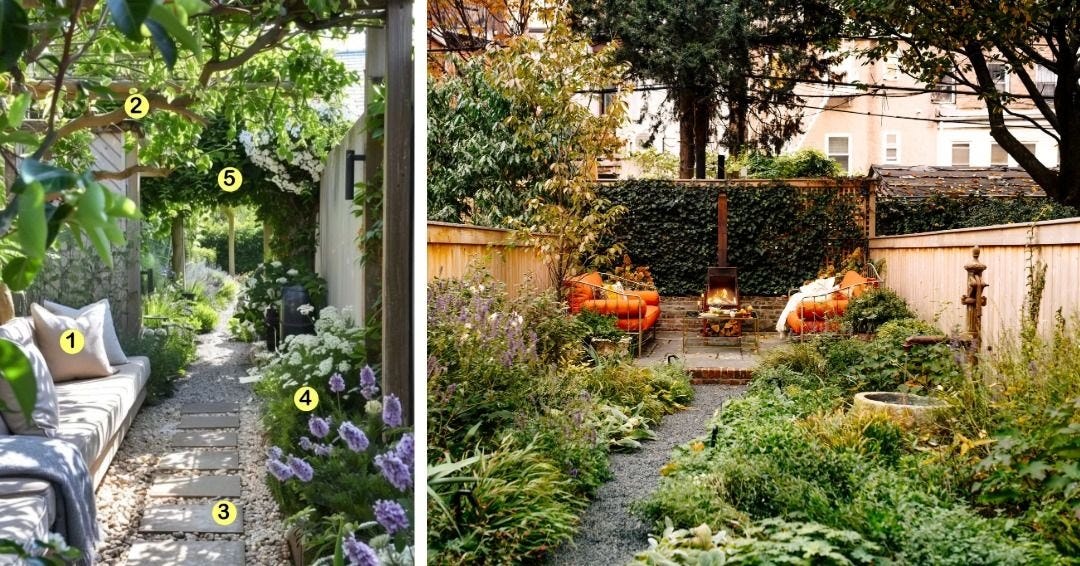
Just like a floorplan of a house, a landscape plan will give a purpose to every part of a property. In an ecological landscape, areas without a specific use will be planted to benefit wildlife—generally in one of three archetypes: meadow, shrubland, and forest. In the plans for both Hortulus Farm, below, and the small urban yard above, each part of the property has a purpose.

How
If you have an iPad and Apple Pencil, load your lot map and watch Zoe and my 90-minute workshop, Turn that Patch into a Plan. Or register below for tonight’s workshop with a new process especially for outdoor spaces under 2,000 square feet.
You will find my favorite planning tools useful: a measuring wheel (pictured) and landscape flags. For small spaces or garden rooms, I also recommend graph paper and, if you’re not using an iPad, tracing paper and landscape stencils.
Wow!
Their allée of ‘Heritage’ river birch and ostrich and cinnamon ferns illustrates Renny Reynolds and Jack Staub’s approach to planning to surprise and delight at Hortulus Farm.
What viewsheds did we already possess that might begin to dictate a plan? What sites were ripe for “destination” status, and how would one perceive that one had arrived at such? What focal points might be in the running to herald said arrival? How would the eye be focused and directed, and how would one travel through the gardens? Paths? Steps? Lanes? Bridges? And what of the idea of progression?—Chasing Eden

Related Resources
Interested in how extraordinary gardens are planned? Read Chasing Eden and Vita Sackville-West's Sissinghurst: The Creation of a Garden (but substitute natives for any planting you admire, natch).
Need inspiration? Visit private gardens during open days hosted by the Garden Conservancy (ditto re plantings).
Want to put some intellectual rigor behind designing plant communities? Read Garden Revolution and Planting in a Post-Wild World.
For Paying Subscribers
We have three private webinars coming up soon!
Plan Now for a Small Backyard You’ll Love
TODAY! Tuesday, February 17, 6 pm E.T.
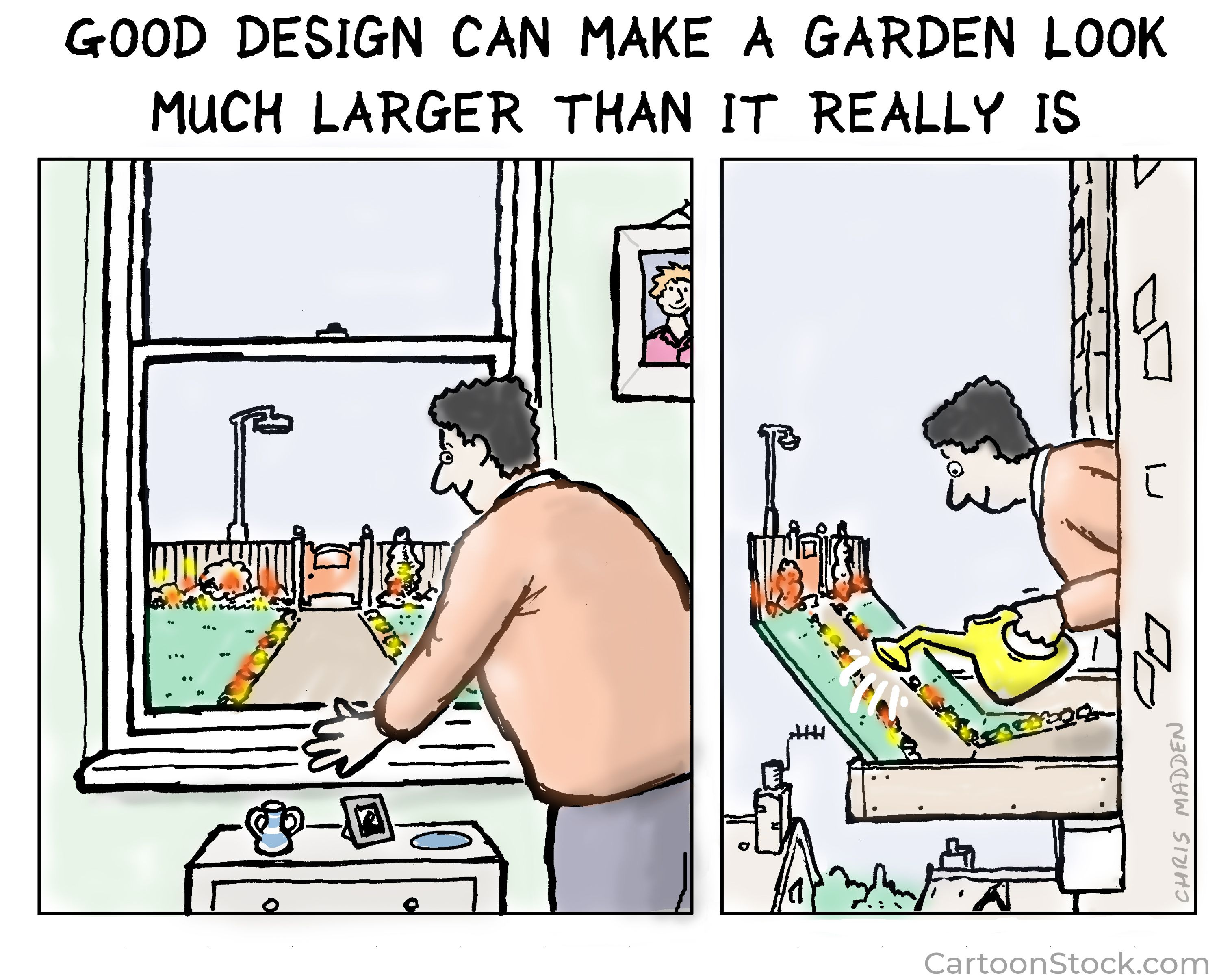
Small yard? Big potential. In this hands-on workshop, Zoe and I will show you how to apply our design approach to small spaces (200 to 2,000 SF). We’ll teach you layout strategies to make balconies and urban outdoor spaces feel larger, function better, and support more wildlife: where to put paths, how to create privacy without blocking light, and how to think about structure and habitat in minimal space. You’ll sketch your own plan and walk away knowing exactly what to do next.
Ditch the AI, Grab a Tablet: Real Garden Design Sketching
Tuesday, March 24, 6 pm E.T.
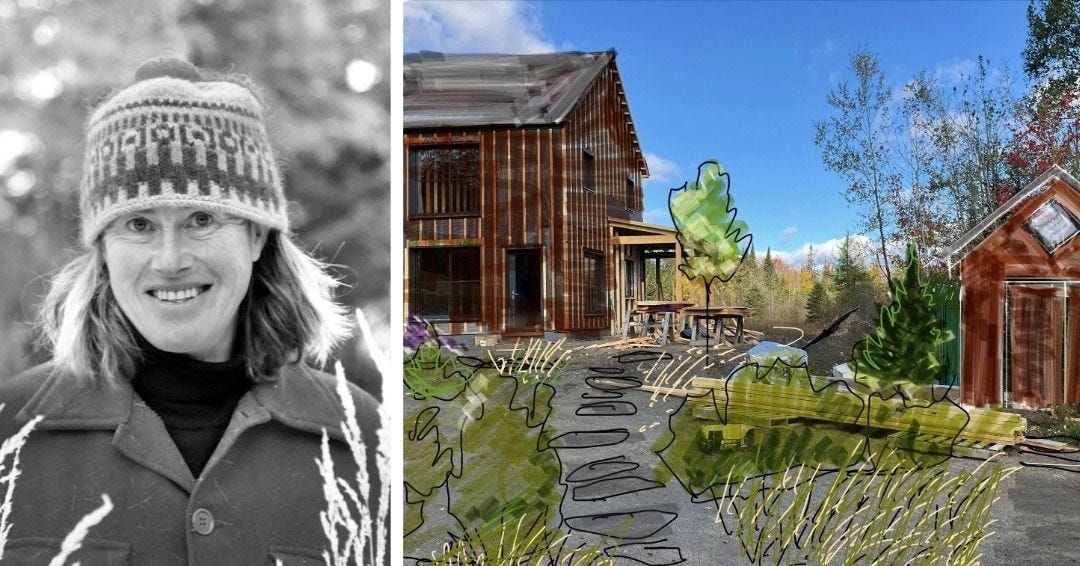
Tired of those AI garden renders that look completely unhinged? Want to actually see what your design will look like before you dig? In this hands-on workshop, artist and landscape designer Liza Kiesler of Viburnum Gardens will teach you (and Zoe and me) to test your ideas by sketching them onto photographs. Sketching will also improve your attention span, ability to stay focused, and your ability to think outside stereotypes (The Cognitive Benefits of Art). No drawing experience necessary!
Here’s Exactly How to Build Your Wildlife Pond
Tuesday, April 7, 6 pm E.T.
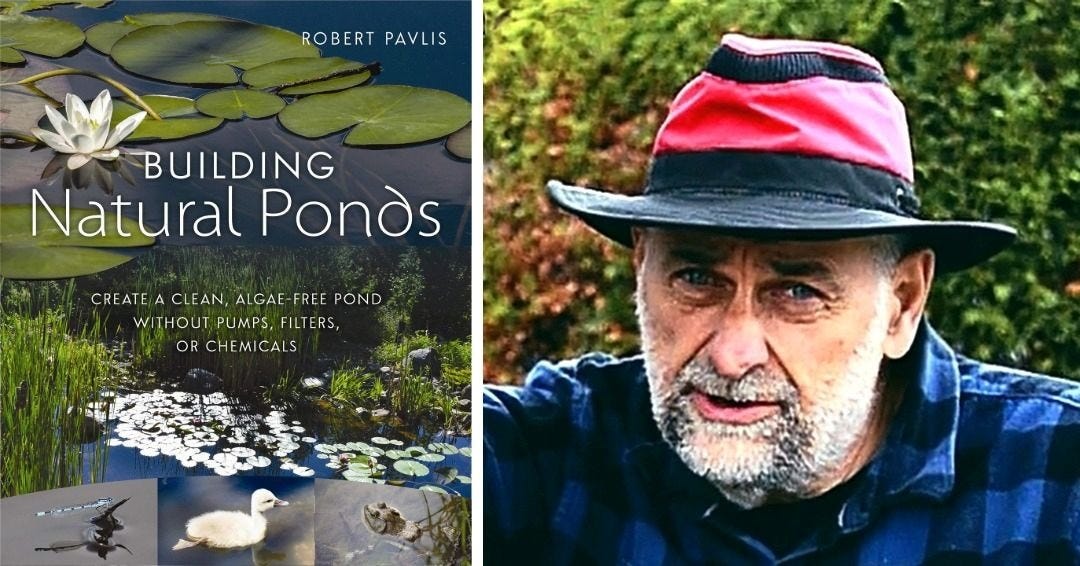
If you’ve always wanted to create a small pond but have been too intimidated to start, this is for you. Wildlife need clean drinking water to survive and many threatened species breed or live in water. Unfortunately, many sources make pond building overly complicated—and less valuable for wildlife. By the time you leave this interview with scientist and author of Building Natural Ponds Robert Pavlis, you’ll be ready to build your wildlife pond—without pumps, filters, or chemicals.
Can’t make the live webinar dates? Recordings will be available for a limited time after the event and will only be shared with people who registered in advance.
To register
Subscribe now to receive registration links to all three webinars.
Already a paying subscriber? Use the registration links here. (If you can see those links, you’re a paying subscriber.)
Love this, thank you! I'm prioritizing our yard this and doing an overhaul to ensure it's more a habitat for nature vs lawn. This is helpful 💚
Tuesday's webinar was great. Even though my space is somewhat bigger and my rooms/ planting areas are established, I got great ideas for moving seating and other features to improve my views an usage of space. And thanks for showing us that natives fit beautifully into more traditional spaces.